
Hoofcount transformed an idea for AI-powered hoof health monitoring into a commercially available product, expanding the business beyond automated cattle footbaths and helping dairy farmers identify lameness earlier.
With support from the UK Agri-Tech Centre, the company secured innovation funding, accessed specialist AI expertise and accelerated development by several years.
Impact at a glance
- Technology readiness: Concept to TRL 7 (demonstrated in operational environment)
- Commercialisation: Pedivue now commercially available
- Commercial adoption: 36 systems installed in the UK, US, Poland, Italy, China and the Netherlands
- Business growth: Three new employees recruited to support Pedivue
The challenge
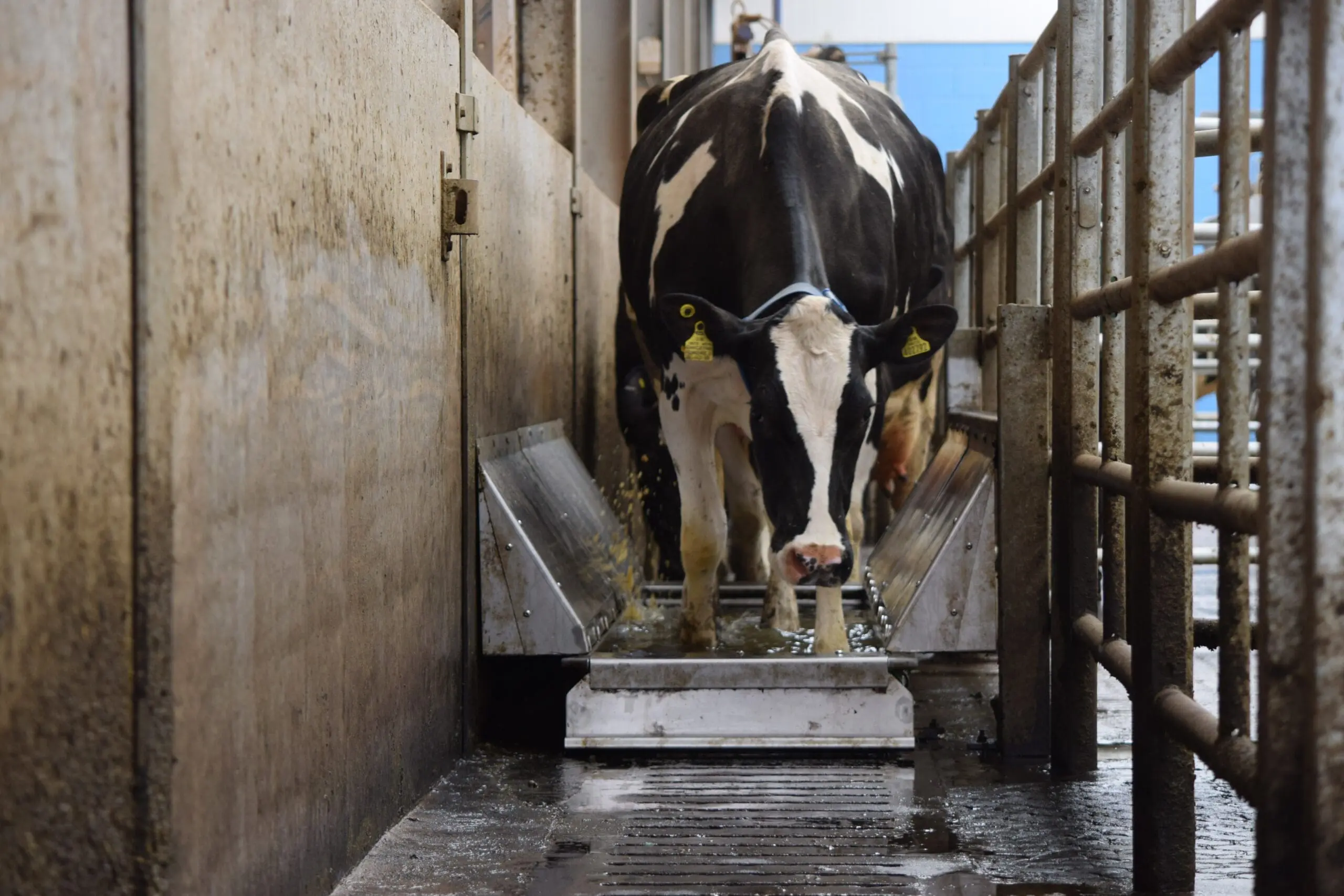
Founded in 2012, Hoofcount developed an automated cattle footbath to help dairy farmers reduce lameness, a condition estimated to cost the UK dairy sector around £250 million every year.
The company later identified an opportunity to develop an AI-powered system capable of detecting hoof lesions as cows pass through the footbath – now called Pedivue. Earlier detection would allow farmers to intervene sooner, improving animal welfare while reducing treatment costs and production losses.
However, turning that vision into reality required expertise beyond Hoofcount’s core strengths in engineering, needing specialist understanding of AI and machine learning. They also lacked resources needed to develop research independently or confidently navigate the innovation funding landscape.
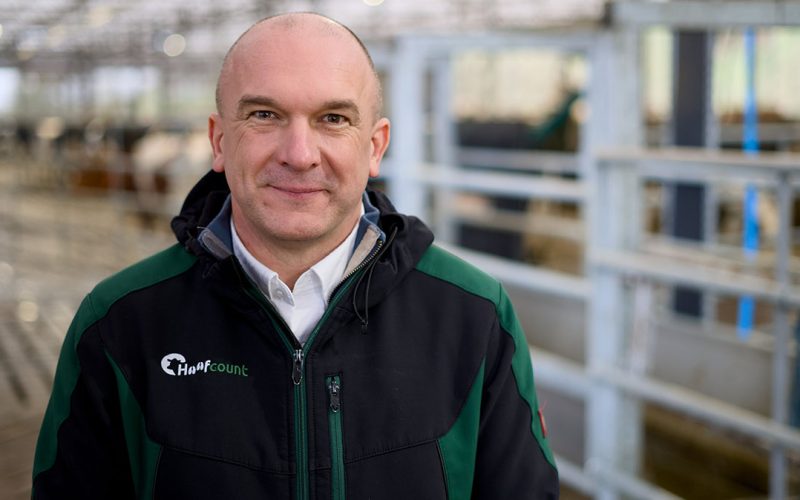
“We could see the potential to create something that would make a real difference to dairy farmers,” explained Hoofcount founder Anthony Marsh. “But we didn’t have the specialist knowledge or resources to develop it ourselves. We needed the right partners to help us turn the idea into a commercially viable product.”
The support
Working with the UK Agri-Tech Centre supported Hoofcount to apply for – and secure – funding and connected them with Bristol Robotics Laboratory at the University of the West of England, whose expertise in artificial intelligence and machine learning complemented Hoofcount’s engineering background.
Training machine learning models requires significant computing power that would have been prohibitively expensive for a small business to access independently. UK Agri-Tech Centre provided that capability, alongside project management and access to the South West Dairy Development Centre, where Pedivue could be tested under realistic farm conditions.
A professionally produced video and farmer demonstration events helped raise awareness and generated early commercial interest, with some attendees going on to purchase Pedivue systems.
“As a small business, we simply couldn’t have accessed this level of expertise, facilities and technical support on our own,” continued Anthony. “UK Agri-Tech Centre brought together the right people and resources at exactly the right time, giving us the confidence to develop something entirely new for the business and allowing us to focus on creating a practical solution for farmers.”
What changed?
Before working with the UK Agri-Tech Centre, Pedivue was an ambitious idea that sat beyond Hoofcount’s technical capabilities. Developing an AI-powered hoof monitoring system required specialist knowledge, computing capacity and collaborative research that would have been difficult for a small engineering business to access on their own.
Working with UK ATC enabled Hoofcount to combine its livestock expertise with specialist AI capability, taking Pedivue from concept to an operational prototype (TRL 7) before bringing the product to market through further development.
The project has also changed the direction of the business. Rather than solely manufacturing automated cattle footbaths, Hoofcount is now developing AI-enabled livestock monitoring technology, creating a new platform for innovation and future growth.
“Without UK Agri-Tech Centre’s support, development would have taken at least several more years to achieve the same outcome, which would have increased the risk of a competitor reaching the market first,” said Anthony.
Business and industry impact
Pedivue is already being used commercially, with installations in the UK, Poland and the United States. With around 6,000 Hoofcount footbath systems already installed worldwide, the company estimates that approximately a quarter of those farms could benefit from Pedivue, giving the business a significant opportunity to grow through its existing customer base while also expanding internationally.
For dairy farmers, Pedivue enables hoof lesions to be identified earlier, allowing treatment to begin sooner, improving animal welfare and reducing production losses. Because monitoring takes place as cows pass through the footbath, it fits easily into existing farm routines without creating additional work for farm staff.
More broadly, the project demonstrates how combining livestock expertise with artificial intelligence can accelerate the development of practical technologies that solve real on-farm challenges. By helping SMEs access specialist expertise, collaborative research and innovation funding, UK Agri-Tech Centre is enabling businesses like Hoofcount to bring innovations to market more quickly and deliver benefits to farmers sooner.
What’s next?
With Pedivue now on the market, Hoofcount is focused on increasing adoption through its distributor network while expanding across the UK and overseas. Alongside commercial growth, the team will continue refining the technology and exploring future enhancements through further research and innovation funding.
Working with the UK Agri-Tech Centre has positioned Hoofcount for its next stage of growth, with ongoing collaboration supporting the development of the next generation of AI-enabled livestock health technologies.