News Category: News

UK-India collaboration grows through new Agri-Tech Accelerator programme

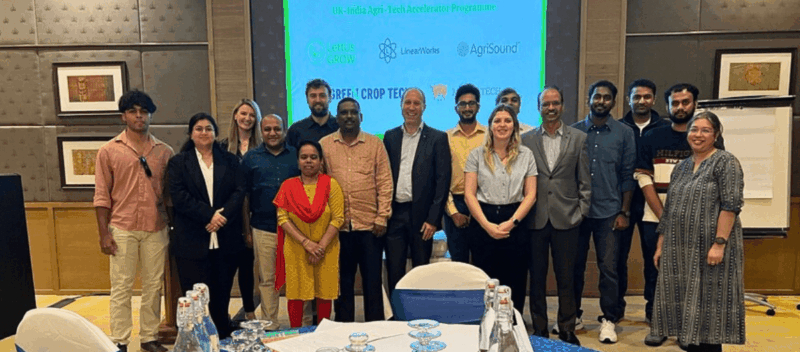
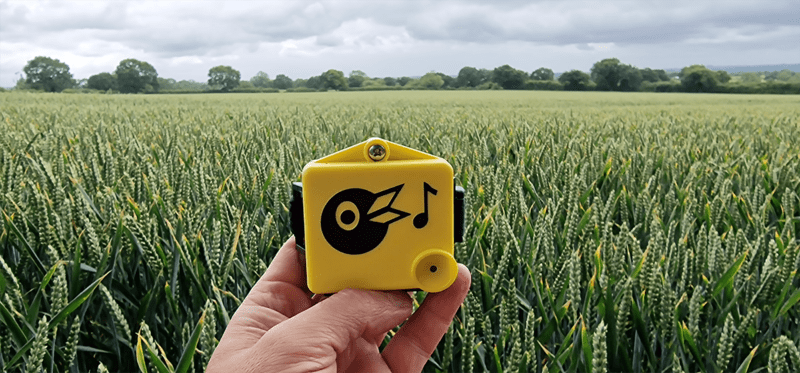
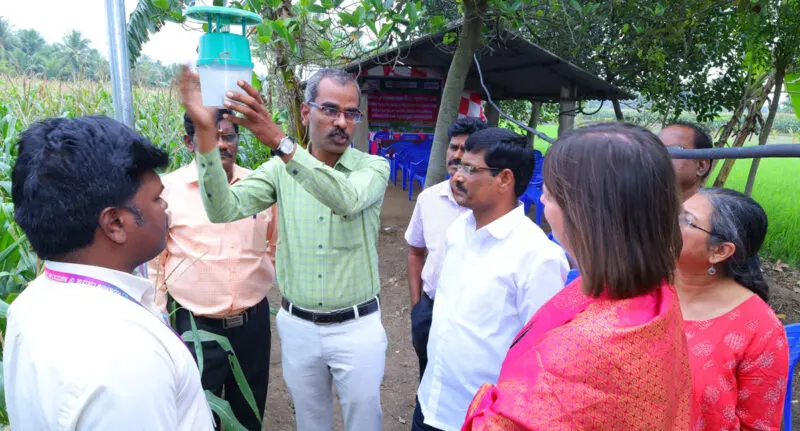
India’s agricultural sector plays a pivotal role on the global stage, with 220 million hectares of cropped land and nearly half of the nation’s workforce employed in agriculture. Between 2023–2024 alone, the country’s agri-exports reached $53 billion, emphasising the importance of food security and economic resilience. Yet, as India strives to modernise and boost productivity, there are clear opportunities for innovative agri-tech solutions. The UK Agri-Tech Centre recently delivered a high-impact UK–India Agri-Tech Accelerator, designed to deepen collaboration between these two nations at the forefront of agricultural innovation. In collaboration with the UK Government, the accelerator was developed to foster links between UK and India’s agri-tech ecosystems, to support sustainable agriculture, strengthen trade and R&D links, and facilitate the commercialisation of cutting-edge technologies tailored to India’s needs. The programme identified key areas of opportunity within the agricultural landscape, with a strategic focus on precision technologies to support climate-resilient crop production. Four key themes were prioritised: · Precision breeding · Crop surveillance technologies · Controlled environment agriculture and precision application systems · Data-driven decision-making tools Five pioneering UK agri-tech businesses were selected to take part in the accelerator, each offering innovative solutions aligned with India’s agricultural priorities: Mutus-Tech – Specialising in AI-driven pest management and fertiliser optimisation. Green CropTech – Delivering nanotechnology-based biostimulants for enhanced crop protection. AgriSound – Deploying bioacoustic sensors to monitor pollination in real time. LinearWorks – Harnessing hyperspectral imaging and drone technology for advanced crop monitoring. LettUs Grow – Innovating in aeroponics for controlled environment farming and yield optimisation. Dr Jenna Ross OBE, Senior International Business Development Manager at the UK Agri-Tech Centre, said: “The aim of the UK–India Agri-Tech Accelerator programme was to establish a network of agri-technology experts, innovators and end users from the UK and India, to create on-going opportunities for agri-tech exchange and partnership, boosting food security and unlocking growth for UK and India based agri-tech businesses. Phase one of the accelerator involved selecting five UK businesses to attend a weeklong curated programme, where they had the opportunity to gain an immersive understanding of India’s agricultural ecosystem, accelerating the opportunity for collaboration and to bring their products to market in India”. A week of immersive engagement The delegation embarked on a weeklong programme across Delhi, Hyderabad and Bengaluru. Through a combination of field visits and workshops, the UK businesses were immersed in India’s diverse agricultural ecosystems, meeting researchers, incubators, investors and government representatives. Each city offered unique insights into regional agricultural priorities and innovation hubs, enabling participating businesses to engage directly with potential partners and stakeholders. Starting in Delhi, the group participated in an ideation and collaboration workshop which included representatives from Government (Indian Council of Agricultural Research ICAR, Ministry of Agriculture), research centres (IARI), incubators (Pusa Krishi), VCs (Think Ag) as well as start-ups and corporates. This workshop facilitated connections with Indian investors and venture capitalists, laying the groundwork for future funding opportunities and partnerships. In Hyderabad, the group visited International Crops Research Institute for the Semi-arid Tropics (ICRISAT), a research centre of the CGIAR consortium (a global partnership uniting international organisations engaged in research about food security), conducting research to develop and improve dryland farming and agri-food systems to address the challenges of hunger, malnutrition, poverty, and environmental degradation in the drylands of Asia and Sub-Saharan Africa. The five companies also participated in an ideation and collaboration workshop with key stakeholders in the region including agri incubators of ICAR, ICRISAT and start-ups. These interactions opened up opportunities for co-development and testing of new technologies in real-world settings. A workshop in Bengaluru identified state level challenges and opportunities for UK-India agri-tech collaborations and included stakeholders from across industry and academia. The delegation travelled to the University of Agricultural Sciences, Bangalore, and participated in a round table discussion where strategic areas for collaboration were identified. They then visited the Centre for Cellular and Molecular Platforms (C-CAMP), an initiative supported by the Department of Biotechnology, which catalyses cutting-edge research and innovation in the life sciences. These engagements helped establish areas for tech testing and validation, crucial for adapting UK technologies to the Indian market. Navneeta Katyan, Co-Founder & CEO of Green CropTech, said: “Overall, the UK-India Agri-Tech Accelerator Programme has enabled us to explore collaborative opportunities, validate our product-market fit in India, and make strategic adjustments to our business plan to support a ‘soft landing’ in the Indian market.” The visits and workshops provided a valuable platform for two-way knowledge exchange with the UK companies showcasing their technologies, and Indian stakeholders sharing potential synergies and real-world challenges, all helping shape future collaborative opportunities. The appetite for collaboration was clear, not only from stakeholders, but from Indian agri-tech innovators keen to explore opportunities in the UK as well. This two-way potential is an exciting next chapter in the UK–India agri-tech journey. Swati Saxena, Senior Science & Technology Officer at the UK Science & Technology Network, British High Commission, Delhi, said: “The UK to India Agri-tech Accelerator visit programme showcased the strength of UK agri-tech innovations and fostered meaningful collaborations with India’s vibrant agri-innovation ecosystem. The UK businesses gained key market insights and identified strategic partners, while Indian start-ups and incubators showed strong interest in collaborating – highlighting a shared drive for sustainable agri innovation.” This programme has laid a strong foundation for future collaborations, reinforcing the shared commitment of both nations to leverage technology for a more resilient and sustainable future. With continued engagement and investment, this initiative promises to drive game-changing innovation, benefiting farmers, agri-tech businesses and wider stakeholders across both countries. If you would like to learn more about the work being done in the agri-food sector both domestically and overseas, get in touch via [email protected]
Read More »

New farmer-led innovation fund launching – Applications now open

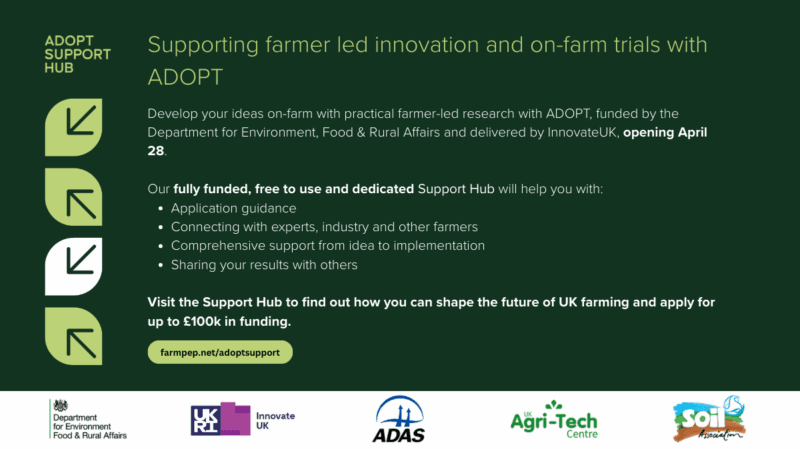
Farmers, growers and foresters in England can now apply for a new round of funding to help trial and test practical solutions to real on-farm challenges, with fully funded, free support from the ADOPT Support Hub. The ADOPT Fund – funded by DEFRA and delivered by Innovate UK – is designed to back farmer-led innovation. Whether it’s trialling a new technology or testing a change in practice, ADOPT offers the funding and support to make it happen. What’s on offer? There are two types of grants available: Support grants (up to £2,500): These help applicants explore their idea and work with a project facilitator to shape a strong proposal. Full grants (up to £100,000): To support farmer-led, collaborative research and innovation projects over 6 months to 24 months. Why this matters The ADOPT Fund is different from previous innovation funding. It’s farmer-led, but collaborative – bringing in others like advisers, researchers, tech providers and other like-minded farmers to help turn your idea into something ready to be adopted more widely in the agricultural community. It’s also focused on practical impact, not just theory. That means funding is aimed at real-world challenges, everyday technology, practices and ideas that aren’t yet widely adopted but could make a difference. You’re not expected to go it alone We understand that most farmers haven’t applied for this kind of funding before. That’s why the ADOPT Support Hub is launching alongside the fund. The Support Hub is fully funded and free to use, providing you with the guidance, resources and connections you need at every step. The Support Hub is here to help you: Whether you’re just exploring an idea or ready to apply, the Support Hub provides the guidance, resources and connections to support you at every step. What is a Project Facilitator? All projects applying for ADOPT competitions must include a Project Facilitator to support project delivery and management. Project facilitators are independent experts who play a required and central role in all ADOPT-funded projects. They bring experience in farmer-led research, Innovate UK grant processes and project management. The ADOPT Support Hub can guide you on how to connect with a suitable registered facilitator – or help you understand how to work with someone you already know, as long as they meet the criteria. We want to hear from you We’re actively encouraging applications across the full spectrum of farming types, regions and communities. Whether you’re a grower, forester, livestock farmer, arable producer or part of a local farming group – we want to hear your ideas, challenges and opportunities. If you’ve got a hunch that something could be improved on-farm, this is your chance to try it with support.     Interested in becoming a Project Facilitator? For information, visit the Facilitator FAQ’s on the Business Connect site.

Read More »

Collaboration key to agri-tech growth and adoption, Minister Daniel Zeichner hears

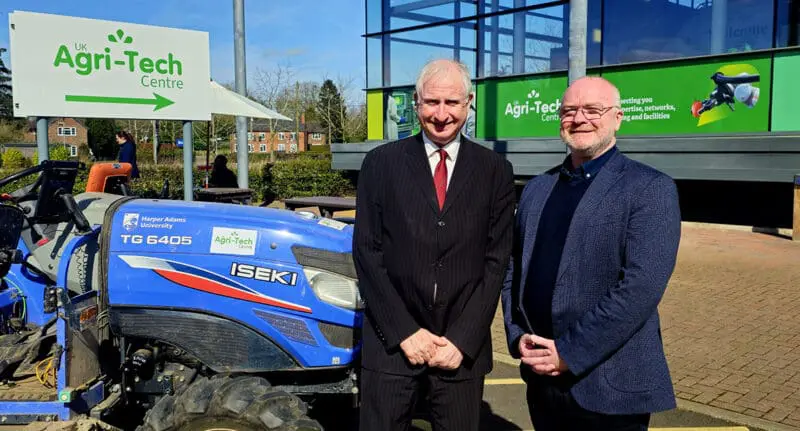
DEFRA Minister Daniel Zeichner toured Harper Adams University’s campus with The Institute for Agriculture and Horticulture (TIAH) and the UK Agri-Tech Centre to explore how education, research and technology development are shaping the future of the agri-food industry. The Minister of State’s itinerary included a stop at the Future Farm, designed to integrate research and teaching priorities, followed by a visit to the UK Agri-Tech Centre’s Midlands Innovation Hub. There, he engaged with businesses leveraging cutting-edge facilities to refine and scale their technologies. Following the tour, the Minister joined a working lunch with hosts and students, where discussions focused on key priorities such as agricultural R&D, skills development, education needs, the land use framework and broader agricultural policy within the UK.     Dr. Peter Quinn, Chairman of the UK Agri-Tech Centre, said: “As the UK’s largest agri-tech-focused organisation, our mission is to fuel business growth and fast-track the adoption of agri-tech solutions that generate real-world impact. We champion a thriving community of forward-thinking agri-tech businesses and take pride in contributing to their achievements. It was a pleasure to introduce Minister Zeichner to companies like UPP, which is addressing labour shortages in broccoli harvesting, developing alternative protein products and creating new revenue opportunities by repurposing agricultural waste.”   Tess Howe, Head of Partnerships and Policy at TIAH, added: “As agriculture encounters evolving challenges and new technologies, it is vital that farmers and growers acquire the skills necessary to stay resilient and innovative. Our upcoming Labour Market Information research underscores the critical competencies required for investing in and implementing technological advancements that will enhance business resilience and sector-wide growth. Through effective collaboration, we can create an environment of knowledge-sharing that bridges skill gaps and equips all farmers and growers with the tools to succeed.”   Professor Ken Sloan, Vice-Chancellor of Harper Adams University, said: “In my discussions with the Minister in Westminster, I stressed the crucial role that collaboration with external partners plays in the success of specialist institutions like Harper Adams. We were therefore pleased to welcome him to our University, alongside our colleagues from TIAH and the UK Agri-Tech Centre, to highlight the strength of these relationships. His visit provided an opportunity to showcase our Future Farm, introduce him to our faculty and students and present some of our numerous research initiatives.”   If you would like to learn more about Minister Daniel Zeichner’s visit or understand more about the work being done in the agri-food sector, get in touch via [email protected]  
Read More »