
Home » Our News & Insights » Farming Smarter: A year with Rob & Jeremy
Real farms. Real problems and solutions. Real change.
In Farming Smarter, we follow Rob Addicott and Jeremy Padfield through a year of decisions on real fields in Somerset. Watch as the two farmers tackle weather-beaten soils, rising input costs and shifting policy with sustainable practices and practical agri-tech solutions.
Across five episodes, see how multispecies covers, precision nutrition, automated weighing, AI biodiversity listening and smart water management help them cut fertiliser and chemical use, protect streams and improve animal health while staying commercially resilient.
This series looks at the choices, trade-offs and data behind smart farming and how the UK Agri-Tech Centre helps innovators and farmers test, trial and scale solutions that work in the real world.
Rob and Jeremy have been farming side by side for over 20 years, ever since both families exited dairying in the early 2000s. What started with sharing a piece of machinery has grown into a full partnership across more than 1,500 acres. They share equipment, staff and knowledge and collaborate on everything from crop planning to water management.
Their joint approach allows them to scale up regenerative practices, trial new technologies and manage risk more effectively. Whether it’s installing sediment traps to protect village roads, fencing streams to improve water quality or benchmarking soil health across new land, they work as a team, balancing productivity with environmental care.
Together, they’ve built a model that blends tradition with innovation, showing that farming can be profitable, resilient and good for the planet.
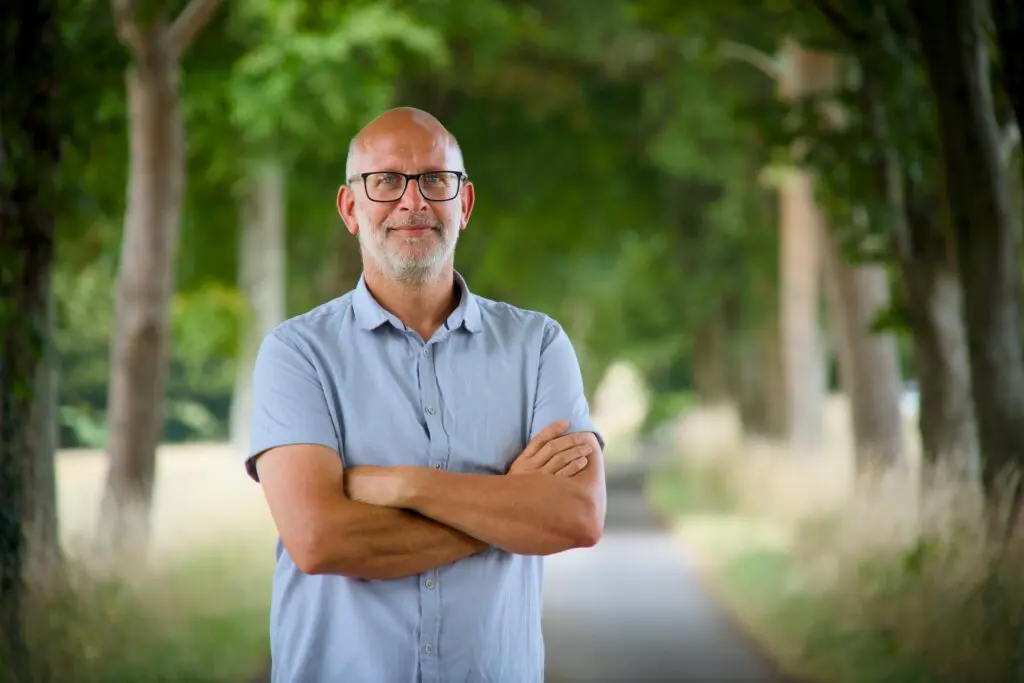
Rob farms 580 acres at Manor Farm in Somerset, where he’s building a mixed enterprise that combines arable cropping, grass margins and a growing sheep operation. His approach is rooted in regenerative agriculture, using direct drilling, long crop rotations and soil health monitoring to reduce chemical inputs and improve biodiversity.
Rob is expanding his flock with the aim of streamlining labour and improving welfare through automated weighing and digital tracking systems.
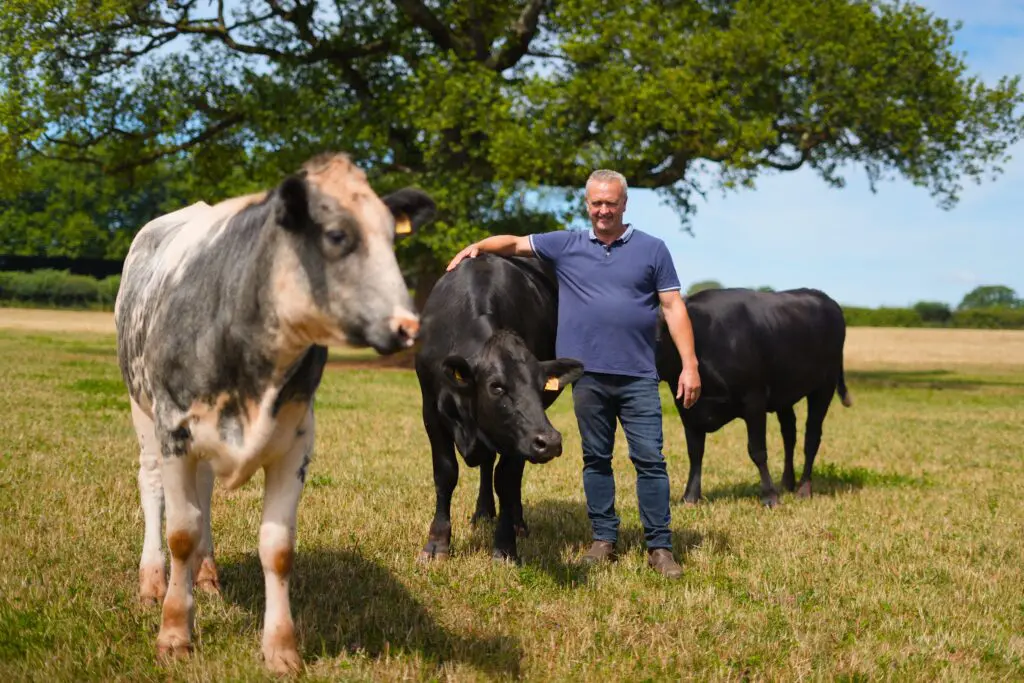
Jeremy manages 650 acres at Church Farm, just down the road from Rob. His focus is on finishing beef cattle, using homegrown feed and rotational grazing to build soil health and reduce external inputs. He integrates livestock into arable rotations, trials cover crops and herbal leys and supports biodiversity through habitat creation and stewardship schemes.
Jeremy’s farm is a mix of practical innovation and quiet care. He uses real-time monitoring to track cattle growth and health and has adopted technologies that reduce stress on animals while improving productivity.
Rob and Jeremy take on a new block of land in Somerset that’s been left compacted, waterlogged and biologically depleted. With flooding risks rising and nutrients washing away, they begin restoring the soil using multi-species cover crops, longer rotations and low-disturbance practices.
This episode highlights early signs of recovery and a clear shift toward farming that works with the land, not against it.
Animal health is front and centre as Jeremy integrates automated weighing and EID tags into his beef system, helping spot issues early and reduce stress. Rob faces a tougher challenge: a resilient parasite in his sheep flock that forces difficult decisions about treatment, land use and welfare.
The episode explores how data and diagnostics support better outcomes, but also how farming demands emotional resilience.
After an autumn of record rainfall, Rob and Jeremy confront runoff, blocked drains and nutrient loss. They install fencing to protect streams, harvest rainwater for reuse, and work with a water expert to test nitrate and phosphate levels. From sediment traps to drainage fixes, they show how small interventions can make a big difference.
This episode highlights the role of farmers as custodians, balancing productivity with responsibility to neighbours, catchments and ecosystems.
Biodiversity is an essential part of the farm’s resilience. Rob and Jeremy install AI bird listening devices, plant pollinator strips and manage species-rich grasslands to support wildlife. The data reveals dozens of bird species, including red-list birds and even helps with refinancing. But biodiversity also brings trade-offs: resistant weeds like black grass challenge their commitment to low-chemical systems.
The episode shows how farmers blend nature-based solutions with targeted interventions, always learning and adapting.
What does the future of farming look like?
As the year closes, Rob and Jeremy reflect on progress. Emissions are down 33%, soil health is improving, and new rotations offer resilience. They baseline carbon for future credits and trial woodland restoration using pigs. The episode also introduces the next generation. It’s a story of optimism grounded in reality: smart farming means making informed choices, investing in people, and building systems that can weather what’s ahead.