Archives: News & Insights

The tech transforming agriculture: Advanced Sensors with Chirrup

Trying to measure biodiversity across a working farm hasn’t been easy. We know it matters and we know it needs to be done, but getting data that’s consistent, affordable and scalable has been a long-standing challenge. That’s finally starting to change. Chirrup.ai, a UK startup turning bird acoustics into biodiversity insights, is showing how that barrier can be removed. Their work highlights how low-cost, scalable sensors can transform a long-standing measurement challenge into something practical, credible and ready for nature-positive farming. Chirrup is proving how sensor innovation can finally make biodiversity accessible, giving farmers and supply chains the clarity they’ve been missing.   Why biodiversity needs a measurement breakthrough Across the agri-food system, new regulations are pushing companies to monitor and report on nature in their supply chains. The problem? Traditional ecological surveys are too expensive and too slow to work across 80,000+ UK farms, let alone global footprints. So, how do you measure nature at scale, without sending ecologists to every field? Birds might just be the answer. Birds provide a robust measurement metric for ecosystem health. Chirrup’s small, low-cost device records bird song and their AI model translates audio into biodiversity indicators linked to habitats, soil, water and more. A single run delivers insights no manual survey could match at scale.   Accelerating the product journey In 2024, Chirrup and the UK Agri-Tech Centre launched ‘ChirrupNano’, using birdsong as a key to unlocking the secrets of wildlife. When Chirrup joined forces with the Centre, their science was strong, but the technology needed maturing. Their device required upgrading, their AI needed validating and their interface still focused on birds rather than broader biodiversity. The Innovate UK–funded project delivered through the UK Agri-Tech Centre included: multi-site trials across the farm network farmer feedback on deployment data expertise from specialists project management for an 18-month timeline access to ornithologists and validation partners real-world testing beyond desktop design According to Managing Director Craig Hutchison, it was “a genuine game-changer.” “Working hand in hand with the UK Agri-Tech Centre allowed us to develop a biodiversity monitoring device and nature intel web-app that is both farmer-friendly and insightful. This, in turn, will allow food companies to support farmers in their nature restoration activities.”   The reality of building sensors for real farms Chirrup’s development path had its ups and downs. Early subcontractors caused delays and field deployment exposed practical issues such as hardware sensitivity near metal fences and the need for simpler farmer installation. Chirrup adapted by: bringing AI development entirely in-house partnering with University of Edinburgh on automated training expanding validation via multiple ornithologists creating rigorous device testing programmes redesigning the interface into a full biodiversity dashboard The outcome? A validated, IP-ready device and AI model now commercially deployable.   What this unlocks for farmers and supply chains Chirrup sells primarily to supply chain intermediaries including processors, buyers and retailers, who can deploy monitoring across hundreds of farms. The technology enables: Scale: biodiversity data across full supply chains Alignment: simple, low-effort evidence for farmers that fits into daily operations Value: nature metrics that inform decisions Farmers gain clear, practical ecological indicators. Biodiversity matters deeply to them; in fact 80% are concerned about nature on their land, more than those prioritising carbon.   A turning point for nature-tech innovation Chirrup’s journey shows what it takes to make biodiversity monitoring routine: low-cost, high-scale sensors validation on real farms farmer-centred design intermediaries driving adoption support structures that de-risk innovation   Moving further, faster with less risk The UK Agri-Tech Centre supports agri-tech businesses accelerate their journey. By giving businesses access to farms, data, expertise and networks, we help turn emerging technologies into market-ready tools. What could your technology achieve with the right support? To get involved with the UK Agri-Tech Centre, contact [email protected].

Read More »

Agri-tech in action: A March round up

From industry insights to supporting businesses to develop cutting-edge innovation across AI, robotics and automation and CEA, to thought-provoking conversations at events, we share our must-read round-up to keep you ahead of what’s shaping the sector.    Global Growth Accelerator – unlock international growth The Global Growth Accelerator unlocks global market access for UK agri-tech companies by co-creating in-country pilot projects with real end users. Delivered in collaboration with Agnition Ventures and AgriTech New Zealand, the programme is designed to fast-track UK agri-tech ventures by validating technologies for dairy and livestock in New Zealand’s innovation-driven farming systems. If you’re an agri-tech business looking to scale internationally and operate in the following areas:   Biosecurity, animal health and traceability  Farm system productivity  Climate volatility, drought and water security  Environmental compliance and nutrient efficiency  GGA can help you unlock your next phase of business growth.    Regstrations close 10 April – don’t miss out!   What it takes to turn innovation into impact Turning innovation into real on-farm impact takes more than a good idea, it relies on trust, practicality and a deep understanding of farming systems. During Growth Week, Dr Kaler Professor of Epidemiology and Precision Livestock Informatics at the University of Nottingham shared three challenges that continue to shape how agri-tech businesses succeed in the real world.   Her insights underline why grounding innovation in real farming systems is so important, and why understanding farmers’ perspectives from the outset can make the difference between adoption and abandonment.  Read more and watch the video   Meet FASTA innovators The first FASTA innovator cohort met at the Carbon Trust’s London office for a milestone moment, the official start of their FASTA journey. For many, it was the first opportunity to connect with fellow innovators and with leaders from retail, finance and agriculture who shape the realities of the agri‑food system.  Each business in the cohort is addressing some of agriculture’s toughest challenges through next‑generation Measurement, Reporting and Verification (MRV) technologies. From improving soil data accuracy to reducing emissions and strengthening supply‑chain traceability, these innovators are developing solutions designed to bring clarity, confidence and scalability to the sector. Together, they bring the creativity, ambition and practical solutions needed to accelerate progress.  In the months ahead, the cohort will refine and scale their technologies with hands‑on support, access to facilities and expert guidance from the UK Agri‑Tech Centre, the Carbon Trust and FASTA partners.  Meet the cohort      What does ‘fit for farms’ really mean? Agri-tech only succeeds when it’s reliable, affordable and genuinely helpful on farm. We sat down with Somerset farmers Rob Addicott and Jeremy Padfield, along with Dr Annie Rayner from FAI Farms, for an open conversation about what it truly takes to make agri-tech work in the field.  Curious about what ‘fit for farm’ really means? Their answers were immediate and practical, grounded in relevance, reliability and a user-centred design. For agri-tech businesses, the message was clear – get on farm early, spend time with end-users and involve farmers from the beginning.   Learn more about how to ensure your tech is fit for farms   If you’re building something with real potential and want to make sure it works where it matters most, we’d love to hear from you. Get in touch at [email protected]

Read More »

Northern CEA Symposium: From Research Insight to Commercial Reality

By Harry Langford, Innovation Director at the UK Agri-Tech Centre, who shares his thoughts on the event. The Northern CEA Symposium brought together growers, researchers, technologists and agri-tech businesses in Sheffield with a shared focus on turning innovation in controlled environment agriculture into solutions for commercial growers.  Across the day, presentations explored practical challenges facing the sector, from nutrient efficiency and water use to substrates, sensing and circular inputs. The emphasis was consistently on application, including how technologies might reduce costs, improve control, and operate reliably in real production environments.  New approaches to sensing and monitoring were discussed as a way to give operators clearer, faster feedback on crop performance, helping them make decisions with greater confidence. Substrate innovation also featured, reflecting growing pressure to move beyond traditional materials while maintaining consistency at scale. Alongside this, approaches to reduce the energy footprint of CEA were tabled and their economics explored.  What stood out was the openness of the community, with speakers acknowledging the need for further testing, integration and validation, reinforcing the importance of environments where technologies can be trialled under realistic conditions and assessed against commercial priorities.    Our involvement The UK Agri-Tech Centre took part in the symposium, organised by UK Urban AgriTech and the University of Sheffield, to share how we support CEA innovation through test, trial and demonstration and how our new Greenhouse to Global programme is supporting innovative CEA technologies to scale.  Too often, promising technologies struggle to move beyond pilot scale because they lack credible, independent evidence of performance in commercially representative environments. We outlined how our programme supports SMEs working across sensing, substrates, lighting and control and how we are testing these technologies together to produce commercial case studies for specific industry use cases.    The companies we spotlighted Through the ACDC spinach production case study, we showcased how Ostara, Fotenix and Vertically Urban are working together to address core challenges in vertical farming: consistent quality, reduced energy use and reduced labour costs. The case study collectively illustrates how integrated control, crop monitoring and tuneable lighting can support more responsive, dataled growing decisions, saving 25% in energy use.  We also featured GyroPlant and its substrate-free approach, overviewing the work that we have done with them on both leafy green production and strawberry propagation, to reduce the reliance on unsustainable substrates whilst maintaining performance at commercial scale.   Throughout the day, the research and development presented demonstrated how collaboration can help CEA innovation progress from early ideas into solutions that can be adopted across the sector.  Alongside the technical discussions, UK Urban AgriTech also used the symposium to float a thought-provoking idea: the potential for a cross-CEA umbrella organisation that better represents the full breadth of controlled environment production in the UK. The concept was framed around bringing together sectors, from crops to mushrooms, insects and seaweed, to improve knowledge transfer and engage more proactively with policy development. Again, this reiterates the importance of the sector working together to maximise the potential of CEA in the UK.  If you would like to work with the UK Agri-Tech Centre, get in touch at [email protected]

Read More »

How the agri-tech industry is helping to build water resilience for the future

The UK Agri-Tech Centre has worked with agri-tech businesses to test and trial their technologies to address the challenges of water quality and management on-farm and across the agri-industry. Safe water production and protection are closely tied to soil health, which in turn underpins our food and energy systems. The UK Agri-Tech Centre has collaborated with a range of innovative partners on projects that address this challenge directly. Below are three initiatives working to safeguard and sustain safe water:   STREAMS (Space Tech for River Environments & Agricultural Monitoring Sensors) Diffuse nutrient pollution remains one of the most significant pressures facing Welsh waterways, with well-known rivers such as the Teifi repeatedly falling short of phosphate standards. These pressures have lasting consequences for our landscapes, affecting biodiversity, land use and the long-term resilience of rural communities. Real-time water quality monitoring has the potential to speed up mitigation efforts, yet traditional sensors often carry prohibitive costs, and many rural locations lack the reliable connectivity required for automated data transfer. As a result, manual water sampling remains commonplace, which can miss short-term pollution spikes and delay timely intervention. The Innovate UK-funded STREAMS project aims to overcome these challenges, by making water-quality monitoring more affordable, reliable and continuous, even in the most remote areas of rural Wales. Project lead, Lacuna Space, is working with Aberystwyth University and the UK Agri-Tech Centre to combine three core innovations: A low-cost multiparameter sensor capable of measuring nitrates, phosphates, dissolved oxygen, pH and other key indicators of river health Lacuna’s LoneWhisper® satellite-IoT Technology, enabling sensors to transmit data without the need for network connectivity A bilingual Welsh–English dashboard, co-designed with end users, delivering clear, real-time insights for farmers, land managers, community groups and environmental professionals Working alongside local authorities, environmental regulators, regional communities and land users, the project will host bilingual workshops and engagement events to co-develop tools, evaluate sensor performance, refine the dashboard and ensure STREAMS delivers tangible value in practice. While STREAMS is grounded in Wales, the challenges it addresses are global: many water challenges are due to poor connectivity, making monitoring impossible. But Lacuna’s connectivity is making monitoring possible anywhere in the world and the team is already in conversation with partners as far afield as Brazil, exploring how the technology could support freshwater quality improvement on a global scale. By demonstrating the model locally first, Wales is establishing itself as a leader in satellite-enabled environmental monitoring and contributing to cleaner, healthier rivers for communities around the world. Interested in getting involved? Watch this space for updates on upcoming engagement events across the Ceredigion region.   NURSE (Nutrient Utilisation and Recovery through Supercritical Extraction) The NURSE project is led by a consortium including Kairos Carbon Limited (lead), Cranfield University, Royal Agricultural University and the UK Agri-Tech Centre, forming part of Defra’s Farming Innovation Programme, delivered in partnership with Innovate UK. The project seeks to develop an advanced hydrothermal technology for processing livestock waste — recovering the valuable nutrients it contains, producing a carbon-negative, non-leaching fertiliser, and separating carbon for permanent sequestration. The UK generates around 140 million tonnes of livestock waste each year, the majority of which is spread directly onto farmland. By stripping out carbon prior to land application, the project aims to deliver meaningful emissions reductions. Currently, less than 50% of applied nutrients, such as phosphorus, are taken up by crops when livestock waste is used as fertiliser. At the same time, fertiliser costs for farmers continue to rise while key resources, including phosphorus, face long-term depletion. By developing a non-leaching fertiliser that enables greater nutrient uptake by plants, the project aims to help keep costs manageable for farmers while reducing resource waste. Equipping farmers with new tools to recover and reuse valuable nutrients while simultaneously reducing environmental impacts is central to the project’s mission. The technology delivers direct benefits by recovering critical materials from livestock waste in a concentrated form, for use as a low-leaching, sustainable fertiliser that can lower input costs and improve yields. It also enables more effective waste management and processing, the breakdown of organic pollutants, and the extraction of carbon for capture and storage all within an energy-neutral system. Kairos aims to reduce emissions from UK agriculture while preventing pollutants and nutrients from entering watercourses, and to tackle air pollution arising from livestock waste and other agricultural sources.   NTPlus2 The NTPlus and NTPlus2 projects are led by Agua DB, specialists in ion exchange technology, in collaboration with the UK Agri-Tech Centre. The goal is to develop a modular, integrated solution for recovering nutrients from wastewater and removing the technical barriers standing in the way of commercialisation. The NTPlus technology generates high-nitrate irrigation water, low-nitrate drinking water, and converts potash into sulphate of potash, boosting crop resilience against drought, stress, disease and pests. Agua DB’s approach targets the so-called ‘Nitrate Timebomb’ by capturing nitrates that would otherwise leach into aquifers, transforming them into a valuable input for farmers. This process enhances water quality while also supporting more efficient irrigation and greenhouse growing practices, making agriculture better equipped to withstand the effects of climate change. NTPlus2 builds on this foundation by extending the recovery process to include phosphates at wastewater treatment plants. It will also trial the novel application of plasma technology to break down persistent organics, including herbicides and pesticides, while generating additional green nitrate in the output. The project’s overarching aim is to optimise the recovery of nitrate and phosphate from wastewater treatment plants, improve sludge properties and produce a liquid fertiliser that will be demonstrated and validated through crop trials. This will support commercial adoption and integration into the liquid fertiliser supply chain. Rebecca Lewis, Head of Bid Development at the UK Agri-Tech Centre, said: “These projects show just some of the range of exciting innovations that are being developed to help deliver more resilient and healthy water systems.  Technology can play a key role in securing a sustainable water resource for farms, ecosystems and communities.” For more information about the UK Agri-Tech Centre and

Read More »

Test and trial your innovations at South West Dairy Development Centre

Mike Jones is the Dairy Technical Manager at the UK Agri-Tech Centre’s South West Dairy Development Centre (SWDDC) in Somerset and he is known for his passion of the industry, as well as his care and appreciation of dairy cows. His role is to manage the state-of-the-art facility in Shepton Mallet, where he welcomes visitors from all over the world who come to see the various innovations the UK Agri-Tech Centre has to offer by way of test, trial and demonstrate, as well as research and development. In addition to his work in the facility, Mike is also an active member of the South & Wiltshire Holstein Club where they host the Winter Herd Competition. This year, Mike and a representative from Steanbow Farm, who owns the cows at Beard Hill Dairy, attended the competition where they won the Best Milking Heifer trophy with their exceptional young cow, Willsbro Hullabaloo Aferyn 5222 (or “Hullabaloo”). Hullabaloo’s success this winter follows a strong show season last year, where she impressed judges to secure Reserve Champion at the Mid Somerset Show. According to Mike, Hullabaloo has become a firm favourite within the herd. He said: “She’s a standout heifer with tremendous style and promise. Hullabaloo calved in May last year and is currently projected to produce 11,500 litres at 4.2% butterfat and 3.0% protein, marking her as a high‑performing young cow with a bright future. She is due to calve again in June.” This latest win highlights both the genetic quality and the dedicated management at Steanbow Farm and Beard Hill Dairy, reinforcing their reputation as leading producers within the region’s Holstein community.   Mike continued: “One of the things we’re most excited about is that the herd is not only housed in a modern facility, but that it is a commercially run herd, owned and managed by Steanbow Farms. It is important that we can conduct groundbreaking projects and at the same time have a herd that is relatable to the current dairy industry in the UK. Sustainable milk production is a key factor and currently the herd is producing 4000L of production from forage, with a herd average of 12,000L per cow. During the summer months last year, monitoring potential heat stress was a major factor. However, the barn is open sided to allow good airflow, and with the introduction of fans to increase airflow from the start of the summer, the different data points gained from each cow, plus the environment in the barn, has helped demonstrate what the cows prefer and how possible heat stress affects each cow. I am often heard saying that our building can be compared to a cruise liner for dairy cows because our meeting room has the best view, looking out on a calm, contented herd.”   This calm, high-welfare environment enables agri-tech companies to trial robotics, digital tools and precision systems under commercial, yet controlled, conditions. The centre features: Automated milking and feeding systems The ability for dry cows to be grazed throughout summer months with precision grazing practices The UK’s first fabric‑roofed dairy building An observational meeting space overlooking the herd Relocated robotic units for improved operational efficiency Current and recent projects include robotic milking advances, chemical‑free milking trials, hoof health monitoring, grassland modelling, sensor integration and immunity research   Mike added: “The cows choose themselves when they visit the robots we have onsite and are diverted four times a week to file through the HoofCount Pedivue Footbath, which helps to prevent hoof diseases. When each cow exits the footbath an image is captured of her feet, with Artificial Intelligence determining if any of her heels have a Digital Dermatitis lesion. The foot bath replenishes itself every 150 cows.” Home to a 200‑cow, all‑year‑round calving herd, the centre gathers industry‑leading levels of individual animal data, creating a uniquely rich environment for testing new technologies, validating performance and understanding their impact on productivity, cow health and welfare. The SWDDC is used to: Test and trial innovations in a commercial dairy environment Generate high‑quality data for product validation and research Demonstrate technologies to farmers, investors and industry groups Collaborate on innovation projects with expert technical support   Mike has such determination and enthusiasm for his work and this is demonstrated by the many appearances he has made in the media. Whether it’s as a writer for the Mole Valley Farmers magazine, where he spoke about the silent revolution in dairy farming, or hosting a tour of the facility to the Wells and Glastonbury Young Farmers Club, where they learned about what the UK Agri-Tech Centre does at the site and what the future holds for the industry. And most recently, Mike has again appeared on the popular ‘ChewintheCud’ podcast, a session which was hosted live at the SWDDC and called ‘From Cows to Code: AI in the Dairy Industry’. We really do mean business when it comes to agri-tech and our expert staff are on hand to talk to you about your farming innovations.   To get involved or discuss trial opportunities at the SWDDC, contact Dairy Technical Manager Mike Jones at [email protected] or for general information email [email protected]

Read More »

UK Agri Tech Centre perspectives on AI integration across the protein supply chain

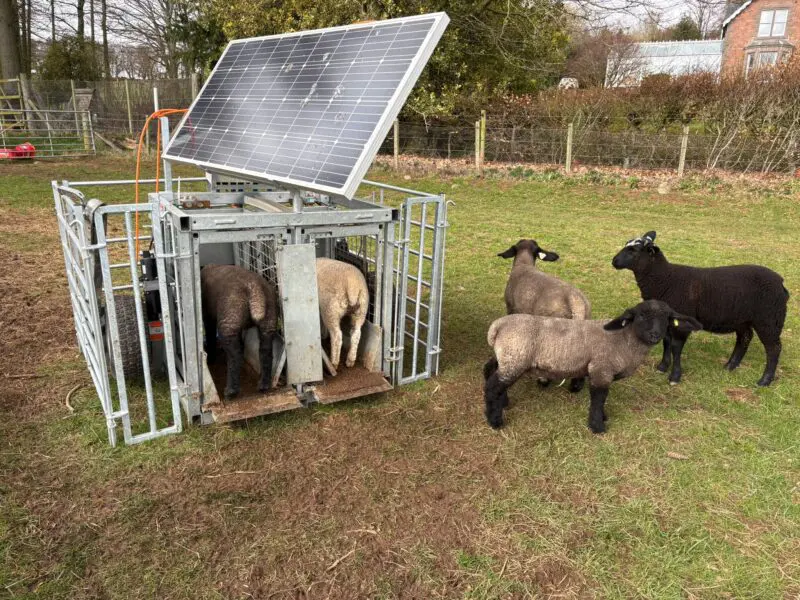
Expert views from Dr Bethan John, Innovation Associate- Animal Health, who attended the event. The UK Agri‑Tech Centre played a key role at this week’s industry forum exploring how artificial intelligence is reshaping the protein supply chain. CEO Steve McLean joined a panel of leading specialists including Professor Jonathan Statham, Dr Matt Dobbs, and David Speller to assess the maturity of AI adoption across livestock and poultry systems, and to explore the infrastructure required to unlock next‑generation decision intelligence. The discussion examined the structural pressures facing protein production, from labour shortages and welfare compliance to environmental constraints and supply chain volatility. Against this backdrop, the panel evaluated how AI‑enabled sensing, modelling and automation can help producers respond more effectively to these challenges. The UK Agri‑Tech Centre’s contribution reinforced its position as a key integrator of applied research, commercial validation, and cross‑industry data innovation. When asked what will ultimately determine the success of AI‑driven technologies across the protein supply chain, Steve highlighted several interconnected factors: “For AI to deliver real impact, we first need to understand what affordable value looks like and who ultimately benefits. When the value created is a public good for example, the investment model needs to reflect that. Strong regulation around AI innovations shouldn’t slow innovation; it builds trust, gives confidence to the market, and ultimately makes it easier to export solutions internationally. At the UK Agri‑Tech Centre, our role is to work with agri-tech businesses, including those developing AI-driven solutions, throughout their commercialisation journey and support them to land with impact at scale.” A recurring technical challenge identified by the panel was the fragmentation of data across the protein value chain. Speakers emphasised that without interoperable data standards linking farm‑level data, processing‑line automation, and downstream demand signals, AI systems remain siloed and unable to deliver system‑wide optimisation. As an illustration of how the UK Agri‑Tech Centre is advancing AI‑enabled livestock management, the organisation has been working with Ritchie to develop in‑field weighing platforms that automate the capture of liveweight data. By reducing manual handling and lowering labour demands, these systems generate continuous, high‑resolution data streams that support: More accurate growth‑curve modelling Improved finishing predictions Better assessments of market readiness   To highlight broader innovation within the sector, the UK Agri‑Tech Centre is also co-delivering work on Flockwise, developed with FAI Farms, a scalable precision‑poultry technology. Building on the foundations of BirdBox, Flockwise combines low‑cost sensor networks with AI‑enabled analytics to deliver continuous insights on behaviour, welfare, and productivity in laying‑hen systems. Its modular, plug‑and‑play design reduces barriers to adoption and supports deployment across diverse production environments. Together, these capabilities show how AI‑driven monitoring can reduce forecasting uncertainty and improve synchronisation across the protein supply chain.   Future Outlook: Toward Integrated Decision Intelligence Looking ahead, AI within the protein sector is transitioning from discrete data‑capture tools toward integrated decision‑support systems capable of modelling biological, environmental, and operational complexity. A key emerging application is disease surveillance and risk management. While AI cannot yet predict disease outbreaks with certainty, it is increasingly enabling: Early detection of subtle behavioural or performance deviations Herd‑level anomaly detection Regional risk modelling incorporating weather, vector activity, and animal movement data   These capabilities support earlier intervention, reduced losses, and improved supply chain resilience. Beyond animal health, AI is advancing sustainable land management by integrating soil sensor data, satellite imagery, and hydrological datasets to model nutrient status, water‑use efficiency, and runoff risk. This enables more precise nutrient application, optimised grazing strategies, and reduced diffuse pollution, all of which underpin forage quality, livestock performance, and long‑term system stability. Collectively, these developments position the UK Agri‑Tech Centre as a central enabler of a more intelligent, interoperable, and resilient protein supply chain. If you have any questions or want to get involved with the UK Agri-Tech Centre, get in touch at [email protected].

Read More »

The tech transforming agriculture: AI & Data – Turning farm data into decisions

Agri‑tech businesses today face a defining moment: the sector is ready for AI‑powered tools, but only the solutions backed by robust field data, end-user trust and commercial proof will break through. Messium’s story shows how that breakthrough happens. As we mark UK Tech Week 2026, much of the national discussion focuses on how artificial intelligence can accelerate innovation and productivity. For farmers, this means looking for practical, trusted tools that help them make good decisions under pressure. The UK Agri‑Tech Centre provides support to agri-tech businesses who want to develop just those kinds of innovations, helping these businesses to commercialise their tested solutions. The journey of Messium, a company using hyperspectral satellite imagery and AI to guide nitrogen management, shows how this support translates into real‑world impact. It’s also a familiar challenge for many agri-tech businesses: strong science and a great concept, but the need to validate the effectiveness of their solution and to scale quickly, reliably and with the end-user at the core. When Messium joined the UK Agri‑Tech Centre Community, their technology already worked well in early trials, but it still needed to scale for use across real farms. Their sampling‑based nitrogen recommendations worked well, but they needed to shift to a satellite‑driven model suitable for commercial deployment. This is where agri-tech businesses often get stuck, not because the tech fails, but because it needs real farm data to mature.   Unlocking Messium’s next phase of growth To help accelerate Messium’s transition, the UK Agri‑Tech Centre provided multi‑site trials, expert data collection and direct farmer feedback. These activities allowed Messium to validate their AI models at pace while refining a farmer‑friendly interface. In practice, this meant faster testing with lower risk involving farmers at every stage. It also opened doors to key partners, including Frontier and the Centre’s robotics and AI specialists, helping position the technology for wider adoption.   Trials, data and measurable progress The first season of trials ran in 2025, an extremely dry year that constrained nitrogen application windows and limited the range of recommendations that could be validated. But despite the challenging conditions, the trials delivered the ground‑truth data Messium needed. Their technology progressed quickly: Nitrogen recommendations moved from early testing to use on working farms Satellite models reached >85% accuracy compared to lab samples An interface farmers could easily use was co-developed with the UK Agri‑Tech Centre network These are the signals investors and partners look for: performance in the field, not just in a lab, and a product farmers can actually use. For farmers involved in the trials, the technology offered something increasingly valuable: timely, evidence‑based nitrogen decisions without relying on labour‑intensive sampling. Even in a constrained season, it provided clarity at moments when application windows were exceptionally tight.   Driving commercial readiness and expansion This technical progress helped Messium secure a £3.3 million investment round, expand their engineering and operations teams and build the commercial partnerships they needed to scale. Strong field data and farmer feedback don’t just improve the product, they unlock investment. Messium are now working with Frontier to onboard 30–60 more UK farmers, and Hutchinson’s agronomists have committed to bringing 100 farmers into the programme. That means more fields, more seasons and faster learning, the foundation for reliable scale‑up. Additional collaborations are emerging with organisations such as Hutchinsons, Syngenta, Bayer, Mondelez and Weetabix. Messium have also been recognised by the European Space Agency as the UK/EU champion for agricultural hyperspectral imaging, credibility they say was strengthened through their consortium, including the UK Agri‑Tech Centre. What began as a UK-led development journey is now shaping nitrogen decisions globally. Internationally, Messium now operates across France, Australia, New Zealand and North America, with further trial expansion planned for 2026.   What this means for agri-tech businesses Messium’s experience highlights what many AI-focused agri-tech businesses need but often struggle to access: High‑quality, multi‑site field data to train and validate models A farmer network to ensure products meet real operational needs Technical expertise to manage data quality, interoperability and trial design Credibility and visibility when seeking investment or building partnerships The UK Agri-Tech Centre supports agri-tech businesses to move further, faster with less risk. By giving agri-tech businesses access to farms, data, expertise and networks, we help turn emerging technologies into market‑ready tools.   Making AI an everyday farming tool For Messium, the next stage is all about scaling responsibly. They are refining their recommendations engine to allow farmers to choose between profit‑optimised and environmentally‑optimised guidance. They are onboarding additional satellite providers for greater resilience. And, through the UK Agri‑Tech Centre, they are beginning to expand into new crops, including barley, with future potential in oilseed rape and maize. More crops mean more value across the rotation. Ultimately their aim is to make AI‑powered nitrogen management a reliable, disruptive and globally scalable solution. This UK Tech Week, Messium’s journey shows how AI in agriculture is no longer experimental. This is one example among many. With the right support, more agri-tech businesses can turn proven ideas into practical tools farmers rely on every day. What could your technology achieve? To get involved with the UK Agri-Tech Centre, get in touch at [email protected].

Read More »

How UK agri-tech businesses can scale globally: Lessons from Australasia

Growing an agri-tech business overseas takes more than a strong product. It requires market insight, trusted partnerships and the ability to demonstrate value in unfamiliar farming systems. On day four of our UK Agri-Tech Centre Growth Week, we explored what it takes to enter and succeed in international markets, focusing on Australia and New Zealand. Drawing on insights from AgriTech New Zealand, Agnition Ventures, UK Government trade teams and real-world experiences from UK agri-tech businesses, we unpacked how to navigate new ecosystems, build credibility and accelerate adoption abroad. We have recently launched the Global Growth Accelerator (GGA), a new programme designed to give UK businesses exactly this kind of support. Registrations are now open for businesses interested in getting involved in New Zealand’s dairy and livestock systems.   Start with deep market understanding Both Australia and New Zealand present major opportunities for UK agri‑tech: sophisticated farming systems, ambitious sustainability goals and high demand for practical, scalable innovation. But as our speakers emphasised, they are not the same as the UK. In New Zealand, agriculture is pasture-based, seasonal and subsidy-free. Farmers are commercially driven and highly pragmatic. As Wilson Wang of Agnition Ventures explained, “farmers often expect a 3:1 return on investment and they want proof.” In Australia, vast distances and state-level regulatory differences mean market entry requires careful targeting. As AgriTech NZ’s Brendan O’Connell noted, “if it can grow on the planet, it can grow in New Zealand, but you still need to understand the local system you’re entering.”   What this means for UK innovators Don’t assume your home-market use case translates directly Shape your proposition to local farming methods, climatic conditions and regulations Expect to provide clear ROI, verified locally Build extra time into your plan   Work through trusted local partners One message came through repeatedly: credibility flows through trusted networks. Farmers in Australasia rely heavily on advisers, co-operatives and industry bodies. Agnition Ventures (Ravensdown’s innovation arm) outlined how their Farm Innovation Network acts as a bridge between innovators and early-adopter farmers, providing real-world trials, feedback loops and in-market validation. This type of local partnership is invaluable for reducing risk and accelerating trust. UK Government teams in Australia and New Zealand also play a major role, from connecting innovators with regulators to providing diplomatic platforms for launches, networking and profile-building. Leverage the networks that already exist: farmer groups, co-operatives, innovation hubs, research organisations and UK trade specialists. They open doors that cold outreach never will.   Demonstrate value in real farming conditions Whether it’s emissions reduction, productivity gains, water management or animal health, Australasia’s priorities mirror global trends, but the solutions must prove themselves locally. Our speakers were clear: field trial data is the currency that unlocks adoption. UK companies shared this first-hand from experience with a past project in Bahrain with relevance to the Australasia market: Ostara retrofitted a greenhouse with advanced environmental and irrigation automation, demonstrating how precision control reduces water use while boosting yields. PolySolar installed flexible solar panels on polytunnels, powering on-farm automation while increasing crop productivity — a critical gain in high-temperature climates. Zayndu deployed its seed-priming system to accelerate germination and improve crop resilience, then brought farmers in to see the results firsthand. These examples show the same pattern: test, trial, demonstrate — then scale.   Key takeaways for global scaling Adapt your value proposition to local farming systems, economics and regulations Build credibility through partners Prove your impact with in‑market trials and real‑world data Be patient and realistic Use the support available from the UK Agri-Tech Centre, Innovate UK and UK Government teams   How the UK Agri-Tech Centre helps you go global To help UK agri-tech businesses build this evidence and enter new markets with confidence, we’ve launched the Global Growth Accelerator (GGA). Applications are now open for our New Zealand programme, built to fast-track technologies for dairy and livestock systems by validating them in New Zealand’s innovation-driven farming ecosystem. Delivered with Agnition Ventures (Ravensdown) and AgriTech NZ, the programme provides structured, in‑market support including: early adopter farms farmer feedback loops third‑party validation access to strategic partners and investors We’re seeking technologies that address: biosecurity, animal health and traceability farm system productivity climate volatility, drought and water security or environmental compliance and nutrient efficiency. Are you ready to go global with your agri-tech innovation? Get in touch today at [email protected]. Find out more and apply to GGA now.

Read More »

What will help agri-tech innovators accelerate the pathway to a sustainable and resilient agri-food sector?

Agriculture sits at the centre of major climate and economic pressures. Farmers are being asked to produce more with fewer emissions, while innovators race to develop technologies that can unlock a more resilient, productive and climate-positive future. The challenge is not a lack of ideas, but how to scale the right ones in real farm systems, supply chains and regulatory environments.  FASTA exists to help close that gap. Delivered by the UK Agri-Tech Centre in partnership with the Carbon Trust, FASTA supports agri-tech solutions that enable Net Zero agriculture. Its first focus is Measurement, Reporting and Verification (MRV), the insight needed to reward improvement, direct investment and give the sector confidence in its climate progress.  The recent FASTA launch event brought together the first cohort of MRV innovators with industry partners, retailers, banks, insurers and producers. The centrepiece of the event was a panel discussion featuring Joseph McDonnell from IGD, Megan Powell from ASDA and Carolien Samson from Oxbury Bank, chaired by Paddy Tarbuck from the UK Agri-Tech Centre. Together, they offered a candid view of what is slowing progress, what is gaining momentum and where collaboration should be prioritised.   Below is a distilled, action-ready summary of the key insights from the panel for agri-tech businesses and innovators.  The big challenges and the opportunities behind them  The panel was clear: MRV is not failing, it is evolving. And like any emerging market, there are practical challenges that innovators now have a real opportunity to solve.  While the need for better measurement has never been greater, today’s MRV tools are often too costly, fragmented or inconsistent to scale effectively. But these barriers are also the areas where innovation can have the biggest impact.  MRV needs to be:  Capable of operating at scale  Simple and low-burden for farmers  Deliver outputs that regulators and finance can trust  Produced in formats that can feed decision-making models and risk assessments    Crucially, these gaps are not dead ends — they are design briefs for the next wave of agri-tech innovation.    What is holding back MRV adoption? Cost and risk in the supply chain For retailers and processors, MRV remains expensive, especially in sectors such as beef, where the supply chain is highly fragmented.   Costs risk being passed to consumers  Retailers fear duplication of effort  Animals often move through several farms, complicating data capture   Data infrastructure is not fit for purpose Speakers highlighted national gaps, including:  Lack of harmonised greenhouse gas accounting  Inconsistent data formats  Little interoperability between systems  Unclear technical regulations for carbon removals      Trust and data ownership  Farmers increasingly see their data as a commodity. Yet today:  Value often flows elsewhere  Data is repeatedly requested in different formats  Farmers fear data could be used against them    Slow feedback loops for farmers  Farmers often wait a year or more for the impact of a change to show. This delays learning and slows uptake of new practices.  Real-time or in-season insights into soil condition, crop performance, or input optimisation were identified as essential for behavioural change.    What buyers need from agri-tech innovators FASTA innovators raised an important question:  How can startups succeed commercially in a market that encourages collaboration across retailers, banks and supply chain partners? With multiple potential buyers and precompetitive expectations, how do young companies navigate this and still build a viable long-term business? Clear value propositions for the right buyer Procurement, risk and operations teams often hold the budget, not sustainability teams. Action: Identify the budget holder early and tailor your pitch to their specific operational or financial pressures. Evidence of return on investment — fast Farmers want solutions that improve yield, reduce inputs or increase resilience. Supply chain partners want consistent MRV data. Action: Innovators should speak in terms of profitability and practicality, not just sustainability. Certainty and longevity  Startups need clarity on emerging standards and stability from supply chain partners. Action: Show commitment to long-term alignment by mapping how your solution fits current and future standards. Build for real farm workflows, not idealised ones The most adoptable technologies are those that slot into existing routines with minimal effort. Action: Co-design with farmers and test early, reduce data entry and make your solution save time from day one. Design for interoperability from the start Closed systems slow adoption and frustrate both farmers and enterprise buyers. Action: build open APIs, align with emerging standards and integrate with common farm management platforms to reduce friction for farmers and supply chains. Map the buyer journey clearly Large organisations require clear business cases. Action: understand procurement cycles, budget triggers and the commercial pain point your solution solves.  FASTA’s role is to help them navigate this complexity and connect with decision-makers who can provide certainty.    Insights from the panel: What needs to happen next   A single national vision for MRV  Speakers called for shared technical frameworks, shared data infrastructure and a coordinated approach to a national baseline. Fragmentation is currently slowing everything.  Blended finance models  Several panellists also highlighted the need for a clearer public and private finance model to support national-scale progress.   The message to innovators was clear: solutions that quantify impact, unlock investment and show a credible return will gain traction faster. Public funding can help de-risk early adoption, but long-term scaling will depend on private investors seeing genuine commercial value.  Paying farmers for data  A clear consensus emerged: Farmers must be fairly compensated for the data that drives value elsewhere.  Collaboration across the supply chain  Shared farmers mean shared data needs, shared standards and shared responsibility for reducing friction.  MRV must support farm businesses  The defining question for any MRV tool:  Does it improve farm profitability?  Does it reduce risk or waste?  Does it open new revenue streams?    If not, adoption will stall.    The role FASTA will play These challenges reflect exactly why FASTA exists: to help innovators scale technologies and solutions that enable a more sustainable, productive and resilient UK agriculture sector.  FASTA is already:  Providing tailored mentorship from the Carbon Trust and industry specialists  Validating solutions through UK Agri-Tech Centre facilities  Connecting innovators with real commercial use cases  Enabling collaboration with FASTA partners, including banks, retailers and policymakers   FASTA is building the ecosystem needed to take agri-tech solutions from isolated pilots to nationwide adoption.   Conclusion: Momentum, clarity and shared purpose The FASTA launch event showed that the UK has the ideas, the intent and the innovation talent it needed for Net Zero agriculture. What has been missing is coordination, consistent data and aligned expectations. FASTA’s mission is simple and urgent: to accelerate the scaling of commercially viable and reliable agri-tech solutions that enable Net Zero agriculture.   Key takeaways for agri-tech innovators:  Collaborate early and often  Test directly with farmers  Integrate, do not isolate  Build evidence, not just features  Design for clear commercial value   

Read More »

What does ‘fit for farm’ really mean?

What agri-tech developers need to hear from the farmers who use their tools. Technology succeeds when it works reliably, affordably and without making someone’s job harder. That was the clear message that came out of day three of the UK Agri-Tech Centre Growth Week, where we sat down with Somerset farmers Rob Addicott and Jeremy Padfield, along with Dr Annie Rayner from FAI Farms, for an honest conversation about what it takes to make agri-tech work in the field. With decades of combined experience trialling, adopting and sometimes rejecting new tools across mixed farming systems, Rob and Jeremy offered the kind of perspective that no laboratory or product roadmap can replicate. Annie brought more than 20 years of scientific expertise and a deep understanding of regenerative systems to the conversation. Together, they gave us a vitally important discussion about what the industry too often misses.   Start with the farmer, not the technology When asked what ‘fit for farm’ means to them, the answers were immediate and practical. Relevance, said Rob. Technology that’s designed for the work being done on farm, not retrofitted from a research context. Reliability and affordability said Jeremy. User-centred design, said Annie. Tools shaped around the people and context they’re built for from the start. Rob captured a common frustration: “Often technology comes on the farm, and it’s been developed without thought for farmers and how they would use it. And obviously then people are going to be slow to take it up.” The key: Get on farm early Ask questions Involve another farmer As Rob put it, farmers will always listen to other farmers. If they know a peer has been part of developing a tool, it carries weight that no research paper or pitch deck can match.   The tech that sticks is the tech that disappears into the workflow When asked to name technology that had genuinely made a difference, Jeremy pointed to a cross-make vehicle telematics system that tracks all farm machinery in real time, now accessible via a phone app. It tells him where every trailer is during silage, tracks fuel efficiency and records jobs automatically, even when someone forgets to log them. Its strength isn’t the data. It’s the fact that nobody has to think about it; expecting all staff to manually log data is unrealistic. The technology that gets adopted is the kind that removes friction, not the kind that adds it. Rob echoed this principle through another example: automatic weighing platforms for beef cattle, positioned at their water drinkers. Animals are weighed multiple times a day without being run through a crush. Health alerts are flagged automatically, which gives farmers a level of daily insight that would previously have required significant time and stress for both the farmer and the animals.   The three questions every farmer asks When new technology lands on farm, Rob and Jeremy described a set of questions running through their minds: Will it actually work for us? Can we afford it and will it pay back? Can our team, not just the tech-savvy ones, actually use it? “In order for it to roll out on mainstream agriculture, it needs to be able to stack up financially”, Jeremy said. This is often where promising ideas stall because the business case hasn’t been thought through with the end user in mind. Rob looks for value beyond the financial: Does it add to soil health? Does it support animal welfare? Does it improve the quality of life for him and for his team? These concerns are central to whether technology is adopted at a time when farms face significant pressure.   The importance of interoperability One of the most consistent frustrations was interoperability, or the lack thereof. Jeremy described a drone system that could identify individual weeds in a field with real precision, potentially allowing just 10% of a field to be sprayed rather than the whole area. Environmentally and economically, it was the right tool, but the drone software couldn’t talk to the sprayer. When they approached the sprayer manufacturer, the company decided they wanted to build the mapping function themselves rather than collaborate and the opportunity was lost. Annie named a related issue from the supply chain side: data collected by different technologies often can’t be compared or shared across different parts of the supply chain, even when everyone is theoretically reporting on the same thing. The result is that farmers end up navigating multiple platforms, relearning systems with each new machine and managing data that can’t flow where it needs to go. Rob’s wish for the year ahead is a piece of software that allows different technologies to talk to each other. It’s a deceptively simple ask, and one the industry hasn’t yet managed to deliver at scale.   What good on-farm trials look like When the conversation turned to on-farm trials and demos, Rob, Jeremy and Annie were aligned: short trials don’t build confidence. A month or two of testing tells you very little about how something will perform across seasons, soil types and weather patterns. Regenerative approaches in particular need to be evaluated over 12 months or more. Demonstrations also need to span a variety of farm types. Farmers watching a demo need to be able to see themselves in it. If the trial is on a completely different scale or soil type, the lesson doesn’t travel, if the technology looks complicated to operate, people walk away before they’ve given it a chance.   Tools that help farmers thrive Rob shared a compelling example of what technology can achieve when it’s genuinely designed around farming needs. During a difficult autumn last year, they trialled a product to improve soil microbial activity alongside crop establishment. Where the product was used, establishment was noticeably better, and on the trial plots nitrogen input was reduced by around 65%. For Annie, positive animal welfare is one of the most promising and underexplored areas for agri-tech innovation. Rather than framing welfare as harm reduction, the

Read More »