Archives: News & Insights

How robotics and autonomous systems are transforming UK agriculture

Innovation in agriculture is being driven by robotics and automation, making farming more productive, sustainable and resilient. Yet, as these systems move from research to real-world deployment, the UK’s regulatory landscape remains complex and fragmented. That’s where ARRNet (the UK Agri-Robotics Regulatory Network) comes in. Launched earlier this year, ARRNet aims to bring clarity and confidence to the UK’s regulatory environment for agri-robotics. The project brings together expertise in robotics and agriculture to identify the knowledge gaps and put into place robust plans to develop standards, codes of practice and guidance to help developers and early adopters understand and navigate regulations, certification processes and ensure that systems are safe and reliable by design. Eliot Dixon, Head of Robotics and AI at the UK Agri-Tech Centre, said: “ARRNet is the latest phase in the work of the UK Agri-Tech Centre to support the development of robotics and automation in agriculture in the UK. The sector faces some significant challenges, but through collaborating on key shared issues such as regulations, testing and training, we can boost business growth together.” Phillip Ironside, Technology Network Manager, said: “Robotics, automation and AI are advancing at an unprecedented pace, set to transform agriculture like never before. If we want to harness these powerful tools, we need to keep safety, reliability, interoperability and efficiency at the heart of progress.”   About the ARRNet project Led by the UK Agri-Tech Centre, in collaboration with the University of Lincoln, Harper Adams University and the Manufacturing Technology Centre (MTC), ARRNet is a 12-month government-funded initiative. From developing robust testing frameworks to training developers, regulators and end users, ARRNet’s work aims to lower the barriers to commercialisation and accelerate the safe, scalable adoption of robotics across UK agriculture. By bringing together key players across academia, government and industry, the project builds on foundations laid by the RSIN Discovery Phase and the National Agri-Robotics Proving Ground study, aiming to establish a sustainable network for the future of agri-automation. Join the conversation – 4 December, MTC Coventry The upcoming ARRNet knowledge exchange event, “Bridging the gap: Automation challenges and opportunities in UK agriculture”, hosted at the MTC in Coventry, will bring together experts, developers and policymakers to explore the real-world challenges and opportunities of automation in agriculture. The event will present: The ARRNet project and a future agricultural robotics network Case studies in agricultural robotics Standards & policy towards agri-robotics Business justification for agri-robotics This ARRNet event is an opportunity to hear from leaders shaping the future of UK agri-robotics and to contribute to a growing network committed to sustainable innovation and growth. Register for the event.  

Read More »

Grow your own way with the UK Agri-Tech Centre: We mean business when it comes to agri-tech

The UK Agri-Tech Centre has launched a new campaign designed to spotlight trailblazing agri-tech companies that are reshaping the future of farming, accelerating innovation and contributing to economic growth across the sector. Titled ‘Grow Your Own Way; We Mean Business When it Comes to Agri-Tech’, the campaign highlights emerging technologies, including in robotics, AI, advanced sensing systems and Controlled Environment Agriculture (CEA) and demonstrates how the UK Agri-Tech Centre has helped enterprises to grow and scale. A central feature of the campaign is a dedicated Growth Week, scheduled for 2–6 February 2026, including a mix of virtual and face-to-face sessions intended to help businesses develop while tackling key barriers that limit progress within the agri-tech sector. Helen Brookes, Engagement Director at the UK Agri-Tech Centre, said: “We really do mean business when it comes to agri-tech. We support businesses and the sector to grow; while ensuring that these solutions have been trialled on-farm and are therefore robust and relevant to meet industry challenges. This campaign celebrates the ingenuity and ambition of those in agri-tech who are committed to creating a resilient and sustainable agricultural sector.” To date, the UK Agri-Tech Centre has engaged with more than 300 businesses, offering access to facilities, technical expertise, innovation hubs and a widespread farm network. This support has helped companies such as Upcycled Protein Power (UPP), Antler Bio and Fotenix advance technologies that contribute to more resilient production systems. UPP Freya is transforming horticulture by tackling labour shortages and reducing waste through automated broccoli harvesting and upcycling crop by-products. Its ISO 9001-certified Harvesta platform lowers emissions and boosts national food security by enabling valuable ingredients to be generated from side-streams. Antler Bio is driving gains in livestock performance with Epiherd, an AI-enabled decision support tool for dairy herds that offers practical, data-driven recommendations. Fotenix is expanding the deployment of its AI crop-diagnostics technology, supporting in-field use and broadening trials across a wider range of indoor environments. Look out for more announcements in the new year about our grow your own way campaign and how the UK Agri-Tech Centre will be helping innovators to scale and succeed.

Read More »

Fungi-powered forestry restoration: Rhizocore secures millions for tree growth innovation

Rhizocore Technologies, a UK-based biotechnology company harnessing the power of fungi to improve tree growth and survival rates, has secured £4.5 million in investment to accelerate its mission of transforming forestry and woodland restoration. The funding round was led by The First Thirty, a specialist investor in soil health technologies and included support from Scottish Enterprise and The Grosvenor Estate, one of the UK’s largest landowners. Other investors in the round included Sand River, Generation-Re (Regenerative Agriculture Syndicate), Kibo Invest, John Thomson and Old College Capital, the University of Edinburgh’s in-house venture investment fund. How the technology works Operating within the UK Agri-Tech Centre’s Northern Innovation Hub in Roslin, near Edinburgh, Rhizocore specialises in producing locally adapted mycorrhizal fungi. The technology works by providing saplings with specific Ectomycorrhizal (ECM) fungi. Drawing on one of the world’s largest living fungal libraries, Rhizocore selects the precise, high-performance species for a given site. These fungi help support woodland regeneration and tree planting success by forming a symbiotic network with the roots, helping trees absorb more nutrients and water. This is important in the vulnerable early stages of a tree’s life, underpinning survival, resilience and growth to ensure long-term financial returns on forest assets. A great success The investment responds to overwhelming market validation for Rhizocore’s technology. It will allow the company to increase supply to meet future demand, with existing customers already having purchased 100% of planned 2025/26 capacity. Plantings using RhizoPellets™ across numerous sites and involving major industry partners have delivered unprecedented results: • Forestry and Land Scotland (FLS) found a 97% survival rate for treated trees versus 78% for untreated saplings – a 25% improvement in survival rate • At a site owned by Trees for Life, Downy Birch saplings grew thirteen times faster than control and fertilised trees after 12 months Rhizocore now operates across more than 100 active field sites, delivering proven growth improvements and survival in a variety of environments – from clear-felled forests and former farmland to heather-covered moorlands. The technology also makes it possible to successfully establish trees in some of the toughest environments, including reclaimed mining land and high-altitude landscapes. Dr Toby Parkes, founder of Rhizocore, said: “We are excited to be working with both existing and new investors, including several of our customers, who are experts in forestry and soil health. The consortium of investors participating in this round is backing our data-driven, nature-first approach to enhance the success of tree planting and the forestry sector. Our results clearly show that planting success can be increased by tapping into the below-ground fertilisation superpowers of fungi. The fact that two of our existing customers have invested in this round is a testament to the work the Rhizocore team has put in, developing the knowledge and technology to unlock the potential of fungi to improve their returns. This capital will accelerate our business scaling plans, unlock new markets and advance our mission of protecting, harnessing and restoring fungal biodiversity.” What’s next for Rhizocore? The funding secured will enable Rhizocore to continue to grow, helping the company to increase its production capacity at its Scottish facility in Roslin to be able to fulfil its growing multi-year order book across the UK and Europe. Rhizocore will also use the capital to grow its team by 50% and expand into the North American market. Antony Yousefian, General Partner at The First Thirty, said: “Our thesis at The First Thirty is that planetary and human health are one and the same—it all starts with the soil. We invest in technologies that unlock the economic value of soil health and Rhizocore is the perfect example. Their technology demonstrates that enhancing soil biology is not only an ecological benefit, but also a powerful driver of financial returns. By making land assets more resilient and productive, Rhizocore is creating the economic incentive that will pull billions in new capital towards large-scale restoration.” Davy Portway, Head of Venture Investment at Grosvenor, said: “At Grosvenor, we believe that mitigating climate change and its impacts is vital. By taking a localised approach to enhancing and restoring our natural assets, we aim to improve the resilience of our land. Having recently completed comprehensive natural capital baselining across our rural estates, we are now developing long-term plans to leverage nature-based solutions that improve biodiversity, soil health and flood resilience. Our partnership with Rhizocore is well timed to support these ambitions and we are particularly excited to assess the impact on below-ground biomass amongst the trees we have planted along with RhizoPellets™. Rhizocore’s locally adapted mycorrhizal fungi solution aligns seamlessly with our sustainability goals, which aim to deliver the dual benefit of accelerating nature restoration while enhancing tree growth and planting survival rates.” Derek Shaw, Director of Entrepreneurship and Investment at Scottish Enterprise, said: “Rhizocore’s breakthrough in fungal biotechnology highlights the kind of nature-based innovation that can scale rapidly and deliver impact. This investment not only strengthens Scotland’s position in the global bioeconomy but also demonstrates how data-led approaches to soil health can unlock new commercial opportunities while restoring our natural capital and a boost to the environment too.” Gareth Waters, Head of Forest Management Support at FLS, said: “The organisation now plans to expand the use of the pellets across multiple sites during the next planting season, with ongoing monitoring to assess their long-term impact. We are always looking for new ways to improve and adapt our forestry practices to grow more productive and resilient forests. It is really encouraging to see that early trials in our collaboration with Rhizocore Technologies have yielded increased survival rates on a test plot at our Damside site.” Jack Hooper, Chief Operating Officer at Rhizocore, said: “We deliver a localised and tailored product to each customer, to their trees and site conditions, which is enabled by our massive and ever-growing strain library. With this investment, we will increase production at the UK Agri-Tech Centre’s Northern Innovation Hub by at least ten times and increase the headcount by 50%, as well as

Read More »

Agri-tech in action: An October roundup

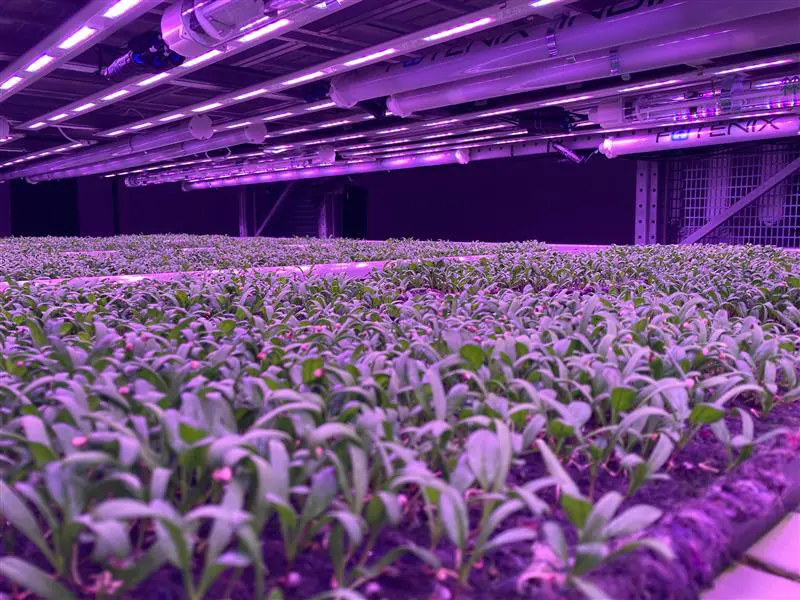
From industry insights to supporting businesses to develop cutting-edge innovation across AI, robotics and automation and CEA, to thought-provoking conversations at events, we share our top activity of the month to help you stay informed about all things agri-tech.     The future of arable and horticulture innovation With climate pressures, resource constraints and a globalised food system, the UK’s arable and horticulture sectors are facing a turning point where innovation is no longer optional; it has become essential.   Our latest report explores how emerging technologies and innovation can help strengthen productivity, resilience and sustainability across the sector over the next decade. Four innovation pathways set out a vision for technology development to deliver growth for the sector.   Whether you’re building new tech, just stepping into the agri-tech space or looking for fresh insights, this report has something for you.  Free download: The future of arable and horticulture innovation       Bring your agri-tech closer to commercialisation Does your agri-tech innovation have what it takes to thrive? The journey from a brilliant idea to a real-world solution can be tough, but it doesn’t have to be.  Business Development Manager, Michael Reardon, shares his practical steps to help get your tech commercialised.  Discover more about the winning formula of validate, test and collaborate and see how the UK Agri-tech Centre can support you with access to real farms, crucial data and expert guidance.   Curious about how to bring your agri-tech closer to commercialisation?       Cutting energy and costs in vertical farming without sacrificing crop quality After two years of innovation, the ACDC project has delivered a breakthrough in Controlled Environment Agriculture – creating a smart, scalable indoor farming system that adjusts grow lights based on what plants need. Now fully operational at the Vertical Farming Development Centre at Stockbridge Technology Centre.  The result? Lower energy use, reduced costs and healthier crops! Watch the video to uncover how it works and what it means for the future of food production.           Transforming dairy farming with epigenomics Dublin based biotech SME Antler Bio is reshaping livestock productivity and sustainability through its flagship innovation: EpiHerd – the world’s first epigenomic testing platform for dairy cows. It’s not just genetics, it’s about how genes respond to the environment, and early adopters are seeing an increase in milk yield and quality.   Antler Bio have been on a long journey since being founded in 2020 to bring its cutting-edge tech to commercialisation. Discover how they got to where they are today and what’s next.  Antler Bio’s journey to success     Find all our stories in our monthly newsletter – sign up here. 

Read More »

Harnessing biology for climate resilience

As global agriculture faces intensifying climate pressures, the UK’s agri-tech community is advancing a shared vision rooted in biology, data and innovation.   A new report from the UK Agri-Tech Centre, “The future of arable and horticulture innovation: Shaping the next 10 years”, outlines how biotechnology will be central to building climate-resilient food systems, a message that resonates strongly ahead of COP30.  Between now and 2028, biotech innovation is reshaping pest and disease management, as mentioned in the UK Agri-Tech Centre’s new report. Biological control solutions are reducing reliance on existing chemical inputs, many of which are declining in efficacy and being phased out through risk-based regulation. New approaches such as microencapsulation can achieve significant pest reductions, while IoT and AI-driven monitoring are enabling earlier, more targeted interventions. Advances in microbiome research are also uncovering beneficial microbes that strengthen plant immunity and enhance resilience, key tools in adapting to a changing climate.   Looking further ahead, microbiome-based and RNA technologies are set to transform how crops interact with their environment. By engineering the rhizosphere and deploying synthetic microbial communities, farmers can improve nutrient uptake, soil health and disease suppression. By 2035, RNA interference (RNAi) and bacteriophage technologies will enable highly specific pest and pathogen control while protecting beneficial species, advancing a new era of circular, low-carbon agriculture supported by AI-driven decision tools.   Harnessing biotechnology for climate resilience goes beyond crop protection; it’s about building sustainable food systems. By progressively integrating biologically inspired, systems-level innovations alongside more efficient use of existing inputs, the UK can:   Strengthen soil health and biodiversity   Reduce dependency on resource-intensive agrochemicals   Enhance resilience to extreme weather and emerging pathogens   Safeguard national and global food security   To make this vision a reality, innovation must go hand-in-hand with regulatory clarity and real-world validation, areas where the UK is uniquely positioned to demonstrate global leadership.  As we look ahead to COP30, these advances will help the UK demonstrate global leadership in integrated biological, digital and engineering innovation, delivering both sustainable productivity gains and farm system resilience.     Explore the future of arable and horticulture innovation   A new report from the UK Agri-Tech Centre, “The future of arable and horticulture innovation: Shaping the next 10 years,” outlines a vision for how UK agriculture can harness innovation to build resilience, productivity and sustainability across the next decade.   This report reinforces the UK Agri-Tech Centre’s commitment to supporting agri-tech ventures in developing, testing and commercialising breakthrough technologies through access to expert guidance, strategic partnerships and world-class facilities. By uniting researchers, producers and policymakers, the UK Agri-Tech Centre continues to play a vital role in shaping a sustainable, globally competitive agricultural sector.   Read more by downloading the report below:  

Read More »

Innovative kelp extracts boost barley yield in nutrient efficiency trials

A collaborative project exploring how kelp extracts can enhance nutrient management in farming continues to show strong progress, thanks to support from Innovate UK and several leading industry partners. The project, ‘Assessing Sugar Kelp Extracts as a Nutrient Management Tool (SKE-NMT)’, is being led by Algapelago Marine Ltd, working closely with fellow kelp cultivators Atlantic Mariculture Ltd, as well as research partners The James Hutton Institute (JHI) and the UK Agri-Tech Centre. The project focuses on three key goals: Sustainable extraction and preservation of new seaweed biostimulants: Atlantic Mariculture has taken the lead in developing sustainable extraction and preservation techniques using cultivated Saccharina latissima (sugar kelp) as feedstock. The company has refined several wet processing methods that avoid the need for energy-intensive drying or milling, creating a route to year-round production that minimises waste while maximising recovery of valuable bioactive compounds. By relying on cultivation rather than wild-harvested kelp, Atlantic Mariculture aims to demonstrate that seaweed-based agricultural inputs can expand sustainably without depleting marine ecosystems. Dr Adrian Macleod, Innovation Manager at Atlantic Mariculture, said: “As demand for marine biomass continues to grow, seaweed cultivation offers a scalable and sustainable route to meeting future resource needs. Cultivation enables consistent quality and supply while actively supporting Scotland’s Blue Carbon Action Plan and the Circular Economy Act 2024. By growing seaweed rather than harvesting it from the wild, we can deliver ecosystem services and create new opportunities for sustainable marine products.” Demonstrating evidence for improved nutrient use efficiency: Researchers at The James Hutton Institute designed and ran a controlled glasshouse experiment to determine whether the kelp extracts could improve nutrient uptake under fertiliser-limited conditions. The trial focused on mitigations against the effects of nitrogen limitation in barley and phosphorus limitation in beans. Dr Gordon McDougall, Head of Plant Biochemistry and Food Quality Group at JHI, said: “The glasshouse trial is now completed and initial results indicated that the tested new seaweed extracts all had significant positive effects on barley grain yield at certain nitrogen levels. This is an excellent result and we hypothesise that this indicates an improvement in how the barley plants assimilate and use nitrogen, which we are testing by analysing the plant material for differences in nutrient uptake and the soil samples for changes in microbiota composition.”       Understanding grower needs and market potential: Algapelago has also launched a comprehensive market research effort to map current demand for seaweed-based biostimulants across the UK agricultural sector, with a focus on the South West. Through 30 interviews with growers, ranging from small one-acre market gardens to 3,500-acre arable farms, the team identified widespread interest in on-farm trials, particularly within arable, fresh produce and soft-fruit sectors with seaweed-based biostimulants being commonly used across all market segments. Growers cited quality, nutrient efficiency and yield as primary drivers for adopting biological inputs, while sustainability remained an added value rather than the sole motivation. Reducing dependence on expensive chemical fertilisers (NPK) emerged as the most common reason for exploring alternatives. As a result, Algapelago and Atlantic Mariculture see an opportunity to leverage findings from the successful trial at The James Hutton Institute to shape product positioning.   Kerr Jeferies, Market Development Manager at Algapelago Marine, said: “It’s important to acknowledge the scepticism that many farmers have towards biostimulants in general, particularly smaller, family-owned operations, that are priced out of the current market. However, seaweed-based solutions benefit from some traditional familiarity, particularly where their forebears have used beach-cast seaweeds to improve nutrition before the mass adoption of synthetic fertilisers and crop protection. A desire to pursue more local, circular solutions is of real interest to growers; similarly, our position as cultivators and farmers of seaweed resonates strongly amongst growers, as they appreciate the effort and ethics of cultivation versus wild-harvest market incumbents. Still, we must first build a highly robust case for the specific impacts and benefits of our products to overcome grower switching costs.” Martin Sutcliffe, Head of Agri-Systems at the UK Agri-Tech Centre, said: “What this project and market research shows is there is a desire to use seaweed-based biostimulants, but there is still some scepticism from farmers about the ‘how and why’. Grounding the development of these products in sound data and combining this with understanding the needs of the sectors, will help to remove some of these barriers. The trials at The James Hutton Institute have clearly given a strong indication that biostimulants can be a part of the solutions to driving up production, increasing yield and sustainability while reducing the sector’s traditional reliance on fertiliser use.”   For more information about the Assessing Sugar Kelp Extracts as a Nutrient Management Tool project or to register interest in upcoming field trials, contact Kerr Jeferies at [email protected]. Learn more about related UK Agri-Tech Centre initiatives by getting in touch at [email protected].

Read More »

Future of arable and horticulture innovation report launches

A new report from the UK Agri-Tech Centre outlines a forward-looking vision for how the UK’s arable and horticultural industries can harness innovation to enhance resilience, productivity and environmental sustainability over the next decade.   Commissioned and authored by the UK Agri-Tech Centre, ‘The future of arable and horticulture innovation: Shaping the next 10 years’ projects toward 2035, identifying the technologies and innovation pathways most likely to accelerate growth in the UK’s agri-tech sector while delivering benefits across the wider food system. The report stresses that UK agriculture stands at a pivotal moment. With mounting climate pressures, ongoing labour shortages and increasing input costs, the need for smart, efficient and integrated farming systems is greater than ever. From advanced sensing and AI to biotechnology and controlled-environment production, emerging technologies will be essential for tackling these challenges and unlocking new commercial opportunities for UK innovators.   Drawing on interviews and collaborative workshops across the supply chain and underpinned by the UK Agri-Tech Centre’s technical expertise, the report identifies three major themes shaping future innovation:   Climate change mitigation Automation and digitisation Diversification of production   Dr Harry Langford, Innovation Director at the UK Agri-Tech Centre, said: “For agri-tech to realise its full potential, innovators need both clear pathways and the ability to connect bright ideas with the complexities of real-world farming. By linking research technology development and commercial practice, the sector can bridge the critical gaps between concept and adoption, delivering scalable, on-farm solutions.”   To set a forward agenda for innovation, the UK Agri-Tech Centre defines four primary pathways for technological development in arable and horticulture over the next decade:   Intelligent and data-driven agriculture – Deploying AI, robotics and sensing technologies to enable predictive, data-led farm management and precision input use. Climate resilience and biotechnology – Integrating precision breeding, early detection and next-generation biological tools to deliver adaptive, holistic management under changing climatic conditions. Regenerative farming and agri-tech – Linking bio-based solutions, agri-tech and robust MRV (measurement, reporting and verification) technologies to enhance soil health and create measurable environmental and productivity gains. New and diversified production systems – Expanding controlled environment, circular and alternative protein systems to increase resource-efficient, year-round production.   Collectively, these innovation pathways provide a structured framework to guide technology development and practical adoption, helping agri-tech innovators move from concept to market-ready solutions. Dr Ruth Bastow, Chief Technology Officer at the UK Agri-Tech Centre, said: “Real progress depends on developing and adopting innovation that drives sustainable systems. To grow the UK’s agri-tech advantage, we need joined-up investment, shared infrastructure and a clear vision that aligns science, policy and business. By working collectively across the sector, we can turn technological breakthroughs into practical tools that drive productivity, resilience and environmental gain.”   This report underlines the UK Agri-Tech Centre’s commitment to supporting agri-tech enterprises in developing, testing and commercialising their technologies through access to world-class facilities, expert guidance and strategic partnerships. By uniting researchers, technology developers, producers and policymakers, the UK Agri-Tech Centre continues to play a crucial role in building a sustainable, globally competitive and tech-enabled agricultural sector.  

Read More »

The top three ways to bring your agri-tech closer to commercialisation

Michael Reardon, Business Development Manager at the UK Agri-Tech Centre, shares practical steps that’ll help your agri-tech solution not just get off the ground, but thrive in the real world. Agri-tech is rewriting the rulebook for food production—think advanced sensors and AI to controlled environments and robotics in the field. If you’re already involved in developing tech, you’re helping to shape a future where agriculture is more sustainable, productive and profitable. Turning bright ideas into real-world solutions isn’t easy. Many agri-tech innovations get stuck in that tricky patch between coming up with a great concept and seeing it used on farms. It’s where projects can stall from a lack of funding, real-world proof or support. To bridge that gap, you need to inspire real confidence, not just from the end-user, but from the whole supply chain. Showcasing your innovation’s real-world value is what gets people excited, invested and ready to make your idea the next industry game-changer. Here’s how to bridge the gap:   Validate with real-world data and tools You’ve got a promising idea or even a working prototype. But before you go all-in, you need to know: will it actually work in the real world? That’s where validation comes in. By testing your tech in environments that reflect actual market conditions, you can gather the evidence you need to move forward. It’s about putting your innovation through its paces—running experiments, collecting data and seeing how it performs with real users. This helps you confirm what’s working, spot what needs refining and avoid costly missteps later on. Having solid, practical evidence isn’t just useful; it shows investors, partners and early adopters that your solution isn’t just clever, it’s also commercially viable and ready to scale. If you’re at that stage, the UK Agri-Tech Centre offers access to commercial-scale, controlled environments, such as the Vertical Farming Development Centre, Marine Aquaculture Innovation Centre and the South West Dairy Development Centre. These aren’t just test sites. They’re innovation playgrounds, equipped with advanced sensors, AI and data analytics to help you validate your tech in a meaningful way. If you’re ready to turn your prototype into a proven solution, this is your chance to do it with confidence.   Data-backed innovation: Drone technology to support strawberry pollination The UK Agri-Tech Centre has supported Polybee to validate drone technology in controlled environments, ensuring that it can work safely within the daily operations of commercial growers.   Put your tech to the test on real farms Getting your innovation onto a working farm is a real game-changer, giving you fast, flexible testing. Whether it’s in a high-tech greenhouse or out in the field, you can tweak, prove and showcase your technology where it actually matters. When you test in real farm settings, you get to work with farmers, co-developing your tech with those who’ll use it means you’re not just being innovative, you’re making sure your solution is practical and solves real problems. That’s how you take the risk out of commercial adoption. The UK Agri-Tech Centre’s network of 25 farms across the UK enables you to test, learn and improve your product quickly. Our farm network has supported over 40 collaborative projects, providing innovators like you with the support needed to transition from prototype to proven product. Field tested: Chirrup Nano The UK Agri-Tech Centre invited 100 farmers to trial the groundbreaking nature monitoring tech, helping to refine it before a wider rollout. Tap into agri-tech expertise Whether you need troubleshooting, technical know-how or business strategy, expert support keeps your project moving and helps you sidestep common pitfalls. The UK Agri-Tech Centre team are experts in horticulture, aquaculture and livestock, combining market savvy with in-depth technical know-how. That means they’re perfectly placed to help you figure out exactly how your tech could work in the real world. Plus, with a powerhouse network of specialists behind you, you’ll have all the support you need to overcome challenges and push your innovation further. Expertise in action: Lupin Loop This project is looking at the improvement of region-specific agronomy traits of lupin production and processing of lupin into a range of ingredients and food products. The UK Agri-Tech Centre team supported every step, bringing project management expertise, sharing commercial and scientific insights and helping to communicate the project’s impact to the broader industry. Ready to make your innovation a reality? If you want to bring your tech closer to commercialisation, get in touch with us at [email protected].

Read More »