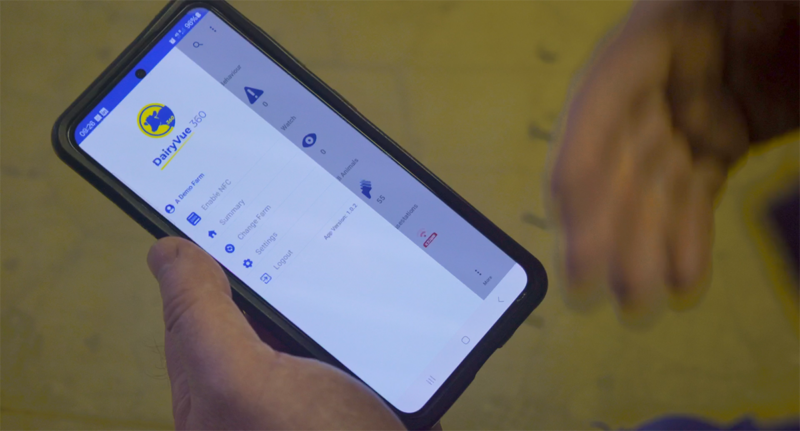
The challenge The dairy sector faces significant challenges in maintaining and improving productivity while ensuring animal health. Issues like lameness, poor body condition and prolonged calving intervals can severely limit efficiency. In both the UK and China, the growing demand on the dairy industry requires efficient resource use and integrated technology to meet this need sustainably. Current diagnostic methods are often reactive, addressing issues on farm only after they arise. The challenge is to develop and deploy monitoring technologies that offer proactive decision-support tools. These tools need to pre-clinically diagnose production-limiting conditions and integrate data to create easy-access early warning systems for health issues. Funded by Innovate UK’s Transforming Food Production competition, the “Sensor Integration for Animal Health Early Warning System” project was a collaborative effort with China to develop smart farming technologies, with a focus on precision engineering to enhance productivity. Launched in 2021, the 3-year project consortium included the UK Agri-Tech Centre, Agsenze Ltd, Ice Robotics Ltd, Dairymaster, Northeast Agricultural University, Harbin and the Institute of Animal Sciences at Chinese Academy of Agricultural Sciences, Beijing. The innovation Using the Herdvision System integrated with Dairymaster’s Moo Monitor+, livestock activity is measured around the clock with this ‘fitbit’ for cows. The Herdvision technology detects subtle changes in body condition and removes human error to give subjective, reliable information to the farmer to inform decision-making. The Moo Monitor+ collects data and analyses key indicators to detect behavioural and health issues in the cow. These are then delivered to the farmer in real-time reports through a desktop or mobile app. The Dairy View 360 platform combines all of the rich data from the Moo Monitor+ and integrates Hervision camera technology to provide automated body condition and mobility data for dairy cows. Head of Farms at the UK Agri-Tech Centre, Rob Morrison said: “In today’s farming landscape, farmers are often drowning in data but starved of information. The Sensor Integration Project addresses this challenge by demonstrating how advanced technologies, such as the Herdvision Body Condition Camera and Dairy Master’s Moo Monitor+, can be seamlessly integrated to transform raw data into actionable insights. By combining data from multiple platforms, we are not only simplifying the process for farmers but also empowering them with the critical information needed to make smarter, more efficient decisions that enhance productivity and sustainability.” The solution This technology offers farmers a powerful tool for enhancing herd management and overall farm efficiency. By predicting the fertility status of cows in real-time through accurate behavioural monitoring, a subjective body condition score is generated so farmers can make more informed insemination decisions, ensuring that each cow is bred at the optimal time. This precise timing increases the chances of successful pregnancies, leading to better calving intervals and higher lifetime milk production, increasing cow profitability and reducing the carbon footprint per litre of milk. Sensor integration into smart farms provides a reduction in labour in comparison to traditional herd management. Farmers no longer need to rely solely on manual observation. The technology streamlines operations, making the farm more efficient and sustainable and offers opportunities to improve the farm’s output. Implementation of this technology can: If you have any questions about the Sensor Integration Project or Smart Farms, please contact the team via [email protected].