News Category: Insights

Innovative approaches to tackling apple scab disease

Innovative approaches to tackling apple scab disease

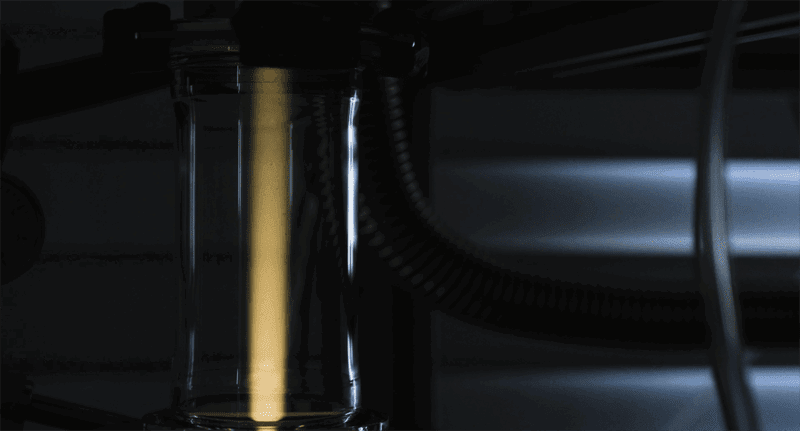
Apple scab, a fungal disease that can devastate apple crops, has long been a challenge to British fruit growers. Traditional methods of control have relied on plant protection products (PPPs), but with stricter regulations phasing out these chemical treatments, growers are facing a serious challenge. The UK Agri-Tech Centre, together with Kent’s Rumwood Green Farm and Landseer Ltd., has been testing a new approach that combines biostimulants with cutting-edge hyperspectral imaging to spot disease before it spreads. The project, Apple Orchard Health: Evaluating Hyperspectral Imagery for Disease Detection and Biostimulant Efficacy, is funded by the Department for Environment, Food and Rural Affairs (DEFRA) and UKRI Transforming Food Production Challenge. Phasing out traditional PPPs PPPs have been central to fighting apple scab in the UK, yet growers are still seeing crop losses of 10-12% even with these protections in place. If PPPs were fully withdrawn, experts predict losses could reach up to 70-80%, posing a huge threat to apple production in the UK.   A promising solution may lie in biostimulants, natural substances that enhance a plant’s own defences. When timed correctly, biostimulants can boost resilience, preventing disease rather than simply treating it. Biostimulants serve as preventative measures rather than curative, necessitating timely application before visible disease symptoms emerge.   The project aim was to address the challenge of evaluating the effectiveness of biostimulants and timing their usage, by utilising advanced technologies such as hyperspectral cameras and drones. The role of hyperspectral sensors Hyperspectral sensors can capture a broad range of light frequencies, revealing unique “spectral fingerprints” for each material or disease that would be invisible to the human eye. For apple scab, this technology could help detect signs of infection at the earliest stages, long before symptoms are visible on the surface. This method can serve as an early warning system, helping prevent disease spread, enhancing crop yield and operational efficiency and reducing reliance on traditional PPPs. Eliot Dixon, Head of Robotics and AI at the UK Agri-Tech Centre, said: “This was a fast-paced proof of concept project designed to provide evidence for both the efficacy of biostimulant in apple scab control, but also in spectral imaging as a method for detecting apple scab. For the UK Agri-Tech Centre, this project highlights how our spectral imaging capabilities can be used in product development for both remote sensing and plant protection products. We are very pleased to have successfully shown how lab-based spectral imaging can be successfully transferred to a commercial farm.” Field trials Michael Parker, Coldstore and Compliance Manager at Rumwood Green Farm, spoke about the challenges of bringing this technology out of the lab and into the orchard: “This trial has been very challenging to reproduce results in the field similar to previous in-lab testing of detecting early signs of scab using specific wavelengths. Despite the challenges, we are a step closer towards early scab detection using the hyperspectral camera. The positive results shown of the biostimulant used will hopefully encourage more growers to use biostimulants as part of their scab control, not only relying on conventional pesticide programs.” While replicating lab conditions in an open field can be challenging, this trial yielded promising results. Not only did it demonstrate the potential for hyperspectral imaging to detect early-stage scab, but it also validated the role of biostimulants in an integrated pest management system. This could lead to fewer chemical applications, healthier crops and a more sustainable approach to disease control. The future of apple orchard health Looking ahead, the project aims to develop an affordable, user-friendly hyperspectral camera for growers. Such a device could function as an “early warning system” for apple scab, allowing farmers to apply biostimulants at the perfect time, prevent disease spread, boost yields and reduce reliance on traditional PPPs. Stephen Tully, Director at Landseer, highlighted the need for this type of innovation. “With disease control becoming increasingly challenging due to changes in plant protection regulations and unpredictable weather, this project aimed to validate the efficacy of biostimulants to support their routine use and investigate the feasibility of an affordable early detection system for apple scab.” “This feasibility study has delivered encouraging results, demonstrating the effectiveness of biostimulants for integration into disease management programs and providing promising results for the development of an affordable early warning system for apple scab.” Landseer Ltd. will be showcasing their trial results at the National Fruit Show on 6 November at the Kent Showground. For those interested in the latest in disease detection and sustainable agriculture, be sure to visit them at stand M77 to see the future of crop protection firsthand. If you are interested in learning about Apple Scab, or the Apple Orchard Health project. Get in touch via [email protected]  

Read More »

Meet Linsey Cresswell, Head of Strategic Partnerships 

Our Meet the Team series profiles the individuals who make up the UK Agri-Tech Centre, offering a glimpse into their stories and ambitions for the sector. Next up is Linsey Cresswell, Head of Strategic Partnerships.  For Linsey Cresswell, balancing commercial success with meaningful contributions to the sector is crucial.  Can you share a bit about your background and how you came to work in this sector?  My background is not in agri-tech. I started my career working in clinical research in the Chest Department at St. Bartholomew’s Hospital, London. That was an intense and rewarding experience, working on conditions that have such a significant impact on people’s lives.  From there, I transitioned into the commercial side of science, joining a company called Amersham International. I wore many hats during my time there—working in the labs, technical support, marketing, key account management and eventually business development and licensing. In 2005 Amersham was acquired by GE Healthcare which was the catalyst for a colleague and I deciding to strike out on our own, founding LLC Associates, where we provided interim commercial support to the life science industry.   In 2018, I was approached by Fraser Black, then CEO for the Crop Health and Protection (CHAP) agri-tech centre about taking on a contract as the interim Commercial Director. I started in February 2018 and after some reflection, I decided to apply for the permanent role later that year. So, that’s how I ended up in the agri-tech sector—and with the merger, I became Head of Strategic Partnerships at the UK Agri-Tech Centre, continuing my customer and commercial focus.  What does your role as Head of Strategic Partnerships entail?  My role is evolving as we define how best to work with our existing partners and identify new opportunities. It falls very much within the business development (BD) sphere and at its core, my job is to generate revenue and create impact. I see this happening primarily by collaborating with larger multinationals. The idea is to align their significant challenges and objectives with the issues we’re tackling here. Together, we can drive meaningful change across the entire supply chain, which is where I believe we can make a real difference.  It’s still early days and a big part of my current focus is mapping out stakeholders and identifying gaps—essentially identifying where we can have the most impact. This approach is particularly important when working with large corporations. On the other hand, we also collaborate closely with academic institutions. My colleague Wendy Hewitson plays a crucial role in that area, helping to determine which academic partnerships will be the most beneficial in developing the sector.   For anyone interested in collaborating with us, I’d suggest they start by reaching out to me and/or Wendy Hewitson directly. Whether it’s a multinational challenge or a sector-wide issue, we’re always open to discussing how we can work together.    What inspires you in this line of work?  I’m very commercially focused, which drives a lot of what I do. I love solving problems and helping businesses succeed—honing their marketing strategies or refining their value propositions for example. It’s incredibly rewarding to see a company grow and thrive because, in part, you’ve helped them.  On a broader scale, I’m also inspired by the challenge of making the UK Agri-Tech Centre financially successful and able to reinvest in the fantastic capabilities we have and hopefully build new ones. However, it’s not just about making money to support ourselves in the future; it’s about ensuring that the work we do has a lasting impact on agriculture and the environment. Balancing commercial success with meaningful contributions to the sector is what keeps me motivated.  What do you think makes the UK Agri-Tech Centre special?   Our unique structure is a contributor to our success. The UK Agri-Tech Centre is a single front door for anyone interested in agri-tech, running projects with our delivery partners on everything from animal health to crop protection, networking, introductions, events and professional services. If there’s something we can’t do, we know exactly who can—whether it’s within our immediate network or through our extensive industry contacts.     However, if the interest lies in something broader—like addressing a significant challenge within the sector or aligning with our objectives on a larger scale—then they should come directly to me. We’re always keen to explore new partnerships, particularly those that can help us achieve our long-term goals and create a real impact.   Does your business have agri-tech ambition?  Contact Linsey Cresswell and her team via [email protected] to find out how you can accelerate your ambitions through partnerships in the industry.   

Read More »

Charting the future of sustainable aquaculture 

Aquaculture is an extremely diverse sector, involving the breeding, rearing and harvesting of fish, shellfish, aquatic plants and algae and can serve as an alternative to traditional fisheries. It is a vital component of the global food system, especially with increasing demand for sustainable protein sources.

Read More »
Dairy Innovation

Smart sensor technology for dairy farms

The challenge The dairy sector faces significant challenges in maintaining and improving productivity while ensuring animal health. Issues like lameness, poor body condition and prolonged calving intervals can severely limit efficiency. In both the UK and China, the growing demand on the dairy industry requires efficient resource use and integrated technology to meet this need sustainably. Current diagnostic methods are often reactive, addressing issues on farm only after they arise. The challenge is to develop and deploy monitoring technologies that offer proactive decision-support tools. These tools need to pre-clinically diagnose production-limiting conditions and integrate data to create easy-access early warning systems for health issues. Funded by Innovate UK’s Transforming Food Production competition, the “Sensor Integration for Animal Health Early Warning System” project was a collaborative effort with China to develop smart farming technologies, with a focus on precision engineering to enhance productivity. Launched in 2021, the 3-year project consortium included the UK Agri-Tech Centre, Agsenze Ltd, Ice Robotics Ltd, Dairymaster, Northeast Agricultural University, Harbin and the Institute of Animal Sciences at Chinese Academy of Agricultural Sciences, Beijing. The innovation Using the Herdvision System integrated with Dairymaster’s Moo Monitor+, livestock activity is measured around the clock with this ‘fitbit’ for cows. The Herdvision technology detects subtle changes in body condition and removes human error to give subjective, reliable information to the farmer to inform decision-making. The Moo Monitor+ collects data and analyses key indicators to detect behavioural and health issues in the cow. These are then delivered to the farmer in real-time reports through a desktop or mobile app. The Dairy View 360 platform combines all of the rich data from the Moo Monitor+ and integrates Hervision camera technology to provide automated body condition and mobility data for dairy cows. Head of Farms at the UK Agri-Tech Centre, Rob Morrison said: “In today’s farming landscape, farmers are often drowning in data but starved of information. The Sensor Integration Project addresses this challenge by demonstrating how advanced technologies, such as the Herdvision Body Condition Camera and Dairy Master’s Moo Monitor+, can be seamlessly integrated to transform raw data into actionable insights. By combining data from multiple platforms, we are not only simplifying the process for farmers but also empowering them with the critical information needed to make smarter, more efficient decisions that enhance productivity and sustainability.” The solution This technology offers farmers a powerful tool for enhancing herd management and overall farm efficiency. By predicting the fertility status of cows in real-time through accurate behavioural monitoring, a subjective body condition score is generated so farmers can make more informed insemination decisions, ensuring that each cow is bred at the optimal time. This precise timing increases the chances of successful pregnancies, leading to better calving intervals and higher lifetime milk production, increasing cow profitability and reducing the carbon footprint per litre of milk.   Sensor integration into smart farms provides a reduction in labour in comparison to traditional herd management. Farmers no longer need to rely solely on manual observation. The technology streamlines operations, making the farm more efficient and sustainable and offers opportunities to improve the farm’s output.   Implementation of this technology can:   If you have any questions about the Sensor Integration Project or Smart Farms, please contact the team via [email protected].

Read More »