Archives: News & Insights

Sugar kelp extract boosts wheat yields and farm profitability

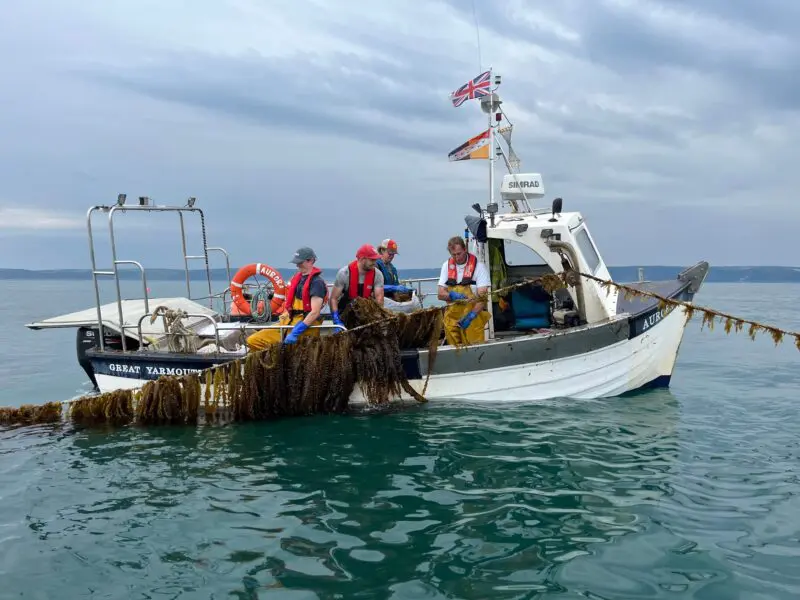
A project exploring efficient, low-energy techniques for processing cultivated kelp into soil biostimulants and animal feed supplements has achieved a significant breakthrough, according to its latest findings. Algapelago, a farmer-led seaweed biotechnology company managing an offshore kelp farm, has worked alongside Rothamsted Research and the UK Agri-Tech Centre to test the effectiveness of these products under conditions of abiotic stress. The Innovate UK-funded project, Optimising Low Energy Extraction of Kelp for Soil and Livestock Nutrition (known as ‘Low Energy Kelp’), focuses on creating sustainable agricultural inputs derived from cultivated seaweed. Interest in seaweed-based biostimulants is rapidly growing within agriculture, thanks to their ability to stimulate plant growth, enhance stress tolerance and improve nutrient use efficiency, all while offering a renewable and environmentally beneficial alternative to chemical inputs. Currently, most agri-seaweed products rely on wild-harvested sources. However, as policy continues to push for reductions in chemical fertiliser use, the demand for cultivated seaweed-derived biostimulants and feed supplements is set to grow exponentially. Despite this, the biochemical mechanisms driving seaweed’s beneficial impact on crops are still not fully understood. In collaboration with subcontractor Atlantic Mariculture, Algapelago has now refined a low-energy extraction process that produces a consistent, high-quality biostimulant with considerable commercial potential.   What did the research show? To determine optimal application rates and methods for Algapelago’s prototype biostimulant ‘TD65’, two controlled experiments were undertaken. The first investigated the impact of four different rates of foliar applications on wheat and field bean yields under both well-watered and drought-stressed conditions and the second investigated whether foliar application or soil application had the greatest impact on yields of wheat. The goals of the first experiment were to identify the most effective application rate of TD65 under normal growing conditions and to explore whether any yield advantage was maintained during drought stress. In the second trial, researchers aimed to determine whether observed benefits came from direct physiological effects on plants or through stimulation of soil microbial activity, which could improve nutrient availability and uptake. For the dosage study, wheat and field beans were cultivated in 10 cm diameter × 90 cm deep intact clay-loam soil cores suitable for both ambient and drought-stress testing. In the application method study, plants were grown in 2L pots containing either sieved soil or glass beads (to simulate a hydroponic system), allowing a comparison between crops grown with and without soil microbes. Three application types were tested: foliar only, soil only and foliar plus soil microbes. In all cases, results were benchmarked against control plants grown without the biostimulant. Results showed that the optimal application rate led to a 53% increase in wheat grain yield, driven by a 45% increase in grain number compared to control values [1]. No benefits were observed under drought-stressed conditions. In the application method experiment, the application method didn’t affect the yields of wheat in either growing medium, although the plants grown in the hydroponic system significantly outperformed those grown in soil. Researchers recommend further studies to examine the timing of applications at different growth stages and to test under additional drought scenarios. Trials using varying fertiliser levels are also advised, as the biostimulant may perform better under more nutrient-limited conditions. Overall, the findings suggest that seaweed-derived biostimulants can deliver measurable yield improvements in certain growing environments.   Luke Ansell, Head of Operations at Algapelago Marine, said: “The completion of the Rothamsted crop trials is a significant milestone for the project and wider product development. Thanks to the Rothamsted team for all their hard work and we are thrilled to see a 53% yield increase in wheat grain due to this prototype sugar kelp extract. This result has validated our belief in the quality of our cultivated sugar kelp and extraction method. While we await the full analysis results from this study, a wider trial program is underway across soft fruits, field and root vegetables which will further build the evidence base for product efficacy. Meanwhile our sister Farming Futures project is investigating the impact of kelp extracts on crop nutrient use efficiency.”   Impact This project demonstrates that rope-grown sugar kelp can play a vital role in strengthening UK food resilience, improving soil health and helping to reduce carbon emissions and nitrate dependency, aligning closely with goals outlined in the Government Food Strategy. Cultivated kelp provides a sustainable source of potash, micronutrients and bioactive compounds, while its offshore farming supports biodiversity by offering habitat and nourishment for various marine species, including commercially important fish species. Professor Adie Collins, Science Director at Rothamsted Research, said: “At a time when yields and corresponding profits are under pressure from a range of abiotic and biotic stresses, biostimulant research offers a glimmer of hope to farmers in an ever more challenging world.” Building on earlier feasibility work, this project has optimised the two-stage liquid extraction and ensiling process for kelp, producing consistent and scalable agricultural products. Dr. Saro Rengaraj, Innovation Associate for Soil Health at the UK Agri-Tech Centre, added: “From sea to soil, kelp builds resilience and grows results. Algapelago’s kelp biostimulants could boost soil resilience, nutrient cycling and microbial health – sustainably enhancing crop productivity.” [1]. N.B. Yield metrics have been updated 30/10/2025 to align with Rothamsted Research results. For more information, get in touch at [email protected].

Read More »

Antler Bio: Harnessing epigenomics to transform dairy farming

Founded in 2020, Antler Bio is a pioneering biotech SME headquartered in Dublin, with operations in the UK and Finland. With a growing team of 16 employees, the company is reshaping livestock productivity and sustainability through its flagship innovation: EpiHerd. EpiHerd is the world’s first epigenomic testing platform for dairy cows. Unlike traditional genetic testing, EpiHerd provides a deeper understanding by examining how genes are expressed in response to diet and environment. Through a simple blood test, farmers receive actionable insights on how to optimise herd health, productivity and welfare while reducing environmental impact. Originally proven in the equine sector on Standardbred racehorses, Antler Bio quickly recognised the potential to apply its technology to livestock, starting with the dairy industry, where improved productivity and sustainability are high priorities. However, entering a traditional farming sector with a novel, complex technology presented a significant challenge.   Path to commercialisation In 2021, Antler Bio partnered with the UK Agri-Tech Centre to accelerate its entry into the livestock market. This collaboration provided: Sector insights – Understanding the needs of UK farmers, the challenges facing the industry and where commercial opportunities lay. Funding support – Guidance in securing an Innovate UK Smart Grant, enabling the company to demonstrate proof of concept in dairy cattle. Industry validation – Practical advice on pricing, user experience and data presentation to ensure the technology was accessible and relevant for farmers.   With this foundation, EpiHerd advanced rapidly from concept formulation (technology-readiness level 2-3) to testing and demonstrating (technology-readiness level 6-7). By 2023, the technology was soft-launched commercially and is now used by over 100 farms, primarily in Northern Europe, with growing adoption in the UK. The results from early adopters included: Up to 22% increase in milk yield Up to 6% increase in milk fat Up to 5% increase in milk protein within six months   This measurable impact on productivity and profitability has helped Antler Bio secure private investment, raising £650k in 2023 and a further £3.25m in 2025.   The power of collaboration Antler Bio’s journey highlights how collaboration can turn scientific innovation into commercial success. Through collaboration with the UK Agri-Tech Centre, they were able to bridge the gap between breakthrough biotechnology and the realities of farming. From grant applications and market insights to introductions across the agriculture ecosystem, our support was described as “instrumental in the early days” of Antler Bio’s growth. As a result, Antler Bio has grown from a three-person start-up into a successful, revenue-generating business with a rapidly scaling product. Looking ahead, the company plans to expand EpiHerd to new species and explore opportunities with feed producers, veterinarians and pharmaceutical companies, unlocking even greater value from the epigenomic data it collects. Thanks to its strong foundations and strategic collaborations, the company is well on its way to transforming livestock farming for a more productive, profitable and sustainable future.   Listen to the podcast If you want to learn more about AntlerBio or want to explore how we can support your innovation journey, get in touch today at [email protected].

Read More »

Global agri-tech SME wins Innovator of the Year

The British Farming Awards were held last week (16 October) at The Vox in Birmingham, where the UK Agri-Tech Centre had the privilege of presenting the Agri-Tech Innovator of the Year award. Each year, the British Farming Awards, organised by Farmers Guardian and sponsored by Morrisons, shine a spotlight on the outstanding contributions of farmers and professionals driving the UK’s agricultural industry forward. Now in its 13th year, the event recognises pioneering farmers and businesses across all sectors who are advancing progress in science, technology, food production and sustainability. Honouring the very best in British agriculture, the awards highlight achievements across a range of categories, from innovative new entrants and multi-staff enterprises to the much-anticipated Innovator of the Year title. This year’s Agri-Tech Innovator of the Year award went to Herdwatch, a company deeply rooted in farming innovation and known for transforming livestock management through smart digital tools. Their recognition celebrates the concept of ‘Herd Intelligence’, embodied by the app’s virtual assistant, ‘Herdi by Herdwatch’. The feature integrates farming expertise, local insight and advanced AI to deliver accurate, personalised advice to farmers directly through the Herdwatch app. The software-as-a-service platform is now trusted by over 22,000 farmers across Ireland, the UK and the United States, allowing them to manage herds and flocks anytime, anywhere. This data-driven approach empowers farmers to make informed decisions that improve efficiency and productivity. Since its early days, Herdwatch has experienced remarkable growth, expanding its team and operations. The company is now based at a state-of-the-art facility at the UK Agri-Tech Centre’s Midlands Hub in Newport. Founder and CEO Fabien Peyaud began his journey in the IT sector and was given the opportunity to test his forward-thinking ideas before establishing his own venture. Balancing two jobs in the beginning, Fabien spent evenings and weekends developing the concept that would become Herdwatch. By collaborating with partners to scale the business, the company has helped farmers boost productivity and reportedly save around three hours per week through smarter farm management. James Greevy, Director of Product at Herdwatch, said: “The goal is to make complex farm data useful in real time. Farmers are drowning in data spread across too many places. Herd Intelligence brings it together—herd records, breeding information, compliance—and gives one clear answer a farmer can act on immediately. It is like having a farm manager, who is an expert in all of this plus knows everything about your herd.” Pat Bolger, Director of Technology, said: “Your farm data never leaves your account. Herd Intelligence doesn’t share it, store it or learn from it—it’s private advice, built for you alone.” Helen Brookes, Engagement Director at the UK Agri-Tech Centre, said: “The British Farming Awards was a fantastic event to celebrate the best of British agriculture and the essential role each business who attended plays. The competition was close, but it was a privilege to support the event by announcing Herdwatch as the winner of the Agri-Tech Innovator of the Year. We have witnessed Herdwatch’s business journey as they have grown within the hub and look forward to seeing what’s next for them.”   If you would like to learn more about Herdwatch, the Innovator of the Year award or have any questions about the UK Agri-Tech Centre, please get in touch at: [email protected]

Read More »

Agri-tech in action at the UK Agri-Tech Centre: A September roundup

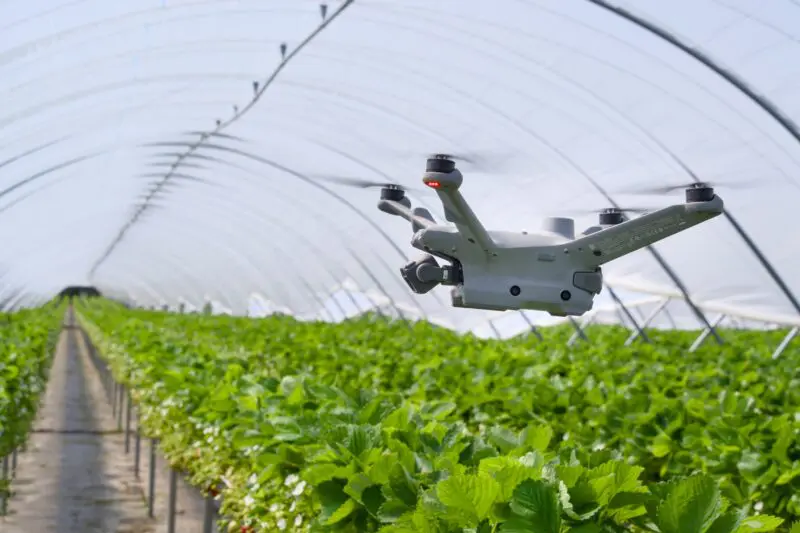
From industry insights to supporting businesses to develop cutting-edge innovation across  AI, robotics and automation and CEA, to thought-provoking conversations at events, we share our top activity of the month to help you stay informed about all things agri-tech.   The UK Agri-Tech Centre appoints new CEO Exciting news! The UK Agri-Tech Centre has confirmed the appointment of Steve McLean as its new Chief Executive Officer. After a thorough and competitive recruitment process, Steve will officially step into his new role on 27 January 2026. Currently, heading up Agriculture & Fisheries Sourcing at M&S, Steve brings with him executive experience and a strong background in driving strategic change.   Steve McLean to join as CEO       Carbon clarity: Aligning assessments with sector needs   As the agri-food sector faces growing pressure to cut greenhouse gas emissions and move faster toward net zero, one big question is emerging: are carbon assessment tools truly fit for purpose? In our latest report, developed with Farm Carbon Toolkit, we dive into how these tools can better reflect the needs and ambitions of farmers, growers and supply chain partners. From practical adoption to data accuracy, standardisation, financial support and innovation, we share insights and recommendations for everyone working toward a lower-carbon future. Free download: carbon clarity         Can drones help grow better strawberries? A groundbreaking initiative is exploring how robotics and AI can revolutionise the way strawberries are grown. At the heart of the project? Autonomous drones that mimic the airflow needed for pollen transfer — a clever solution to the growing challenges of large-scale natural pollination and it’s one of the first of its kind in the UK.   Could this be the future of fruit farming?         How is agri-tech helping farmers protect biodiversity? From uncovering elusive species to tracking the subtle changes in ecosystems, today’s agri-tech tools are transforming the agricultural landscape. They’re not just instruments for increasing yields—they’re emerging as vital allies in the critical battle for biodiversity preservation. On World Habitat Day, we delved into four groundbreaking ways that technology is empowering farmers to nurture their land while simultaneously enhancing its natural resilience. Picture smart sensors, real-time data analytics and integrated systems that provide farmers with a deeper understanding of the ecosystems they influence every single day.   Think agri-tech is just about efficiency? Discover how it’s helping nature thrive     What if we could see beyond what the human eye can detect? Hyperspectral imaging unlocks invisible insights by capturing hundreds of wavelengths, revealing early signs of disease long before symptoms appear. It’s a game-changer for agriculture. The UK Agri-Tech Centre is helping innovators use advanced sensors such as hyperspectral imaging in adapting their solutions. We collaborate with growers to test and refine their solutions, paving the way for agri-tech breakthroughs.     Hyperspectral imaging could accelerate your agri-tech solution         Find all our stories in the monthly newsletter by the UK Agri-Tech Centre – sign up here.  

Read More »

Hand in Hand for Better Foods: UK Agri-Tech Centre celebrates World Food Day

The UK Agri-Tech Centre is delighted to support World Food Day (16 October) by highlighting some of the groundbreaking work we do to help build a more sustainable, secure and resilient global food system. This year’s theme, “Hand in Hand for Better Foods and a Better Future,” reflects the importance of global partnerships driving innovation and sustainability across the agri-food sector. The projects below showcase just a few examples of collaboration in action, combining creativity, science and technology to feed the world more responsibly. A successful agricultural future depends not only on the technologies developed to simplify and enhance farming, but also on how effectively those innovations are embraced and applied. Sustainable methods and forward-thinking adoption remain key to meeting the ever-changing challenges facing our industry. With the support of Innovate UK and in collaboration with multiple partners, the UK Agri-Tech Centre continues to drive progress through projects that help deliver better food and secure the future of farming.   Broccoli Harvester This initiative by UPP focuses on making full use of broccoli plants, turning what was once waste into valuable, nutritious ingredients and significantly reducing the environmental footprint of protein production. Working alongside partners, the UK Agri-Tech Centre has helped ensure that we can now utilise 100% of the broccoli plant, rather than just the 30% typically harvested. Thanks to advanced sensor technologies, this approach not only minimises waste but also offers sustainable, hypoallergenic food alternatives while maximising the crop’s total value. By transforming unused biomass into protein-rich ingredients, this project achieves a much lower CO₂ footprint compared with conventional crops such as soy.   DeCyst The DeCyst project has reimagined how pest management is approached, especially in controlling Potato Cyst Nematodes (PCN), a persistent threat to UK potato growers. Through collaboration, project collaborators have refined and optimised the use of solanaceous trap crops, which are specifically developed to outsmart PCN infestations. Widespread adoption of DeCyst™ crops has the potential to strengthen the resilience of potato farming and safeguard yields, offering a long-term solution for the UK’s potato industry.   Precision Pollination Polybee is exploring how drone technology can revolutionise pollination in food crops, beginning with strawberries. By manipulating airflow, these drones assist with pollination, improving fruit yield, quality and forecasting. This project brings together leading UK berry growers, innovation experts and a Singapore-based partner specialising in drone-assisted crop management. The aim of the project is to integrate this technology into commercial strawberry operations across the UK, ensuring consistent flower pollination and helping mitigate losses in yield and fruit uniformity caused by poor pollination during critical growth stages.   Fotenix Fotenix founded the metaverse of agriculture, creating a digital twin of crops using light-based imaging and AI-driven analytics. By capturing virtual models of plants through multi-spectral imaging, Fotenix provides growers with early detection of stress factors like nutrient deficiencies or disease long before they become visible to the human eye. This technology empowers farmers to act quickly, enhancing productivity, profitability and sustainability while seamlessly integrating with existing farm systems.   If you’re an SME interested in shaping the future of sustainable food production, we’d love to connect with you. Get in touch at [email protected]

Read More »

Automating lamb weighing for smarter, welfare-friendly sheep farming

Weighing lambs is essential for tracking growth and deciding when they’re ready for market, but it’s also one of the most time-consuming and labour-intensive parts of sheep farming. Gathering the flock, running them through the scales and recording the data can take hours, often done every couple of weeks.   That’s why the ‘Lamb Monitor’ project is rethinking how weighing is done. Developed in collaboration with David Ritchie Agricultural (Implements) Ltd and the UK Agri-Tech Centre, supported by the National Sheep Association and with support from Defra and the Transforming Food Production (TFP) Challenge Programme (through Innovate UK), the project is putting automation, sensors and smart data systems to work to make lamb weighing simpler and less stressful for both farmers and animals.   Automation making a difference for livestock farmers The Lamb Monitor is an automated, in-field solution designed to continuously monitor lamb performance without the need for regular manual weighing.   Three prototype designs are being tested:   A walk-over weigher that records weights as lambs move naturally through it   A creep-feed attractant to encourage voluntary weighing   A climb-on platform that uses lambs’ play behaviour to capture data   A metered feed creep for a small amount of feed stuffs as an attractant (minerals could be used)  Each system is paired with an easy-to-use app that gives farmers real-time insights into growth rates and weight gain. The system also includes a metered creep-feed setup, which ensures fair feed distribution among lambs and reduces the risk of overfeeding. This system results in better data, less stress and more efficient management, all without disrupting the daily routine. Test trial and demonstrate The Lamb Monitor prototypes are currently being deployed on Ritchie’s trial farms and will be on four UK Agri-Tech Centre innovation farms. Farmers continue their usual weighing practices alongside the automated systems, giving researchers the opportunity to compare data accuracy and gather farmer feedback to refine the technology.  Importantly, the automated system also integrates with Ritchie’s auto-drafting equipment, meaning lambs can be automatically sorted once weight data reaches the desired threshold, saving even more time and labour.   Charlie Brown, Product Development Manager at Ritchie, said:  “We aim to bring a level of automation and improved efficiency to the sheep industry with this product. The first prototype was created after farmer-led interactions resulted in us making efficiencies within the industry. Following field trials and farmer feedback, we’re refining the product for our Mk2 trial.”   This hands-on, collaborative approach ensures that the final product will be practical, reliable and built around farmers’ needs.   From research to real-world application The UK Agri-Tech Centre has played a key role in bringing the project from concept to on-farm testing, helping Ritchie navigate the development process, manage trials across multiple farms and gather real-world validation.   Hayley Gerry, Project Manager at the UK Agri-Tech Centre, explained:  “This project has enabled us to bridge a gap the industry itself identified, where efficiencies could be made. By using our farmer network, we can test and validate the prototypes in commercial setups and feed that insight back into product development. This helps Ritchie move towards commercialisation with confidence.”   By supporting testing and integration directly on working farms, the UK Agri-Tech Centre ensures new technologies can fit seamlessly into existing operations and deliver tangible benefits from day one.   Improving livestock production for the sector The benefits of automated lamb monitoring go well beyond saving time. Reducing handling and gathering means less stress for animals, resulting in higher-welfare products. At the same time, better data allows farmers to make more precise management decisions, optimising feeding, improving growth rates and reducing time to market. This also supports sustainability targets. Research from CIEL (2020) showed that improved data capture can cut greenhouse gas emissions in lamb production by up to 68% on hill farms and 37% on lowland farms.   With further studies showing that precision livestock technologies can save up to 36% in labour costs (Morgan-Davis et al., 2018), automation is becoming a vital part of building a more efficient, sustainable and resilient sheep sector.   The Lamb Monitor project is a clear example of how collaboration between technology developers and farmers can transform traditional practices. By combining advanced sensors, automation and data-driven insight, the project is showing what’s possible when innovation is tested and proven in real farming conditions, along with feedback from farmers for co-development.   As the technology continues to evolve, it has the potential to reshape lamb production across the UK, improving welfare, cutting emissions and giving farmers more control over their operations.   Want to learn more? To find out more about the Lamb Monitor project or how to get involved with the UK Agri-Tech Centre today at [email protected]

Read More »

Discover dedicated facilities for digital innovation in livestock

Livestock farming is changing fast. As the world demands more sustainable and ethical food, there’s real pressure to adapt. But for SMEs and agri-tech innovators, this isn’t just a challenge, it’s your chance to lead meaningful change and drive positive impact across the industry.   If you’re looking for specialist facilities to test and validate agri-tech solutions in the livestock sector, you’re in the right place. The Centre for Digital Innovation Applied to Livestock (C-DIAL) addresses key challenges in livestock food production, with a focus on health and welfare management. C-DIAL uses the latest digital tech and scientific know-how to make sure animal welfare and productivity go hand in hand. The team mixes data science, engineering and veterinary smarts to completely rethink how livestock are monitored and managed.   A hub for collaboration The Centre’s focus areas are: A farming systems approach to enhancing animal health and welfare Development of practical on-farm monitoring and assessment of livestock Refining husbandry and housing practices to improve health and welfare Application of cutting-edge video and computing techniques for livestock monitoring   Validated tools for better welfare With C-DIAL’s digital tools, you can unlock a new level of insight into animal health and behaviour.  High-definition cameras, thermal imaging and automatic feeding systems work together to detect the early signs of illness – often before they’re visible to the human eye. This proactive approach means faster, more effective targeted treatment, quicker recovery times and a smarter use of antibiotics. Through digital imaging and remote visualisation, you can keep an eye on animal behaviour and physiology with minimal physical interaction. Less handling means less stress for livestock and because the tech works around the clock, you get tailored management and continuous monitoring of the performance of individual animals.   Specialist digital technologies  C-DIAL is equipped with a range of state-of-the-art tools and technologies for livestock monitoring including:  High-definition networked digital cameras and depth perception cameras for behaviour observations  An 18-metre gait analysis laboratory for 3D tracking of animal movement  The Farmex BarnReport® system for remote environmental monitoring  Thermal and hyperspectral imaging systems adaptable to various sensor types  Bluetooth weighing systems and Nedap feeders for individual animal performance tracking    Live Innovation at C-DIAL The C-DIAL facilities are being used in the monitoring of bird welfare as part of the Flockwise project, funded by Defra’s Farming Innovation Programme in partnership with Innovate UK. Led by FAI farms, this project brings together experts from Newcastle University, The Lakes Free Range Egg Company and the UK Agri-Tech Centre to develop a sensor embedded flock management system for chickens that increases productivity and efficiency, whilst improving laying hen health and welfare.   This capability is based at the University of Newcastle’s Cockle Park Farm.    If your business would like to explore how C-DIAL can help you develop and test agri-tech solutions, connect with us today at [email protected]

Read More »

The UK Agri-Tech Centre appoints new CEO

The UK Agri-Tech Centre has confirmed the appointment of Steve McLean as its new Chief Executive Officer, following a rigorous recruitment process. He will officially take up the position on 27 January 2026. Currently serving as Head of Agriculture & Fisheries Sourcing at M&S, Steve brings extensive executive experience and a strong background in driving strategic change. His career spans the retail, agriculture and fisheries industries, with deep involvement across the supply chain. Looking ahead to his new role, Steve shared: “I’m honoured to be joining the UK Agri-Tech Centre at such a pivotal time for British agriculture. The sector is undergoing rapid transformation, and the organisation plays a vital role supporting the development of agri-tech innovation, which helps farmers and food producers meet the challenges of sustainability, productivity and resilience. I look forward to working with our partners across the industry to accelerate progress and deliver real impact.” Dr Peter Quinn, Chairman of the UK Agri-Tech Centre, commented on the transition and the progress made under interim CEO Hannah Senior: “Steve’s appointment will be instrumental in building on Hannah’s success, providing strategic leadership to drive growth in the agri-tech sector and supporting businesses to successfully develop and commercialise their products and services.” Although Hannah will be stepping down from her interim role, she will remain involved with the organisation as a member of the Board. Reflecting on her time as interim CEO, Hannah said: “It’s been a pleasure and a privilege to work with the UK Agri-Tech Centre on an interim basis. We’ve taken huge strides to make the business more impactful in supporting innovative companies to develop and commercialise their agricultural technologies, so I couldn’t be more pleased that in the new year it’s Steve, bringing his deep understanding of the value chain and the sector, who will be leading the organisation forward to an exciting future.”   To learn more about the UK Agri-Tech Centre and its initiatives, contact us at [email protected].

Read More »

Hyperspectral imaging: Advanced agricultural sensing beyond the visible

Hyperspectral imaging captures images at hundreds of wavelengths, creating a detailed spectral signature of objects and materials. Compared to multispectral imagery, hyperspectral imagery measures energy in narrower and more numerous bands, thus giving much more information about the target. Hyperspectral imaging is especially useful in agri-tech, where its ability to detect minor changes in the light reflected from a target can be used to form a unique spectral profile or fingerprint. This profile can be correlated with phenotypic observations to detect and automate:      Species identification      Disease/pest detection even before visible symptoms appear      Stress detection      Productivity indices      Non-destructive chemical analysis   At the UK Agri-Tech Centre, we offer a comprehensive suite of services designed to take your hyperspectral imaging ideas to a fully commercialised product. Our process spans from understanding system requirements and identifying potential pitfalls, to implementation, unit testing and market demonstration and commercialisation.   Test, trial and demonstrate Yingwang Gao, Spectral Imaging Specialist at the UK Agri-Tech Centre, said: “At every stage of this pathway, from initial understanding to final product development, the UK Agri-Tech Centre is dedicated to fostering innovation through intelligent agriculture and growth. By integrating advanced technologies such as spectral imaging with our robust network and expertise, we are driving the future of sustainable agriculture.” Hyperspectral imaging, together with LiDAR, was used in the UAV Tree Health project, an innovative project in partnership with Vertinetik, looking to assess tree ash dieback disease. A species classification model was created to identify ash trees among mixed-species woodland using spectral features.   Hyperspectral imaging is especially useful for early disease detection, where visible symptoms are not recognisable via traditional imaging. The UK Agri-Tech Centre supports businesses using advanced sensors such as hyperspectral imaging in adapting their solutions to grow the agricultural sector, helping them work alongside growers to test and trial their products and deliver sustainable food security outcomes.   Find out more about hyperspectral imaging and how we can support your business today at [email protected].

Read More »

Four ways agri-tech supports farmers in protecting biodiversity

This World Habitat Day, we’re reflecting on the importance of biodiversity and the part it plays in agriculture. To mark the occasion, the UK Agri-Tech Centre is highlighting four ways agri-tech innovations are helping farmers safeguard biodiversity while strengthening resilience on their land. This year’s World Habitat Day focuses on environmental sustainability, urban development and the promotion of inclusive, safe communities, encouraging action that supports better living conditions worldwide. In farming, new monitoring tools and techniques are proving essential for measuring and managing biodiversity. In collaboration with industry experts, the UK Agri-Tech Centre has been advancing technology that supports habitat mapping, species monitoring and collaboration with landowners, strengthening connections with nature and demonstrating the benefits of conservation. Raising awareness about these approaches supports more effective policy and management decisions, particularly in agricultural landscapes. A growing number of biodiversity monitoring techniques now integrate technologies, data collection and analysis to help assess ecosystem health, track species and monitor environmental change across scales. Here are four key methods currently shaping biodiversity monitoring in farming: Remote sensing Remote sensing captures data about landscapes without the need for direct physical presence. Technologies such as LiDAR surveys, drones and satellite imagery provide valuable top-down perspectives, enabling large-scale monitoring of habitats and long-term change. One example is the company Senus, which applies remote sensing to assess and verify natural capital at farm level. Bioacoustics Bioacoustic tools record and analyse the sounds of wildlife, from pollinators and moths to birds, bats and even marine mammals. Increasingly, AI and machine learning are used to interpret these recordings and deliver insights into biodiversity at local scales. Autonomous recorders now make it possible to gather continuous data with minimal human input. Chirrup AI is one company harnessing birdsong to help farmers track biodiversity and measure ecological change. Environmental DNA (eDNA) eDNA sampling uses traces of genetic material found in soil, water or air to reveal which species are present in an area, even those that traditional surveys might overlook, such as microorganisms or fungi. This technique provides valuable indicators of ecosystem health. Nature Metrics and SimplexDNA are two organisations offering eDNA-based biodiversity monitoring and reporting. Citizen science Citizen science engages volunteers in species identification, habitat assessments and population surveys, creating cost-effective and large-scale biodiversity data. It also fosters public awareness and education about conservation. When paired with AI-powered identification tools, data collection becomes more accurate and scalable. Pollenize, which develops solutions to restore pollinators and Merlin, a popular bird-identification app, are strong examples of this approach in action.   If you want to learn more about biodiversity, our ongoing projects or have questions, get in touch at [email protected]

Read More »