Archives: News & Insights

Supporting robotics and AI for smarter strawberry pollination

An innovative project, Precision Pollination for Higher Strawberry Productivity and Quality, is harnessing robotics and AI to transform how strawberries are grown in the UK. At the centre of this work is a collaboration between the UK Agri-Tech Centre, Angus Soft Fruits and Singapore-based technology company Polybee, with funding support from Innovate UK and Singapore funder, Enterprise Singapore.   Polybee’s autonomous drone technology, designed to use airflow to aid pollen transfer, is one of the first of its kind to be deployed in the UK. Bringing advanced robotics into commercial farming environments, however, has its challenges, particularly when introducing drones into the daily operations of growers. The UK Agri-Tech Centre has helped to address these challenges. Sarthak Mittal, Lead Product Engineer at Polybee, said: “The UK Agri-Tech Centre team has helped us deploy our technology on farms across the UK. They’ve been on-site with me, helping figure out where to deploy the drones, how to keep them away from daily farm operations, and ensuring safety in all our activities. All of this is new for us at Polybee, and it’s one of our first deployments in the UK. It has been great having them on-site to help us navigate the process.”     How robotics and AI are supporting pollination Most UK strawberries are grown in polytunnels or glasshouses, where natural pollination is difficult to achieve at scale. While bumblebees and honeybees are often relied upon, their activity can be limited by weather, temperature or crop growth stage, leading to inconsistent results.  Polybee’s drone-based solution applies robotics and AI to this challenge. By using controlled airflow, the drones help distribute pollen more evenly across plants, reducing the risk of misshapen or undersized fruit and boosting the proportion of “Class 1” strawberries, the highest retail grade.  But deploying AI-driven drones into working farms is not simply a matter of switching them on. Safe integration, alignment with farm routines and adapting to growers’ needs are essential for success. The UK Agri-Tech Centre has played a central role in making that transition possible.    Test, trial and demonstrate The UK Agri-Tech Centre team has supported the project from assessing where and when to deploy drones to managing safety considerations in active farm environments, ensuring that Polybee’s robotic pollinators could be tested and refined in real-world conditions.  Katie Clark, Project Manager at the UK Agri-Tech Centre, highlighted the importance of this collaborative approach: “This project represents a critical step towards leveraging innovative drone technology to enhance strawberry yield and fruit quality, addressing the challenges of pollination in protected growing environments. By combining cutting-edge drone solutions with the knowledge of leading growers and agri-tech specialists, we aim to drive meaningful advancements in food security and sustainability for the UK and beyond.” With Angus Soft Fruits providing commercial testing environments, Polybee delivering robotics and AI expertise and the UK Agri-Tech Centre supporting deployment and grower integration, the project represents a model for how innovation can be scaled into agriculture.  Lucy Wilkins, Breeding Programme Director at Angus Soft Fruits, said: “Enhancing pollination by integrating advanced technology alongside bumblebees promises significant benefits for our growers, ultimately improving yields of Class 1 and premium-tier strawberries.” This fusion of technology, grower insight and hands-on support is paving the way to grow more resilient and productive food systems for the sector.   Driving food security through robotics and AI The Precision Pollination project showcases how the UK Agri-Tech Centre supports robotics and AI businesses along with the UK soft fruit industry, in adapting their solutions to grow the agricultural sector, helping them work alongside growers to test and trial their products and deliver sustainable food security outcomes.    To find out more about Polybee, the Precision Pollination project and how we can support your business today, get in touch at [email protected].
Read More »

Reflections from the World Agri-Tech Innovation Summit: Championing farmer-centric innovation in agri-tech

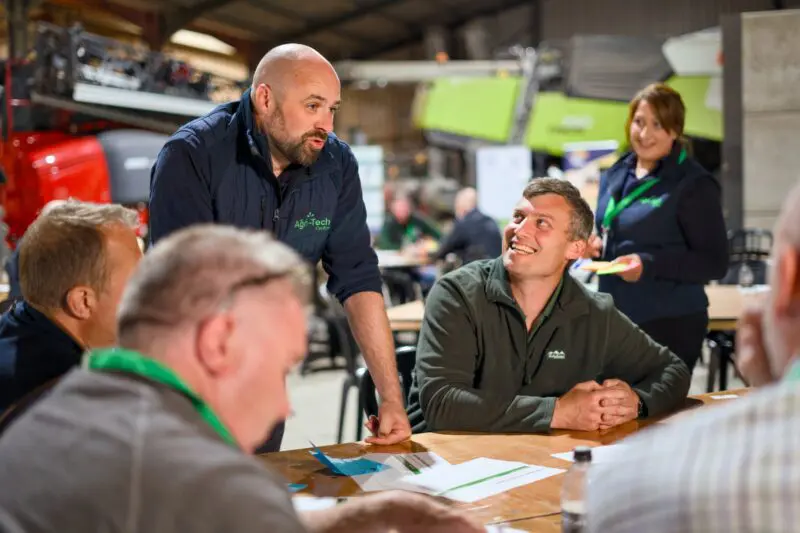
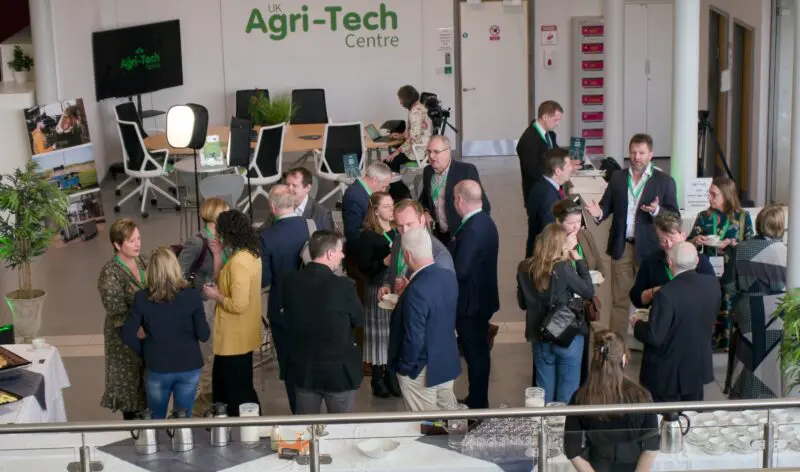
The UK Agri-Tech Centre joined hundreds of industry leaders at the World Agri-Tech Innovation Summit in London, Europe’s premier networking event for agri-tech innovation. The summit provided a dynamic platform for meaningful discussions, expert insights and collaborative thinking around the future of food systems. Throughout the two-day event, the UK Agri-Tech Centre engaged with agri-businesses, policymakers, technology leaders and start-ups, discussing the support and collaborative opportunities to drive forward cutting-edge, farmer-centric innovation. The UK Agri-Tech Centre took part in an insightful roundtable discussion about aligning innovation with agri-tech growth. The conversations underscored the importance of collaboration across the ecosystem to accelerate the development and adoption of technologies. On the day the UK Agri-Tech Centre was also joined by Lettus Grow, a UK tech company innovating in glasshouses. Jack Farmer, Co-Founder and Chief Scientific Officer of Lettus Grow, said: “It has been a really good event, attendance has been great with coverage of agri-tech start-ups, investors and corporate players in this space; it’s been a really good buzz this year.”   Hannah Senior, Interim Chief Executive Officer at the UK Agri-Tech Centre, said: “The World Agri-Tech Innovation Summit is a really important annual event in the UK agri-tech scene and brings together the investors, the established agri-tech businesses and entrepreneurs who are active in the agri-tech space. This creates a really exciting opportunity for understanding what trends are emerging and just getting a temperature check on the agri-tech ecosystem. We’ve been having lots of conversations with businesses of all sizes that are very active in the agri-tech world, to understand what’s on their mind. We talked about the opportunity for us, as the UK Agri-Tech Centre, to interact with them and accelerate the commercialisation of their technologies, getting them into the hands of farmers, growers and aquaculturists, in the UK and around the world. It’s been a really engaging couple of days and we are delighted to have been able to take part.”   To learn more about the World Agri-Tech Innovation Summit and how we can support your business or innovation, get in touch via [email protected].

Read More »

Carbon clarity: aligning assessments with sector needs

As pressure mounts for the agri-food sector to understand and reduce greenhouse gas emissions in line with the UK’s net zero commitments, there is a growing demand for carbon assessments. However, it is important to note that one size does not fit all when it comes to carbon assessments. Understanding how these tools are being used and how they can evolve to reflect real-world farming systems and industry priorities is crucial. For farmers, carbon assessments are not merely about meeting reporting requirements; they present an opportunity to gain insights that enable more resilient, efficient and sustainable production. How do we navigate the diverse requirements around carbon assessments in the agri-food sector? Seventy two percent of actors within the supply chain identified confidence in the data accuracy of tool providers as the most important outcome of carbon assessments, with independent verification also a key priority, according to a new report published by the UK Agri-Tech Centre in collaboration with Farm Carbon Toolkit. The two organisations collaborated to enhance the understanding of the range of uses to which carbon assessment tools are applied within the UK’s agri-food supply chain. This effort builds upon a previous harmonisation study undertaken by Defra, resulting in an independent, sector-wide review of carbon assessments and their diverse use cases to drive innovation, sector growth and support climate-smart decisions across the supply chain. Crucially, the report titled “Navigating the diverse needs and requirements of carbon assessments in the agri-food sector” also evaluates how well the needs of the sector are being met by the limited number of carbon assessment tools currently available on the market. The study is based on survey responses from more than 40 agri-businesses and ancillary service providers. The findings were used to map current carbon assessment to requirements and a gap analysis was undertaken to identify to what extent the tools meet those requirements. It covers data-driven carbon assessments, the tools and methods used, supporting services received, as well as motivations for and barriers to those assessments. With strategic insights for agri-businesses, farmers and growers and carbon tool providers, the report makes a series of recommendations around practice and adoption, standardisation and data accuracy, financial support and innovation. The report is a resource to shape decisions, investments and innovations across the carbon assessment landscape.  

Read More »

Driving agri-tech: the Robotics Proving Ground

The UK Agri-Tech Centre is a proud partner of the Robotics Proving Ground, an Innovate UK initiative which serves as a catalyst for the rapid development and adoption of robotics technologies in the UK and beyond. The Robotics Proving Ground is an internationally recognised catalyst for the development and adoption of advanced robotics technologies, accelerating the journey to commercialisation. The UK Agri-Tech Centre recently hosted an event within the Proving Ground programme at our Midlands Hub, creating an opportunity for cross-sector learning and collaboration. World-renowned capabilities The Robotics Proving Ground is deliberately broad, creating a strong UK-based innovation ecosystem that cuts across multiple industries. This event was a fantastic opportunity to showcase our facilities, connect with innovators and demonstrate how our network supports businesses in making technology market-ready. Agriculture, in particular, creates a complex and challenging proving ground for robotics. It is a sector defined by unpredictable weather patterns, variable terrain and complex physical conditions. It can be valuable to look at other challenging environments, such as offshore renewable energy, to learn how other sectors test and refine their own robotic solutions. One of the most important tools in this process is simulation. By creating virtual models, developers can test their technologies in a safe, controlled environment before moving into the field. The UK Agri-Tech Centre’s farm network and test and trial facilities enable innovators to trial their products safely, to build confidence and move closer to market readiness. Showcasing innovation During the event, we highlighted several success stories from our Community: Earth Rover – based at our Midlands Hub, using our workshop spaces to test and refine their robotics. UPP Broccoli Harvester – another tenant at the Hub, leveraging our network and facilities to advance their pioneering harvesting technology. Antobot – an excellent example of how access to our network has helped refine their product, find their niche in agriculture and grow. A collaborative audience The event brought together a diverse audience of companies, academic partners, supply chain representatives and stakeholders from across the automation and robotics sector. Key takeaways from the day include: Designing and testing autonomous technology that works alongside humans and livestock is a challenge. Proof of safety to build confidence among end users is critical.   The Robotics Proving Ground aims to bridge knowledge gaps and build networks to tackle these shared challenges.   What’s next? This event was part of an ongoing series designed to grow the robotics ecosystem and strengthen collaboration across sectors. The event also provided a great opportunity to highlight the work of the Automation and Robotics Regulatory Network (ARRNet), which is creating an organisation which will, in future, become the trusted partner of regulators, policy-makers, researchers and industry to deliver the evidence they need to create progressive regulation, industry standards and support businesses through the regulatory compliance testing and training accreditation journey. ARRNet is hosting two events in the next few months: Working Robots Day on 24 September – University of Lincoln 5 December – Manufacturing Technology Centre (MTC)   The Proving Ground comprises the Satellite Applications Catapult, the High Value Manufacturing Catapult, represented by the Manufacturing Technology Centre and the Offshore Renewable Energy Catapult.   If you’re curious about our cutting-edge facilities, the Robotics Proving Ground or the ARRNet initiative, we’d love to hear from you via [email protected]

Read More »

Agri-tech in action at the UK Agri-Tech Centre: An August round up

From industry insights to supporting businesses to develop cutting-edge innovation across AI, robotics and automation and CEA, to thought-provoking conversations at events, we’re sharing our top activities of the month to help you stay informed about all things agri-tech.   The next wave in responsible aquaculture   The importance of developing more test and trial facilities for businesses to create robust solutions in real-world environments was a significant topic of discussion led by our experts, Martin and Polly, at Aqua Nor last month. In Martin’s talk, titled “Stop Treading Water – The Next Wave in Responsible Aquaculture,” he called for increased investment in demonstration sites to accelerate the introduction of new products to the market. He highlighted the UK Agri-Tech Centre’s Marine Aquaculture Innovation Centre (MAIC), designed to enhance the UK’s capacity for aquaculture research and innovation. As we navigate towards a more sustainable and prosperous future in aquaculture, the message is clear: establishing robust testing grounds is not just beneficial; it’s essential for driving transformative change.     Building resilience in UK aquaculture       Using agri-tech to combat challenges in agriculture   As part of Farm24 in August, we highlighted those working hard to drive transformation and growth across the agriculture sector. The UK Agri-Tech Centre collaborates with businesses to accelerate innovation and with farmers and growers to increase adoption. Find out about some of the standout projects leading the way, including, Precision Pollination, a game-changer that harnesses drone technology to enhance strawberry pollination and HoofCount’s Pedivue device, which employs AI for the early detection of lameness in dairy cattle. These projects are testing and trialling new innovative solutions to drive sustainability, improve productivity and strengthen resilience. The future of farming is here and it’s more extraordinary than you could imagine!   Discover the future of farming       Boosting the future of potato farming with advanced trap crop strategies   If you are a potato grower, you might be familiar with a hidden battle lurking beneath the soil – the notorious potato cyst nematodes or PCN for short. This resilient foe poses one of the most formidable challenges for potato farming in the UK, wreaking havoc and leading to significant crop losses across the nation. Is there ray of hope on the horizon? Well, yes there is – the DeCyst initiative, a groundbreaking project supported by Defra and Innovate UK, which is exploring trap cropping as an innovative pest management strategy to help growers combat PCN and protect their yields.     Can agri-tech outsmart PCN?       Turning livestock waste into sustainable fertiliser with hydrothermal technology   Imagine a world where the 140 million tonnes of livestock waste generated each year in the UK no longer pose a problem, but instead, become a potent resource. Currently, when farmers spread this waste on their fields, only about half of the crucial nutrients, like phosphorus, are actually absorbed by crops. As costs for traditional fertilisers soar and vital resources dwindle, the agricultural landscape faces a pressing challenge. A new project: ‘Nutrient Utilisation and Recovery through Supercritical Extraction’ (NURSE) aims to change that. Supported by Defra and Innovate UK, this project will use advanced hydrothermal technology to recover valuable nutrients from livestock waste while also reducing carbon emissions. The project offers farmers a more sustainable and cost-effective solution to traditional fertilisers and enables condensed nutrients for precision application.   How waste is being turned into wealth     Unlocking agricultural insights with advanced multispectral sensors   How can multispectral imaging technology support smarter, data-driven farming decisions? Spectral imaging provides an efficient and cost-effective technology for farmers to see what the human eye cannot, capturing light across multiple wavelengths to reveal hidden details about their crops. The UK Agri-Tech Centre offers the chance to test, trial and demonstrate opportunities: Crop health monitoring Soil analysis Irrigation management Yield prediction Multispectral imaging: redefining what’s possible for modern agriculture   Find all our stories in our monthly newsletter – sign up today to get it straight to your inbox.

Read More »

Unlocking agricultural insights with advanced multispectral sensors

Multispectral imaging has long been a cornerstone of earth observation, used in satellite platforms like Landsat to monitor global environmental changes. In agriculture, unmanned aerial vehicles (UAVs) equipped with advanced sensors are revolutionising how we monitor and manage crops. What makes multispectral imaging so powerful is its ability to see beyond the visible spectrum. By capturing data across wavelengths such as near-infrared (NIR) and red edge, it enables detailed analysis of plant health, soil conditions and more. Techniques like the Normalised Difference Vegetation Index (NDVI) are just the beginning. This technology is proving invaluable across a wide range of agricultural applications. The integration of UAVs has made it possible to scale these insights, allowing for rapid, large-area mapping that supports smarter, data-driven farming decisions.   Our imaging system in action At the UK Agri-Tech Centre, our Trinity F90+ drone, paired with the MicaSense Altum sensor, has a flight time of up to 90 minutes. This setup is ideal for covering extensive farmland efficiently. The sensors cover Red, Green, Blue, NIR, Red Edge and Long-Wave Infrared (LWIR), making them a versatile tool for everything from crop health monitoring to thermal analysis.   Test, trial and demonstrate opportunities Crop Health Monitoring: Multispectral imaging can detect subtle changes in plant reflections that indicate stress, disease or nutrient deficiencies. This early pre-symptomatic detection allows for timely interventions to improve crop health and yield. Soil Analysis: By analysing different spectral bands, multispectral imaging can assess soil properties such as moisture content, organic matter and nutrient levels, helping farmers optimise soil management practices. Irrigation Management: Multispectral data can identify areas of water stress within a field, enabling precise irrigation management to conserve water and ensure optimal plant growth. Yield Prediction: By monitoring crop growth stages and health, multispectral imaging can help predict yields more accurately, aiding in better resource allocation and planning.   Yingwang Gao, Spectral Imaging Specialist at the UK Agri-Tech Centre, said: “At the UK Agri-Tech Centre we offer a one-stop multispectral imaging solution from data capturing to data analysis which has been proven to be fast and reliable. Please reach out to us if you’d like a quick insight into crop health, yield prediction and more.” Multispectral imaging was used in the Apple Orchard Health project, in collaboration with Landseer and Rumwood Green Farm, where healthy and diseased plots were surveyed and analysed. NDVI was derived from multispectral data and correlation analysis was carried out between health status and NDVI values.   Work With Us Whether you’re launching a new agri-tech innovation or looking to harness AI and data systems to boost your operations, we’re ready to collaborate. Our pathway is designed to support ideas through to commercial success, supported by expert knowledge, cutting-edge facilities and a strong commitment to sustainable agriculture.   If you want to learn more about Multispectral Imaging or have any questions, please get in touch at [email protected].
Read More »

Turning livestock waste into sustainable fertiliser with hydrothermal technology

A new initiative is enabling farmers to optimise the use of livestock manure and nutrients as fertiliser, helping to reduce costs and environmental impact. The project, titled ‘Nutrient Utilisation and Recovery through Supercritical Extraction’, or NURSE, is being developed by a consortium of collaborators including Kairos Carbon Limited (lead), Cranfield University, Royal Agricultural University and the UK Agri-Tech Centre. It is a part of Defra’s Farming Innovation Programme, delivered in partnership with Innovate UK. NURSE is focused on developing hydrothermal technology to process livestock waste, recovering valuable nutrients and producing carbon-negative, non-leaching fertiliser. The process also enables permanent carbon sequestration, offering a sustainable solution for farmers. Megha Raghavan, CEO of Kairos Carbon Limited, said:“It is critical that we find ways to turn wet organic wastes from a problem into a resource. This technology has the potential to prevent environmental contamination, fight nutrient depletion and remove billions of tonnes of carbon dioxide from the atmosphere, making it a powerful tool in the fight against climate change.” The UK generates approximately 140 million tonnes of livestock waste every year, most of which is spread on farmland. However, less than half of the nutrients applied, such as phosphorus, are absorbed by crops when livestock waste is spread on land. At the same time, farmers are facing rising fertiliser costs, while fertiliser resources like phosphorus are being depleted. This project offers a sustainable solution by removing carbon before fertiliser is applied, helping to significantly reduce emissions. Its non-leaching properties also ensure that more nutrients are absorbed by the plants, reducing waste and lowering costs.   Impacts for agriculture The hydrothermal technology developed offers direct benefits to farmers by recovering critical nutrients and materials from livestock waste in a condensed form. This enables the targeted use of low-leaching, sustainable fertilisers that help to reduce costs and improve crop yields. The technology will also allow for more effective waste management, decrease organic pollutants and capture carbon for storage, all while being energy neutral. These benefits also directly meet the UK’s requirements to improve the management of the livestock waste produced across England. Dr Stuart Wagland, Reader in Energy and Environmental Chemistry at Cranfield University, said: “Developing novel thermochemical processes to manage challenging wet wastes, dealing with emerging contaminants and recovering nutrients will have a significant impact across the UK and we are excited to be involved in this project.” Beyond directly benefiting farmers, Kairos also aims to further reduce emissions from UK agriculture and prevent pollutants and excess nutrients from entering water sources, helping to minimise the environmental impact of fertiliser use. The technology also addresses air pollution from livestock waste and other sources of agricultural emissions. Dr Karen Rial-Lovera, Associate Professor in Agriculture and Dean of Agricultural Science and Practice at the Royal Agricultural University, said: “This innovation seeks to support our growing need for sustainable nutrient management in agriculture. By repurposing waste products into a targeted fertiliser, the project has the potential to reduce contamination, waste and improve crop yields.”     In addition, Kairos’ solution will create and safeguard hundreds of skilled jobs across its supply chain like farming and agronomy, which support rural communities, to chemical engineering in fabrication and maintenance. This technology is scalable and can expand to additional industries, including sewage sludge, municipal waste and hazardous chemicals. This expansion offers the potential to remove more emissions and pollution whilst making more nutrients available for agriculture. Charlie Bowyer, Farm Technology Specialist at the UK Agri-Tech Centre, said: “Manure is an invaluable source of on-farm nutrients in livestock systems, but it is not without its challenges. Challenges around cost-effective and sustainable manure and slurry storage and point and diffuse air and water pollution are all serious issues facing farms producing manure. Furthermore, the east-west arable/livestock divide has led to an asymmetry in the availability of organically-derived nutrients in farming systems. Technologies to effectively process manures to eliminate storage issues whilst adding value by concentrating or stripping nutrients are sorely needed and this project takes a step towards developing a fascinating process to achieve just this.”   If you want to learn more about the NURSE project or other UK Agri-Tech Centre projects, please get in touch via [email protected]

Read More »

How can our spectral imaging technology fast-track your path to commercialisation?

We are driving the future of farming through cutting-edge AI and advanced sensors, such as our spectral imaging technologies. Spectral imaging allows us to see what the human eye cannot, capturing light across multiple wavelengths to reveal hidden details in crops, soil and plant health. It’s a fusion of imaging and spectroscopy and it’s revolutionising agricultural diagnostics. We work with three core technologies: Multispectral Imaging: Efficient and cost-effective, ideal for assessing plant health using indices like Normalised Difference Vegetation Index (NDVI). Hyperspectral Imaging: Offers detailed spectral “fingerprints” for precise analysis of crop conditions and soil composition. Fluorescence Imaging: Detects emitted light to monitor chlorophyll and molecular markers, enabling early stress detection. These technologies are foundational to our intelligent agriculture solutions, enabling species identification, stress detection and non-destructive chemical analysis.   Our AI-driven innovation pathway We offer a comprehensive suite of services designed to take your spectral imaging ideas from initial concept through to a fully commercialised product. Our process spans from understanding system requirements and identifying potential pitfalls, to implementation, unit testing and ultimately, market demonstration and commercialisation. Understanding product needs We begin by identifying the real-world challenges and opportunities. Leveraging our farm network, expert collaborators and in-house specialists, we ensure every project is grounded in practical agricultural insight. Laboratory testing and spectral imaging exploration In our Digital Phenotyping Lab, we use advanced imaging systems like the Hyperspectral Camera (VNIR/SWIR) and Videometer seed lab to detect minute spectral differences. This helps us uncover unique traits in crops and soil that can be used to build targeted AI models. Controlled glasshouse trials We scale up testing in our glasshouse facilities, including our Innovation Hub for Controlled Environment Agriculture (IHCEA). These trials simulate real-world conditions, validating lab results and refining AI models with robust data. Remote sensing capabilities With insights from the lab and glasshouse trials, we then move to field testing. Our UAV (Unmanned Aerial Vehicle) capabilities allow us to conduct large-scale surveys, gathering data across various terrains, which allows us to study organisms difficult to assess in controlled environments, such as forestry and livestock. Data processing, analysis and AI At every stage, we process and analyse data using advanced software and machine learning techniques. Our centralised data systems allow us to train AI models, such as random forest classifiers, to automate detection, classification and prediction tasks. This integration of spectral data with AI enables: Predictive diagnostics Automated phenotyping Real-time decision support Scalable data-driven solutions Commercialisation and market demonstration Once refined, we support collaborators in bringing their solutions to market. From go-to-market strategies to live demonstrations on our smart farms, we help showcase the value of AI-powered spectral imaging to investors, customers and stakeholders.   Work with us The UK Agri-Tech Centre is involved in a number of innovative projects, including the UAV Tree Health project, bringing research level agri-tech capability to the forestry sector. In partnership with Vertinetik, the project utilises drones with highly sophisticated sensors to capture reflective light from tree canopies for assessment of tree disease pathogen status.   The UK Agri-Tech Centre’s Spectral Imaging Specialist, Yingwang Gao, said: “At the UK Agri-Tech Centre, we have mature, ready-to-deploy spectral imaging sensors and cutting-edge imaging systems like SIF. We provide a one-stop ‘test, trial and demonstrate’ solution which will bring your ideas to life. We are looking for anyone who has a desire for precision farming to collaborate with us.”   Whether you’re developing a new agri-tech product or exploring how advanced sensors can enhance your operations, we’re here to collaborate. Our pathway is designed to support innovation from concept to commercialisation, backed by expertise, facilities and a commitment to sustainable agriculture.   If you want to learn more about spectral imaging or have any questions, please get in touch at [email protected].
Read More »

Using agri-tech to combat challenges in agriculture

The UK Agri-Tech Centre backs Farm24 As part of Farm24, powered by Farmers Guardian and sponsored by Morrisons, we are shining a light on those working behind the scenes to help drive transformation, whether through the adoption of new agricultural technology or the introduction of innovative, time-saving ideas. We are proud to work alongside amazing collaborators all year round. We work with farmers and innovators across the industry who work tirelessly to get nutritious food on your plate; delivering innovative solutions to agriculture’s most complex challenges, including climate pressures, rising energy costs and shifting demands. What are we working on? Tackling waste, boosting nutrition – leftover broccoli used for protein outputs In an effort to tackle food waste, the UK Agri-Tech Centre worked with UPP on their broccoli harvesting project, SusProt. This innovative sensor technology provides a sustainable choice and helps provide more nutritious food options for the consumer, while also maximising the value of what we grow. By ensuring 100% of the plant is put to good use, rather than the typical 30%, UPP are helping to reduce food waste, lower food miles and ensures more broccoli makes it to the supermarket shelves.   From daffodils to dairy cows Working with researchers and partners, we are exploring how a specific alkaloid found in daffodils can reduce methane emissions and improve the efficiency of feed protein utilisation by 50%. The ‘Dancing with Daffodils’ project benefits agriculture and society by enhancing productivity, reducing the need of high- cost, imported feed materials, improving food security and providing rural job opportunities.   Strawberry pollination by drones We have collaborated on the ‘Precision Pollination’ project, which uses drone technology to enhance fruit yield and quality in UK strawberries. By using changes in airflow, these drones aid pollination efforts, giving growers better forecasting tools. This project aims to drive advancements in food security, sustainability, increased production and improved fruit quality. Early detection of lameness in dairy cows Lameness remains a major challenge within the dairy sector, so we are supporting HoofCount’s ‘Pedivue’ – a device that enables farmers to detect lameness at an early stage by visualising changes to hoof health. This allows farmers to intervene with early treatment, to help cut down future vet costs, improving animal health and welfare and producing higher quality milk. Innovation rooted in real-world challenges Technology continues to open doors for smarter, more sustainable farming. The UK Agri-Tech Centre is helping to drive the future of farming by connecting people, ideas and solutions, working with our partners and collaborators to tackle the challenges faced by farmers and agri-tech businesses. Let’s celebrate the future of farming, powered by passion, driven by innovation and rooted in collaboration. Join the conversation, support British farming and see how technology is helping us grow better, together.   Want to know more about what we’re working on? Get in touch at [email protected].

Read More »