Archives: News & Insights

Collaboration key to agri-tech growth and adoption, Minister Daniel Zeichner hears

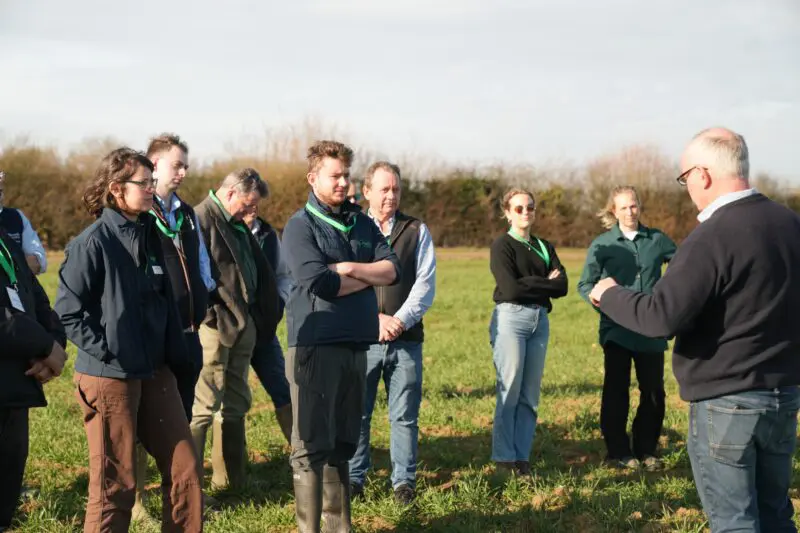
DEFRA Minister Daniel Zeichner toured Harper Adams University’s campus with The Institute for Agriculture and Horticulture (TIAH) and the UK Agri-Tech Centre to explore how education, research and technology development are shaping the future of the agri-food industry. The Minister of State’s itinerary included a stop at the Future Farm, designed to integrate research and teaching priorities, followed by a visit to the UK Agri-Tech Centre’s Midlands Innovation Hub. There, he engaged with businesses leveraging cutting-edge facilities to refine and scale their technologies. Following the tour, the Minister joined a working lunch with hosts and students, where discussions focused on key priorities such as agricultural R&D, skills development, education needs, the land use framework and broader agricultural policy within the UK.     Dr. Peter Quinn, Chairman of the UK Agri-Tech Centre, said: “As the UK’s largest agri-tech-focused organisation, our mission is to fuel business growth and fast-track the adoption of agri-tech solutions that generate real-world impact. We champion a thriving community of forward-thinking agri-tech businesses and take pride in contributing to their achievements. It was a pleasure to introduce Minister Zeichner to companies like UPP, which is addressing labour shortages in broccoli harvesting, developing alternative protein products and creating new revenue opportunities by repurposing agricultural waste.”   Tess Howe, Head of Partnerships and Policy at TIAH, added: “As agriculture encounters evolving challenges and new technologies, it is vital that farmers and growers acquire the skills necessary to stay resilient and innovative. Our upcoming Labour Market Information research underscores the critical competencies required for investing in and implementing technological advancements that will enhance business resilience and sector-wide growth. Through effective collaboration, we can create an environment of knowledge-sharing that bridges skill gaps and equips all farmers and growers with the tools to succeed.”   Professor Ken Sloan, Vice-Chancellor of Harper Adams University, said: “In my discussions with the Minister in Westminster, I stressed the crucial role that collaboration with external partners plays in the success of specialist institutions like Harper Adams. We were therefore pleased to welcome him to our University, alongside our colleagues from TIAH and the UK Agri-Tech Centre, to highlight the strength of these relationships. His visit provided an opportunity to showcase our Future Farm, introduce him to our faculty and students and present some of our numerous research initiatives.”   If you would like to learn more about Minister Daniel Zeichner’s visit or understand more about the work being done in the agri-food sector, get in touch via [email protected]  

Read More »
Freerange poultry | Monogastric expertise | UK Agri-Tech Centre | farming innovation

Poultry innovation and sustainability with Dr Fiona Short and Paddy Tarbuck

Experts from the UK Agri-Tech Centre recently joined an engaging discussion on the Poultry.Network’s podcast, delving into science-led research, sustainability and the challenges facing the poultry industry today. Dr Fiona Short and Paddy Tarbuck, both Innovation Leads at the UK Agri-Tech Centre, sat down with Tom Willings for a special edition of the Sustainability Hub podcast.

Read More »

UK Agri-Tech Centre CEO champions farmer-led innovation in NFU speech

Farmer-led approaches to innovation are critical, Phil Bicknell, CEO of the UK Agri-Tech Centre, told the audience at the NFU conference. In a session titled Science and Technology to grow, he described three transformational technologies in which the UK Agri-Tech Centre has been involved and in which farmer ideation, input and codesign as well as on-farm test and trial, were critical to their successful development: Hoofcount, Antobot and UPP Susprot. In each case, what began as a problem-solving tool is becoming a game-changer – creating new revenue streams, reducing waste and reshaping the future of farming.  His speech followed DEFRA Secretary of State, Steve Reed, who said that innovation and technology will help farmers produce more food more sustainably and more profitably and announced legislation to implement the Precision Breeding Act for plants in England had been laid in Parliament that day (Tuesday, February 25). The Secretary of State also announced the ADOPT programme which will fund farmer-led trials to bridge the gap between new technology and their use in the real world. The UK Agri-Tech Centre, along with ADAS and the Soil Association will help manage the ADOPT support hub, a centralised support system to help farmers, growers and foresters across England access the Programme. “We know that farmers are busy and applying for funding can feel overwhelming,” said Phil Bicknell. “The ADOPT support hub is here to provide straightforward, step-by-step support – whether it is developing trial ideas, applying for funding or sharing knowledge with the wider community, including farming groups and stakeholders.” A wide range of ideas is encouraged: the UK Agri-Tech Centre’s definition of agri-tech embraces all new technology and pioneering management strategies across agriculture, forestry and aquaculture. And we have the breadth of knowledge and facilities to support them – with 43 innovation capabilities, 150 expert staff and 470+ industry partnerships, the UK Agri-Tech Centre is in a singular position to foster collaboration, expand international reach and drive sector resilience. “Our work is designed to bring the best possible benefits to your world,” said Phil. “We’re well aware that you operate in a world of economic and climate pressures, as well as changing policy. We’re also well aware that you are the experts on your farms – how can we support you, your farm, your business, your future? Get in touch and let us see what we can do to make your work easier, more profitable and more sustainable.” While at this event, Phil was interviewed for BBC Farming Today on the topics highlighted in this blog. Listen here.   If you want to learn more about the ADOPT programme or any of the projects mentioned, get in touch via [email protected].

Read More »

In-market visit to Africa: The DATA-BEE project

Africa – in market visit (February 10-14, 2025)   A delegation from the UK Agri-Tech Centre has completed a successful weeklong visit to Nigeria and Ghana as part of the DATA-BEE scoping project focused on digital farming and precision agriculture.   The scoping project is part of the Innovate UK Climate-Smart Agriculture Partnership and aims to build networks between the UK, Brazil, Ghana and Nigeria identifying opportunities for collaboration and knowledge sharing to develop technologies and practices that promote climate-smart agriculture solutions for sustainable food production systems in Ghana and Nigeria.  The visit aimed to build knowledge and foster collaboration, which included engagement with government agencies, research institutions and agribusinesses.   During the mission, the UK delegation engaged with various local companies and organisations to explore opportunities for knowledge exchange, technology transfer and capacity building. Meetings and site visits provided valuable insights into the challenges and opportunities within the agricultural sectors of Nigeria and Ghana, reinforcing the importance of international collaboration in advancing climate smart farming solutions in digital farming and precision agriculture.  Key highlights of the visit included:  The outcomes of this mission will be instrumental in shaping upcoming initiatives, including further engagement with regional partners and potential project ideas.  Next Steps: Join Our Dissemination Events  This Friday (February 21, 2025), we are hosting two online sessions to update UK and Brazilian stakeholders on our findings, market insights and early-stage project ideas. There will also be Nigerian and Ghanaian stakeholders on the call that we have connected with through the visit.  Nigeria Webinar (10:45 – 11:45 UK time)  Exploring Opportunities in Digital Agri and Precision Farming in Nigeria Tickets, Fri, Feb 21, 2025 at 10:45 AM | Eventbrite  Ghana Webinar (12:00 – 13:00 UK time)  Exploring Opportunities in Digital Agri and Precision Farming in Ghana Tickets, Fri, Feb 21, 2025 at 12:00 PM | Eventbrite    James Kayam, International Business Development Manager at the UK Agri-Tech Centre: “The visit was an important element of our DATA-BEE project for our team to validate research, build an understand of market requirements and develop key contacts in the sector. We engaged with over 200 individuals from across government, academia and industry.  From hearing about the effects of climate change to how post-harvest losses can account for up to 60% of food waste, our team have come away with key insights and connections that will help us in developing future projects in the region with UK and Brazilian expertise and capability.” Claire Hodge, Head of Agri-System at the UK Agri-Tech Centre: “We can support the development of agri-tech solutions in Nigeria and Ghana by leveraging our UK facilities and expertise in technology development. Key focus areas include affordable connectivity via satellite and mobile platforms, IoT-driven water management for efficient irrigation, AI-powered forecasting to help farmers anticipate weather shifts and planting seasons and digital pest and disease management for early detection and control. In partnership with Brazil, we aim to develop globally scalable solutions, addressing these challenges across diverse farming systems. We can ensure practical adoption by working with Ghana and Nigeria businesses to develop and integrate these technologies with established KE networks and farmer cooperatives, enhancing productivity across staple and horticultural crops.” Mark Smithson, Department for Business and Trade Country Director, British Deputy High Commission Lagos, Nigeria: “The UK Agri-Tech Centre’s visit to Nigeria highlighted the transformative potential of the DATA-BEE project in supporting and advancing digital agriculture. By harnessing data and precision farming technologies, DATA-BEE (one of the 12 Innovate UK scoping projects) aims to support farmers with actionable insights to enhance productivity, improve resource efficiency and drive sustainable agricultural practices. This initiative underscores the UK’s commitment to fostering innovation and collaboration in Nigeria’s agri-tech sector, paving the way for greater food security and resilience in the region.” Godlove Otoo, Department for Business and Trade, British High Commission Accra, Ghana: “The UK Agri-Tech Centre’s visit to Ghana highlights the transformative potential of the DATA-BEE project to empowering and transforming farmers crop production and post-harvest handling with real-time, data-driven insights. Strengthening UK-Ghana partnerships, we are advancing sustainable agriculture through innovation and technology.” If you would like to know more about the DATA-BEE in-market visit to Africa , please get in touch via [email protected]

Read More »

The power of legumes in enhancing farm biodiversity

Biodiversity plays a crucial role in maintaining healthy ecosystems and within agricultural landscapes, legumes can be powerful in encouraging this. The inclusion of legumes within cropping systems has a distinct ability to improve the biodiversity of farm ecosystems, both spatially and temporally at below and above-ground scales. The benefits of nitrogen fixation An immediate positive impact of legumes on biodiversity are the effects of their nitrogen fixation on surrounding soil health; a legumes ability to fixate atmospheric nitrogen provides ideal soil conditions for other plants or organisms, acting as a reliable nitrogen source. For example, nitrogen transfer from clover to wheat is related to increased earthworm presence and activity, which indicates the soil has ideal conditions for biological activity and even microbial activity.   The ability for legumes to fixate their own nitrogen also reduces the dependence on applied nitrogen fertilisers in areas in which legumes are present or have been in the past. Using applied chemical fertilisers can cause eutrophication, which causes excessive plant and algal growth and is detrimental to aquatic ecosystems and their subsequent inhabitants and biodiversity.   Replacing nitrogen fertilisers with self-sufficient nitrogen-fixing legumes allows for the generation of beneficial nitrogen and ammonia within soils, without the risk of chemical fertiliser runoff causing eutrophication which hinders biodiversity. The attraction of pollinators and inhabitants Beyond the nutritional benefits on biodiversity, legumes can visually effectuate biodiversity through their attraction of pollinators. A flowering legumes provision of nectar and pollen helps sustain pollinator populations, such as bees and butterflies, which may not have been otherwise present in an area lacking floral resources. The physical presence of legumes may also provide habitats for other taxa, be it insects or small mammals. For example, lucerne, a leafy legume, act as a significant habitat for grasshoppers. This provision of habitats and their subsequent inhabitants can supply animals that act as prey and provide foraging habitats for larger organisms, like farmland birds, bats and vertebrates. The benefits of stable soil structures Legumes can improve soil structure due to their extensive rooting systems that provide an intact soil structure with minimal disturbance, attracting beneficial insects and earthworms to the stable soil. Beyond improving animal diversity, the maintenance of stable topsoil also sustains plant diversity, by providing more structured soils and ideal growing conditions for other plant types or crops. However, the benefits of soil structure go beyond diversity and include improved root water systems and assist with carbon sequestration. Contributions towards more resilient food chains The localised benefits of legumes on biodiversity can more largely contribute towards boosting biodiversity within a farm’s wider food chain, as the increased presence and diversity of smaller organisms provide food for larger, more mobile species across the ecosystem. These trophic interactions also contribute towards the transfer of nitrogen-rich substances throughout the food chain and aid even large animals in their survival and access to nutrient-rich prey. Implementing legumes into grassland systems The UK Agri-Tech Centre is collaborating with LEAF on the Nitrogen Utilisation Efficiency Legumes (NUE-leg) project, a DEFRA on-farm and research trial looking to eliminate the dependence of UK grassland farming on applied nitrogen fertilisers. It aims to do this by developing solutions to reduce environmental impacts while enhancing the economics and sustainability of grassland farming and promoting on-farm biodiversity. Incorporating legumes into agricultural practice is not just strategic for improving crop growing conditions, but a vital step towards enhancing and sustaining biodiversity across the entire ecosystem.   If you are interested in the power of legumes or the NUE-leg project and want to learn more, get in touch with us at [email protected]

Read More »

A career in agricultural science: A conversation with Dr. Phoebe Sutton 

On International Day of Women and Girls in Science 2025, the UK Agri-Tech Centre is celebrating the contributions of women at our company. Dr. Phoebe Sutton, Innovation Sector lead is a plant scientist with a passion for applied research.   Discovering a passion for plant science   Growing up in Leicester, Phoebe didn’t come from a farming background. Her mother worked as a council secretary and her father was in the building trade. But she excelled in academia, particularly in biology, which she pursued at the University of Bristol. Initially uncertain about her specialism, it was during her undergraduate studies that she discovered a fascination with molecular plant science.  “I liked the simplicity of it,” she explains. “Plants just respond to their environment using their genetic programming. There’s no messy behaviour like with animals, and the ethics of experiments are far easier to navigate so its easier to answer deeper questions.”  Her curiosity led her to an integrated master’s degree, before which she undertook a summer research project in partnership with a local vertical farming company. This experience inspired Phoebe and established an interest in how technology can enhance plant growth and nutrition, setting the foundation for her PhD research.  Navigating a PhD  Phoebe’s PhD at Lancaster University focused on the effects of light on vertically grown plants, particularly how different wavelengths impact the nutritional density of leafy greens. Sponsored by an industry partner, she was conducting high level research at the intersection of academia and applied science.  But, like many researchers, Phoebe faced significant hurdles. In her first year, she constructed a bespoke vertical growth system with tuneable lighting inside a growth chamber, but at a critical point in her research, the environmental control of the plant growth chamber broke down, delaying her experiments for over a year. When it was finally repaired in early 2020, the pandemic hit, forcing her to pivot towards bioinformatics on published datasets. “It was tough, especially since I’d been waiting so long to do the practical research,” she says. “But you have to keep looking for opportunities in setbacks. The data analysis added another element to my thesis and the time enabled me to do a desk-based review with one of the UK Agri-Tech Centre legacy centres, which sowed the seed for me joining in my current role.”  Despite the challenges, Phoebe successfully completed her PhD, even working unpaid for a period to finish her experiments. “It was a labour of love,” she admits, “but it’s also my greatest achievement.”  Breaking into industry   Towards the end of her PhD, Phoebe was approached by a horticultural lighting company, Vertically Urban, looking for a plant scientist to support their product development. This transition from academia to industry was a natural fit, allowing her to apply her expertise to real-world agricultural challenges.  At Vertically Urban, she balanced scientific research with elements of engineering and design, as well as marketing and sales — this SME experience deepened her understanding of innovation in the agri-tech sector. Today, Phoebe works at the UK Agri-Tech Centre, where she plays a key role in research projects that bridge science and industry. “I love the variety,” she says. “One day I’m analysing data, the next I’m attending conferences and the next I’m working with companies to design funding proposals. I greatly value the opportunity to work with people that have really exciting ideas about technology and how to improve food production in a range of different ways. It’s a much broader view of agriculture than I had in my PhD.” The power of female mentorship   Reflecting on her career, Phoebe credits her success to strong female mentors. “My PhD supervisor, Gabriella, was a huge champion for me—always putting my name forward for opportunities,” she says. “I was also lucky to work with inspiring women like Kerry Franklin, who supervised my research project at Bristol and was then my external examiner for my PhD. Its was a lovely circularity to my journey.”  While plant science has a relatively high proportion of women, Phoebe noticed a stark contrast when she moved into the business world. “At Vertically Urban, I was often the only woman in the room,” she recalls. “That was a new experience, and there were challenges, but I never doubted my right to be there.” Phoebe’s advice for young women in STEM is simple but powerful:  “Find the people who will lift you up. Seek out mentors, ask for guidance and surround yourself with those who champion your success. And above all, trust in your own abilities. If you’ve put in the work, you deserve to be there.”  Looking to the future   Phoebe sees broader changes on the horizon for agriculture. “There’s a real shift happening,” she notes. “The old model of extracting from the land is being replaced by a more balanced approach—one that values sustainability, regeneration and working in harmony with nature.”  Women, she believes, will play a vital role in this transformation. “Whether it’s in regenerative farming or agri-tech, there’s a growing space for women to lead and shape the future of food production.”  Happy International Day of Women and Girls in Science!  If you want to learn more about Dr. Phoebe Sutton and her experience, get in touch via [email protected]  

Read More »