Archives: News & Insights

How do we drive agri-innovation for a Net Zero Scotland?

That was the question UK Agri-Tech Centre Chairman, Dr Peter Quinn explored in front of an audience of Scottish ministers, MSPs and representatives of Scotland’s rural industry at the Scottish Parliament. So how do we drive agri-innovation for a Net Zero Scotland? Peter writes: It was a privilege to speak in the heart of Scottish democracy about one of the defining challenges of our generation: how we feed a growing global population, while radically reducing emissions and restoring our ecosystems. I was invited to address MSPs and invited guests from across Scotland’s rural sector as part of the Royal Highland and Agricultural Society’s 2025 Presidential Initiative which is highlighting the ways the ways that agriculture is supporting the environment as well as how Scotland’s research institutes and organisations are helping the country to reach its Net Zero targets. It aims to promote Scottish farming as a part of the solution rather than the problem. I also believe that Scotland has the science, the innovation infrastructure and the rooted farming traditions to lead the way. Let’s not sugarcoat the challenge: globally the population is projected to rise by 20% to nearly one billion by 2050. Here in the UK, we are looking at a 13% increase to around 77 million people. And the growth isn’t linear: by 2032, we’ll see a 9% global rise and 7.3% here in the UK. Meanwhile, agriculture uses 70% of the world’s freshwater, emits 25% of all greenhouse gases and occupies 44% of habitable land. In the UK 70% of our land is formed but we still import 40% of the food we eat. And crucially, Total Factor Productivity – a key measure of innovation and efficiency in farming – has dropped by over 5% in the UK over the past year. We’re falling behind key competitors. This is more than a climate emergency; it’s an economic and strategic opportunity to re-imagine how we produce food smarter, cleaner and more locally. The role of innovation Innovation is how we turn ambition into action. At the UK Agri-Tech Centre we’ve focused on three priorities. 1: better measurement, because if you can’t measure it, you can’t manage it; 2: faster adoption of proven low emission technologies, from soil to stomach; and 3: maximising carbon removal without compromising food security. Let’s take livestock: ruminants produce nearly 90% of UK missions but we now have feeds, genetic tools and manual management systems that can reduce emissions dramatically by targeting methane production directly. In crops, fertiliser is the major emitter. Innovations like green ammonia, biological alternatives and better nitrogen use efficiency can shift the dial. And across the board, breakthroughs in data, senses and satellite-linked decision tools are making carbon-smart farming a reality. This isn’t science fiction, it’s science now, but to scale it we need investment, regulation and collaboration to reach Net Zero. Scotland’s innovation ecosystem Scotland is punching well above its weight when it comes to agricultural innovation. At the James Hutton Institute in Dundee, we’ve helped establish a world-leading controlled environment agriculture hub, a state-of-the-art facility for sustainable, tech-driven farming. On Loch Fyne, our Marine Aquaculture Innovation Centre (MAIC) supports cutting-edge R&D and fish health, feeds and environmental impact. Our mobile sensory laboratory takes advanced quality testing tools directly to farms, capturing real-world data that informs breeding market decisions. And through Scotland’s farm network and research partnerships we are proving that breakthrough science can be grounded in practical, on-farm realities. Take iLivestock, for example. It’s a Scottish agri-tech company we’ve supported throughout its growth. With investment from Scottish Enterprise and Kelvin Capital, they’ve tripled their workforce, increased monthly revenue tenfold and now export 78% of their product overseas. Their platform cuts CO₂ emissions by up to 30% by optimising nutrition and life-cycle management, validated by the University of Edinburgh. That’s Net Zero innovation: creating jobs, exports and measurable climate benefit. Policy opportunity But innovation doesn’t happen in a vacuum. Scotland’s Net Zero 2045 target is bold. It’s national innovation strategy is ambitious. Now the task is to align policy with practice. That means enabling precision tech and smart data tools, investing in climate focused businesses and removing regulatory roadblocks that hold back sustainable progress. It means making sure that Scottish science can translate into Scottish solutions for our farmers, food system and future, and it includes exploring technologies like precision-breeding ,approached in a way that reflects our values, our world-class science and our need to stay globally competitive. Above all, it means putting farmers at the centre, not just as adopters but as co-creators of this transition. Scotland has the science, it has the innovators and it has the will. Through smart policy, bold investment and collaborative partnerships like those we’ve built across the UK Agri-Tech Centre network we can turn climate risk into economic opportunity. Because if we get this right, we won’t just hit Net Zero, we’ll build a food system that’s productive, profitable and sustainable for generations to come.
Read More »

New farmer-led innovation fund launching – Applications now open

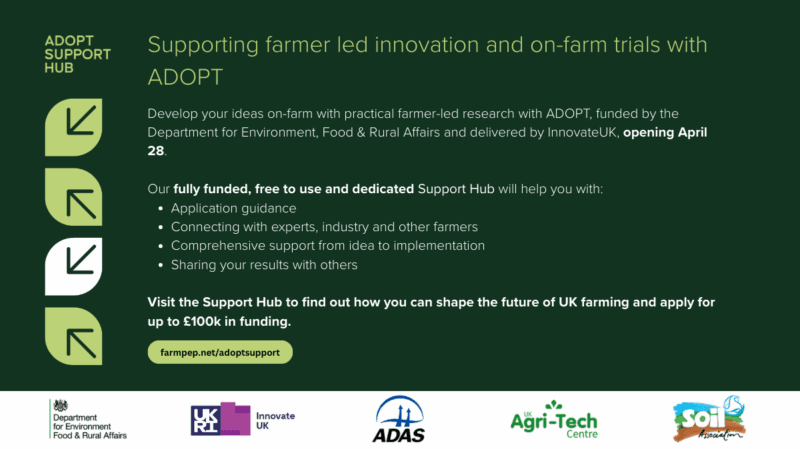
Farmers, growers and foresters in England can now apply for a new round of funding to help trial and test practical solutions to real on-farm challenges, with fully funded, free support from the ADOPT Support Hub. The ADOPT Fund – funded by DEFRA and delivered by Innovate UK – is designed to back farmer-led innovation. Whether it’s trialling a new technology or testing a change in practice, ADOPT offers the funding and support to make it happen. What’s on offer? There are two types of grants available: Support grants (up to £2,500): These help applicants explore their idea and work with a project facilitator to shape a strong proposal. Full grants (up to £100,000): To support farmer-led, collaborative research and innovation projects over 6 months to 24 months. Why this matters The ADOPT Fund is different from previous innovation funding. It’s farmer-led, but collaborative – bringing in others like advisers, researchers, tech providers and other like-minded farmers to help turn your idea into something ready to be adopted more widely in the agricultural community. It’s also focused on practical impact, not just theory. That means funding is aimed at real-world challenges, everyday technology, practices and ideas that aren’t yet widely adopted but could make a difference. You’re not expected to go it alone We understand that most farmers haven’t applied for this kind of funding before. That’s why the ADOPT Support Hub is launching alongside the fund. The Support Hub is fully funded and free to use, providing you with the guidance, resources and connections you need at every step. The Support Hub is here to help you: Whether you’re just exploring an idea or ready to apply, the Support Hub provides the guidance, resources and connections to support you at every step. What is a Project Facilitator? All projects applying for ADOPT competitions must include a Project Facilitator to support project delivery and management. Project facilitators are independent experts who play a required and central role in all ADOPT-funded projects. They bring experience in farmer-led research, Innovate UK grant processes and project management. The ADOPT Support Hub can guide you on how to connect with a suitable registered facilitator – or help you understand how to work with someone you already know, as long as they meet the criteria. We want to hear from you We’re actively encouraging applications across the full spectrum of farming types, regions and communities. Whether you’re a grower, forester, livestock farmer, arable producer or part of a local farming group – we want to hear your ideas, challenges and opportunities. If you’ve got a hunch that something could be improved on-farm, this is your chance to try it with support.     Interested in becoming a Project Facilitator? For information, visit the Facilitator FAQ’s on the Business Connect site.

Read More »

SKE-NMT Project: Kelp extract as a sustainable solution for soil health and crop resilience

A project is underway to explore how kelp extracts can enhance nutrient management in agriculture, backed by Innovate UK funding and a coalition of industry experts. The project, titled ‘Assessing Sugar Kelp Extracts as a Nutrient Management Tool’ (SKE-NMT), is spearheaded by Algapelago Marine Ltd in collaboration with The James Hutton Institute, Atlantic Mariculture Ltd and the UK Agri-Tech Centre. In its early phases, this research seeks to investigate how biologically driven nutrient management strategies can improve soil health and crop performance. By leveraging the natural properties of seaweed biostimulants and reducing reliance on mineral fertilisers, the project aims to foster plant resilience while optimising soil microbial and fungal ecosystems. Seaweed supplements contain a uniquely rich blend of fibres, micronutrients and bioactive compounds that stimulate beneficial soil microbiota. This, in turn, triggers a chain reaction of biological processes that benefit productivity, resistance to abiotic stress and resistance to pathogens. This innovative approach is applicable across a broad range of crop types, including broadacre, horticulture and top fruit. Seaweed biostimulants present a viable solution to both biotic and abiotic challenges, facilitating the transition toward more sustainable and resilient farming practices. The research will also lay the groundwork for larger-scale field trials, further investigating the impact of kelp-derived biostimulants on Nutrient Use Efficiency (NUE). How does it work? Rhizosphere microbiota is a collection of microorganisms that live in the soil and around plant roots and plays an essential role in the degradation of organic matter, nutrient retention and recycling. Previous studies suggest that applying seaweed extracts can significantly enhance microbial diversity and improve crop yield and quality. The SKE-NMT project builds upon prior research, including an Innovate UK-supported initiative on low-energy kelp extraction for soil and livestock applications. This project is examining the potential of biostimulants and livestock feed additives—derived from sugar kelp through an innovative low-energy extraction process—to improve soil conditions and enhance feed efficiency. The seaweed extracts are novel due to two key factors: firstly, cultivated sugar kelp (a type of brown alga native to UK coastal waters), is a relatively new species in the seaweed extract sector and boasts a distinct biochemical composition; secondly, these extracts are produced using a novel low-energy fermentation and extraction process. Cultivated kelp provides a sustainable and scalable alternative to wild-harvested marine biomass. However, the potential of novel cultivated seaweed biomass, especially in applications like biostimulants, remains under-explored.  This project seeks to establish an innovative supply chain where cultivated seaweed biomass plays a crucial role in the transition to global sustainable agricultural practices. The new SKE-NMT project will quantify the ability of these low-energy seaweed extracts to improve nutrient use efficiency in stringently designed crop trials. These trials will explore yield responses under reduced nitrate and phosphate conditions and correlate improved uptake of nitrogen and phosphorus under fertiliser limitation with impacts on microbial diversity and community structure.The project will merge the development of new technologies (novel seaweed extracts) with further means to improve nutrient use efficiency in arable and horticultural systems. Broader impacts Traditional nutrient management practices often rely on heavy mineral fertiliser inputs, which can lead to environmental degradation and high costs. Integrating seaweed-derived supplements could improve NUE, reducing carbon emissions while simultaneously enriching soil fertility. With UK farmers under increasing pressure to maintain productivity while mitigating nutrient leaching and reducing fertiliser dependency, this project aims to validate the role of cultivated kelp extracts in improving NUE. Luke Ansell, Head of Operations at Algapelago Marine Ltd, said: “We’re thrilled to have secured funding for a second Innovate UK project focused on the development of kelp biostimulants. The project aims to address data gaps and build the evidence case for the role of cultivated seaweed extracts in modern crop production. The SKE-NMT will test the hypothesis that sugar kelp extracts can improve plant nutrient use efficiency here in the UK.” Dr Adrian Macleod, Innovation Manager at Atlantic Mariculture Ltd, added: “We are delighted to have been provided this opportunity by Innovate UK. Seaweed aquaculture is a game-changer for sustainable food systems, and I’m passionate about unlocking its full potential. Cultivated seaweed biomass offers a scalable, sustainable solution that not only supports marine ecosystems but could also play a vital role in sustainable agriculture. This project is an exciting step forward in demonstrating how seaweed biostimulants can enhance soil health, improve nutrient efficiency and reduce reliance on conventional fertilisers. By developing an innovative supply chain, we are laying the groundwork for a future where cultivated seaweed is a cornerstone of both aquaculture and agriculture.” Gordon McDougall, Research Leader at the James Hutton Institute, said: “We are delighted to bring our expertise in seaweed biochemistry, biostimulants and crop trials to this important research project. Understanding how these novel low-energy seaweed extracts can reduce inputs of nitrogen and phosphate fertilisers, maintain or improve crop yield whilst altering the soil microbiota could provide new approaches for greener agriculture.” And Martin Sutcliffe, Innovation Lead for Aquaculture at the UK Agri-Tech Centre, commented: “The UK seaweed farming sector has great potential to meet the needs of other sectors such as arable farming. Projects like this can provide real-world use cases for seaweed farmers, enabling sustainable growth of seaweed farming in the UK which, in turn, can provide well-paid, long-term jobs in our coastal communities, helping to shift away from the current boom-and-bust cycle of seasonal employment. I’m really excited to see the results of this work and how, together with similar projects the UK Agri-Tech Centre is working on, we can move towards a more resilient, sustainable food system in the UK.” This initiative underscores the growing importance of seaweed-derived biostimulants in sustainable agriculture, positioning cultivated kelp as a valuable resource for improving soil health, nutrient efficiency and overall farm productivity.   If you would like to learn more about the SKE-NMT project, please get in touch via [email protected].

Read More »

Collaboration key to agri-tech growth and adoption, Minister Daniel Zeichner hears

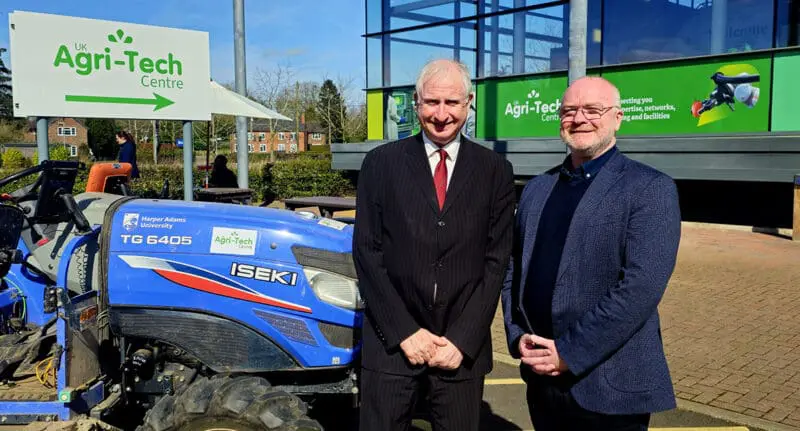
DEFRA Minister Daniel Zeichner toured Harper Adams University’s campus with The Institute for Agriculture and Horticulture (TIAH) and the UK Agri-Tech Centre to explore how education, research and technology development are shaping the future of the agri-food industry. The Minister of State’s itinerary included a stop at the Future Farm, designed to integrate research and teaching priorities, followed by a visit to the UK Agri-Tech Centre’s Midlands Innovation Hub. There, he engaged with businesses leveraging cutting-edge facilities to refine and scale their technologies. Following the tour, the Minister joined a working lunch with hosts and students, where discussions focused on key priorities such as agricultural R&D, skills development, education needs, the land use framework and broader agricultural policy within the UK.     Dr. Peter Quinn, Chairman of the UK Agri-Tech Centre, said: “As the UK’s largest agri-tech-focused organisation, our mission is to fuel business growth and fast-track the adoption of agri-tech solutions that generate real-world impact. We champion a thriving community of forward-thinking agri-tech businesses and take pride in contributing to their achievements. It was a pleasure to introduce Minister Zeichner to companies like UPP, which is addressing labour shortages in broccoli harvesting, developing alternative protein products and creating new revenue opportunities by repurposing agricultural waste.”   Tess Howe, Head of Partnerships and Policy at TIAH, added: “As agriculture encounters evolving challenges and new technologies, it is vital that farmers and growers acquire the skills necessary to stay resilient and innovative. Our upcoming Labour Market Information research underscores the critical competencies required for investing in and implementing technological advancements that will enhance business resilience and sector-wide growth. Through effective collaboration, we can create an environment of knowledge-sharing that bridges skill gaps and equips all farmers and growers with the tools to succeed.”   Professor Ken Sloan, Vice-Chancellor of Harper Adams University, said: “In my discussions with the Minister in Westminster, I stressed the crucial role that collaboration with external partners plays in the success of specialist institutions like Harper Adams. We were therefore pleased to welcome him to our University, alongside our colleagues from TIAH and the UK Agri-Tech Centre, to highlight the strength of these relationships. His visit provided an opportunity to showcase our Future Farm, introduce him to our faculty and students and present some of our numerous research initiatives.”   If you would like to learn more about Minister Daniel Zeichner’s visit or understand more about the work being done in the agri-food sector, get in touch via [email protected]  

Read More »
Freerange poultry | Monogastric expertise | UK Agri-Tech Centre | farming innovation

Poultry innovation and sustainability with Dr Fiona Short and Paddy Tarbuck

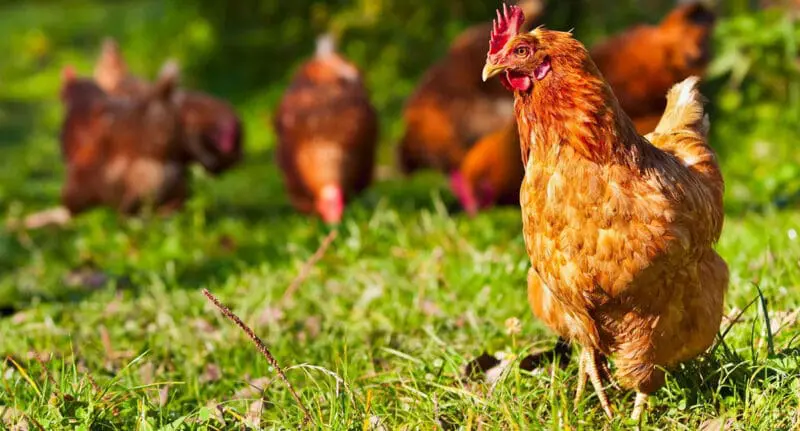
Experts from the UK Agri-Tech Centre recently joined an engaging discussion on the Poultry.Network’s podcast, delving into science-led research, sustainability and the challenges facing the poultry industry today. Dr Fiona Short and Paddy Tarbuck, both Innovation Leads at the UK Agri-Tech Centre, sat down with Tom Willings for a special edition of the Sustainability Hub podcast.

Read More »

UK Agri-Tech Centre CEO champions farmer-led innovation in NFU speech

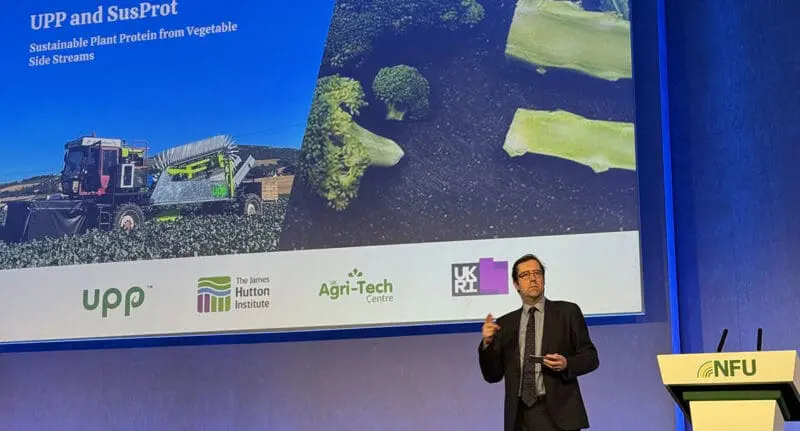
Farmer-led approaches to innovation are critical, Phil Bicknell, CEO of the UK Agri-Tech Centre, told the audience at the NFU conference. In a session titled Science and Technology to grow, he described three transformational technologies in which the UK Agri-Tech Centre has been involved and in which farmer ideation, input and codesign as well as on-farm test and trial, were critical to their successful development: Hoofcount, Antobot and UPP Susprot. In each case, what began as a problem-solving tool is becoming a game-changer – creating new revenue streams, reducing waste and reshaping the future of farming.  His speech followed DEFRA Secretary of State, Steve Reed, who said that innovation and technology will help farmers produce more food more sustainably and more profitably and announced legislation to implement the Precision Breeding Act for plants in England had been laid in Parliament that day (Tuesday, February 25). The Secretary of State also announced the ADOPT programme which will fund farmer-led trials to bridge the gap between new technology and their use in the real world. The UK Agri-Tech Centre, along with ADAS and the Soil Association will help manage the ADOPT support hub, a centralised support system to help farmers, growers and foresters across England access the Programme. “We know that farmers are busy and applying for funding can feel overwhelming,” said Phil Bicknell. “The ADOPT support hub is here to provide straightforward, step-by-step support – whether it is developing trial ideas, applying for funding or sharing knowledge with the wider community, including farming groups and stakeholders.” A wide range of ideas is encouraged: the UK Agri-Tech Centre’s definition of agri-tech embraces all new technology and pioneering management strategies across agriculture, forestry and aquaculture. And we have the breadth of knowledge and facilities to support them – with 43 innovation capabilities, 150 expert staff and 470+ industry partnerships, the UK Agri-Tech Centre is in a singular position to foster collaboration, expand international reach and drive sector resilience. “Our work is designed to bring the best possible benefits to your world,” said Phil. “We’re well aware that you operate in a world of economic and climate pressures, as well as changing policy. We’re also well aware that you are the experts on your farms – how can we support you, your farm, your business, your future? Get in touch and let us see what we can do to make your work easier, more profitable and more sustainable.” While at this event, Phil was interviewed for BBC Farming Today on the topics highlighted in this blog. Listen here.   If you want to learn more about the ADOPT programme or any of the projects mentioned, get in touch via [email protected].

Read More »

In-market visit to Africa: The DATA-BEE project

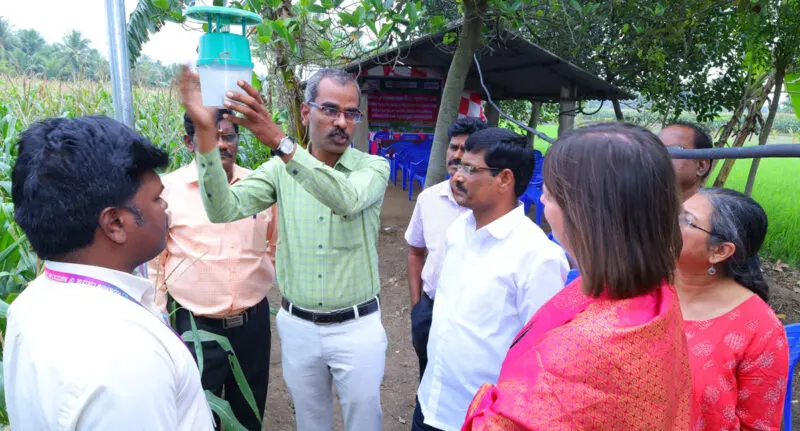
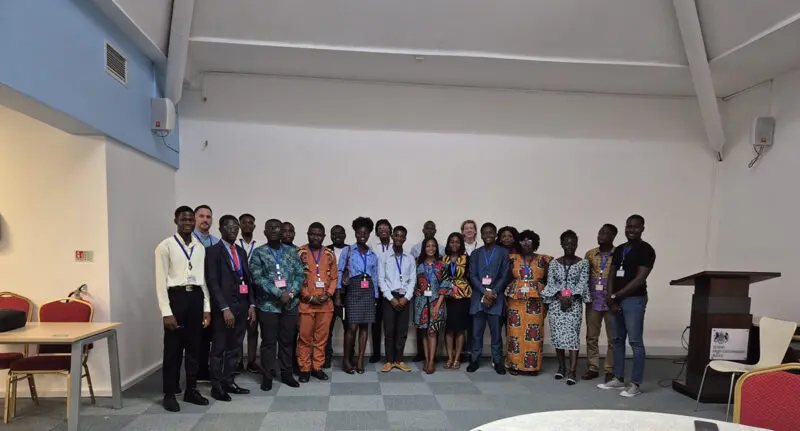
Africa – in market visit (February 10-14, 2025)   A delegation from the UK Agri-Tech Centre has completed a successful weeklong visit to Nigeria and Ghana as part of the DATA-BEE scoping project focused on digital farming and precision agriculture.   The scoping project is part of the Innovate UK Climate-Smart Agriculture Partnership and aims to build networks between the UK, Brazil, Ghana and Nigeria identifying opportunities for collaboration and knowledge sharing to develop technologies and practices that promote climate-smart agriculture solutions for sustainable food production systems in Ghana and Nigeria.  The visit aimed to build knowledge and foster collaboration, which included engagement with government agencies, research institutions and agribusinesses.   During the mission, the UK delegation engaged with various local companies and organisations to explore opportunities for knowledge exchange, technology transfer and capacity building. Meetings and site visits provided valuable insights into the challenges and opportunities within the agricultural sectors of Nigeria and Ghana, reinforcing the importance of international collaboration in advancing climate smart farming solutions in digital farming and precision agriculture.  Key highlights of the visit included:  The outcomes of this mission will be instrumental in shaping upcoming initiatives, including further engagement with regional partners and potential project ideas.  Next Steps: Join Our Dissemination Events  This Friday (February 21, 2025), we are hosting two online sessions to update UK and Brazilian stakeholders on our findings, market insights and early-stage project ideas. There will also be Nigerian and Ghanaian stakeholders on the call that we have connected with through the visit.  Nigeria Webinar (10:45 – 11:45 UK time)  Exploring Opportunities in Digital Agri and Precision Farming in Nigeria Tickets, Fri, Feb 21, 2025 at 10:45 AM | Eventbrite  Ghana Webinar (12:00 – 13:00 UK time)  Exploring Opportunities in Digital Agri and Precision Farming in Ghana Tickets, Fri, Feb 21, 2025 at 12:00 PM | Eventbrite    James Kayam, International Business Development Manager at the UK Agri-Tech Centre: “The visit was an important element of our DATA-BEE project for our team to validate research, build an understand of market requirements and develop key contacts in the sector. We engaged with over 200 individuals from across government, academia and industry.  From hearing about the effects of climate change to how post-harvest losses can account for up to 60% of food waste, our team have come away with key insights and connections that will help us in developing future projects in the region with UK and Brazilian expertise and capability.” Claire Hodge, Head of Agri-System at the UK Agri-Tech Centre: “We can support the development of agri-tech solutions in Nigeria and Ghana by leveraging our UK facilities and expertise in technology development. Key focus areas include affordable connectivity via satellite and mobile platforms, IoT-driven water management for efficient irrigation, AI-powered forecasting to help farmers anticipate weather shifts and planting seasons and digital pest and disease management for early detection and control. In partnership with Brazil, we aim to develop globally scalable solutions, addressing these challenges across diverse farming systems. We can ensure practical adoption by working with Ghana and Nigeria businesses to develop and integrate these technologies with established KE networks and farmer cooperatives, enhancing productivity across staple and horticultural crops.” Mark Smithson, Department for Business and Trade Country Director, British Deputy High Commission Lagos, Nigeria: “The UK Agri-Tech Centre’s visit to Nigeria highlighted the transformative potential of the DATA-BEE project in supporting and advancing digital agriculture. By harnessing data and precision farming technologies, DATA-BEE (one of the 12 Innovate UK scoping projects) aims to support farmers with actionable insights to enhance productivity, improve resource efficiency and drive sustainable agricultural practices. This initiative underscores the UK’s commitment to fostering innovation and collaboration in Nigeria’s agri-tech sector, paving the way for greater food security and resilience in the region.” Godlove Otoo, Department for Business and Trade, British High Commission Accra, Ghana: “The UK Agri-Tech Centre’s visit to Ghana highlights the transformative potential of the DATA-BEE project to empowering and transforming farmers crop production and post-harvest handling with real-time, data-driven insights. Strengthening UK-Ghana partnerships, we are advancing sustainable agriculture through innovation and technology.” If you would like to know more about the DATA-BEE in-market visit to Africa , please get in touch via [email protected]

Read More »