
What is the ARRNET project?
This project aims to bring clarity to the UK’s fragmented regulatory environment for agri-robotics, boosting confidence and accelerating innovation, scaling and investment.
ARRNet – the UK Agri-Robotics Regulatory Network – was launched to simplify and strengthen the regulatory landscape.
Led by the UK Agri-Tech Centre, with partners the University of Lincoln, Harper Adams University and the Manufacturing Technology Centre. ARRNet unites deep expertise in robotics, agriculture and regulation.
With 12 months of government grant funding, the project aims to lower the regulatory barriers to the commercialisation and widespread adoption of robotics and automated systems in agriculture.
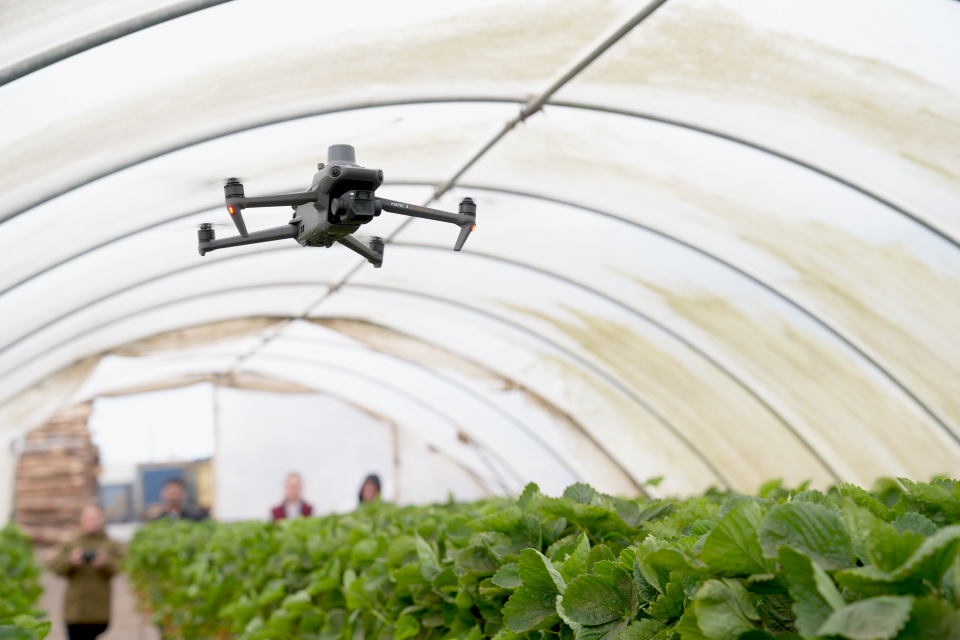
Agri-robotics face unique challenges in outdoor environments, in-field operations, unpredictable environments, and varying levels of autonomy. ARRNet will collaborate with regulators, policymakers, developers, farmers and key stakeholders from across the wider supply chain to identify pathways to addressing the unique challenges.
Building on strong support from the RSIN Discovery Phase and the National Agri-Robotics Proving Ground study, ARRNet is backed by government, industry and academia. During its 12-month funded phase, ARRNet is set to lay the foundations for a sustainable network, a community driving the sustainable growth and adoption of robotics and automation in agriculture.
Project Partners
The UK Agri-Tech Centre
Lead partner in the development of the network and potential funding models. Undertaking Knowledge Exchange with regulators and the network webinars.
Project and Risk management; communication across partners and external stakeholders, including PMO; progress and financial reporting.
University of Lincoln
Lead partner for Standards and Testing Framework Development. The University of Lincoln will lead the investigation and interpretation of existing regulations and standards relevant to the agricultural and horticultural sectors.
In addition, the University will lead the development of a robust testing framework. This includes researching current testing regimes, defining the technical requirements for agri-robotic test facilities and designing a framework to support a national testing network.
Harper Adams University
Development training for users, developers and regulators. Covering risk management, commissioning, emergency procedures, site designs and planning to optimise deployment.
Harper Adams is also supporting the University of Lincoln with the Investigation and translation of existing regulations and standards appropriate to the agricultural/horticultural sector and Testing framework development and demonstration. Core contribution – Development of Training packages.
Manufacturing Technology Centre
Supporting the University of Lincoln with the testing framework development and demonstration.
The team will be conducting research into existing testing regimes and identifying the technical requirements for agri-robotic test facilities.
This will lead to the development of a framework for the network to provide testing facilities. This will then lead into certification and compliance testing processes.