
Expert views from Dr Bethan John, Innovation Associate- Animal Health, who attended the event.

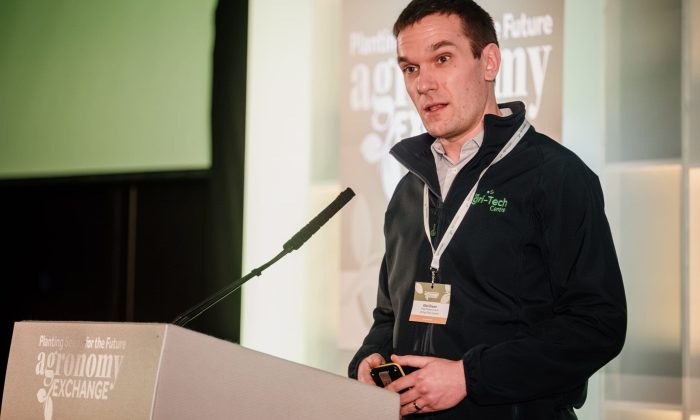
The UK Agri‑Tech Centre played a key role at this week’s industry forum exploring how artificial intelligence is reshaping the protein supply chain. CEO Steve McLean joined a panel of leading specialists including Professor Jonathan Statham, Dr Matt Dobbs, and David Speller to assess the maturity of AI adoption across livestock and poultry systems, and to explore the infrastructure required to unlock next‑generation decision intelligence.
The discussion examined the structural pressures facing protein production, from labour shortages and welfare compliance to environmental constraints and supply chain volatility. Against this backdrop, the panel evaluated how AI‑enabled sensing, modelling and automation can help producers respond more effectively to these challenges. The UK Agri‑Tech Centre’s contribution reinforced its position as a key integrator of applied research, commercial validation, and cross‑industry data innovation.
When asked what will ultimately determine the success of AI‑driven technologies across the protein supply chain, Steve highlighted several interconnected factors:
“For AI to deliver real impact, we first need to understand what affordable value looks like and who ultimately benefits. When the value created is a public good for example, the investment model needs to reflect that.
Strong regulation around AI innovations shouldn’t slow innovation; it builds trust, gives confidence to the market, and ultimately makes it easier to export solutions internationally. At the UK Agri‑Tech Centre, our role is to work with agri-tech businesses, including those developing AI-driven solutions, throughout their commercialisation journey and support them to land with impact at scale.”
A recurring technical challenge identified by the panel was the fragmentation of data across the protein value chain. Speakers emphasised that without interoperable data standards linking farm‑level data, processing‑line automation, and downstream demand signals, AI systems remain siloed and unable to deliver system‑wide optimisation.
As an illustration of how the UK Agri‑Tech Centre is advancing AI‑enabled livestock management, the organisation has been working with Ritchie to develop in‑field weighing platforms that automate the capture of liveweight data. By reducing manual handling and lowering labour demands, these systems generate continuous, high‑resolution data streams that support:
- More accurate growth‑curve modelling
- Improved finishing predictions
- Better assessments of market readiness
To highlight broader innovation within the sector, the UK Agri‑Tech Centre is also co-delivering work on Flockwise, developed with FAI Farms, a scalable precision‑poultry technology. Building on the foundations of BirdBox, Flockwise combines low‑cost sensor networks with AI‑enabled analytics to deliver continuous insights on behaviour, welfare, and productivity in laying‑hen systems. Its modular, plug‑and‑play design reduces barriers to adoption and supports deployment across diverse production environments.
Together, these capabilities show how AI‑driven monitoring can reduce forecasting uncertainty and improve synchronisation across the protein supply chain.
Future Outlook: Toward Integrated Decision Intelligence
Looking ahead, AI within the protein sector is transitioning from discrete data‑capture tools toward integrated decision‑support systems capable of modelling biological, environmental, and operational complexity. A key emerging application is disease surveillance and risk management. While AI cannot yet predict disease outbreaks with certainty, it is increasingly enabling:
- Early detection of subtle behavioural or performance deviations
- Herd‑level anomaly detection
- Regional risk modelling incorporating weather, vector activity, and animal movement data
These capabilities support earlier intervention, reduced losses, and improved supply chain resilience.
Beyond animal health, AI is advancing sustainable land management by integrating soil sensor data, satellite imagery, and hydrological datasets to model nutrient status, water‑use efficiency, and runoff risk. This enables more precise nutrient application, optimised grazing strategies, and reduced diffuse pollution, all of which underpin forage quality, livestock performance, and long‑term system stability.
Collectively, these developments position the UK Agri‑Tech Centre as a central enabler of a more intelligent, interoperable, and resilient protein supply chain.