Archives: Capabilities

Advanced Glasshouse Facility

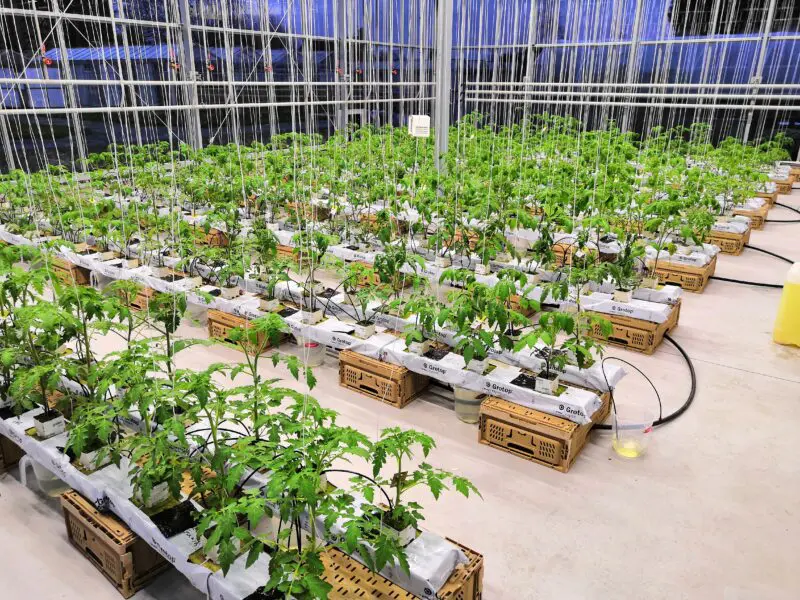
The Advanced Glasshouse Facility enables agri-tech businesses, growers and innovators test, validate and refine controlled-environment and crop protection technologies under commercially representative conditions. Based at Stockbridge Technology Centre (STC), the facility provides flexible, customisable glasshouse environments designed to support the development and demonstration of plant protection products, integrated pest and disease management strategies and sustainable food production systems. Reliable and controlled trial conditions make the facility particularly valuable for evaluating biopesticides and next-generation crop inputs. The facility enables innovators to generate independent performance data, optimise products and accelerate market adoption through commercial-scale trials. Capabilities include: Flexible glasshouse compartments for bespoke trial design Controlled heating, ventilation and shading systems Commercial-scale testing of crop protection and production technologies Integrated pest and disease management evaluation Deep water hydroponic systems for future crop protection programme testing The facility also includes 60 individual hydroponic tanks equipped with temperature control and aeration systems, supporting advanced trials in controlled-environment agriculture and plant health technologies. Through the Advanced Glasshouse Facility, agri-tech businesses can access specialist expertise, real-world trial environments and industry collaboration opportunities that help bring innovative horticultural solutions closer to market adoption and commercial scale In collaboration with: This Capability is based at the Stockbridge Technology Centre (STC). STC is an independent agricultural and horticultural centre of excellence, supported by both growers and supply sectors of the industry.  Controlled Environment Agriculture (CEA) Our unique CEA facilities range from pilot-to-commercial scale to foster the development, optimisation, validation, scale-up and demonstration of next generation technologies and innovative solutions that optimise the indoor production of crops (yield; costs) ,improving food quality whilst reducing our impact on resources. We can test the effect of different strategies (environmental controls; IPM); growing systems (natural light; hydroponic; sunless); recipes (lights; nutrients); explore new crops and applications (seed breeding; high-value molecules; ingredients), as well as integrate circular economy opportunities (nutrients; energy; heat; CO2) to drive forward the novel practices and innovation that underpin this sector’s ambitions for sustainable and resilient food production. Media / images Projects

Read More »
IHCEA - The UK Agri-Tech Centre

Innovation Hub for Controlled Environment Agriculture (IHCEA)

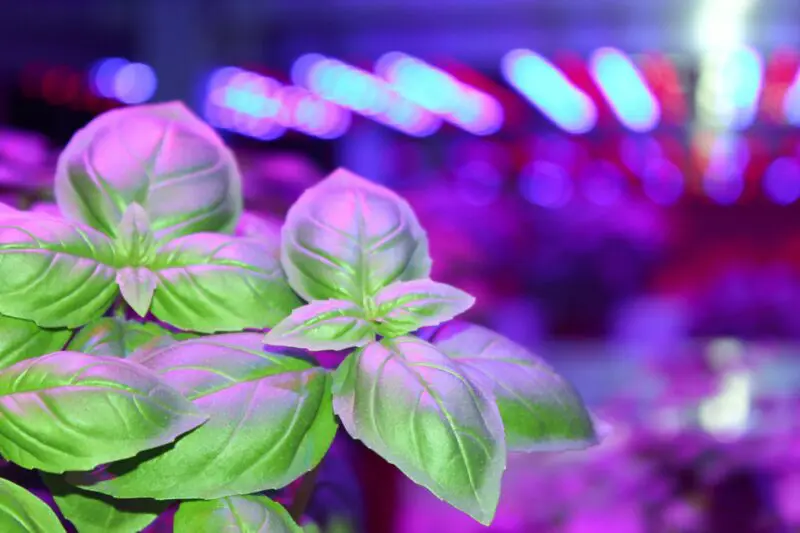
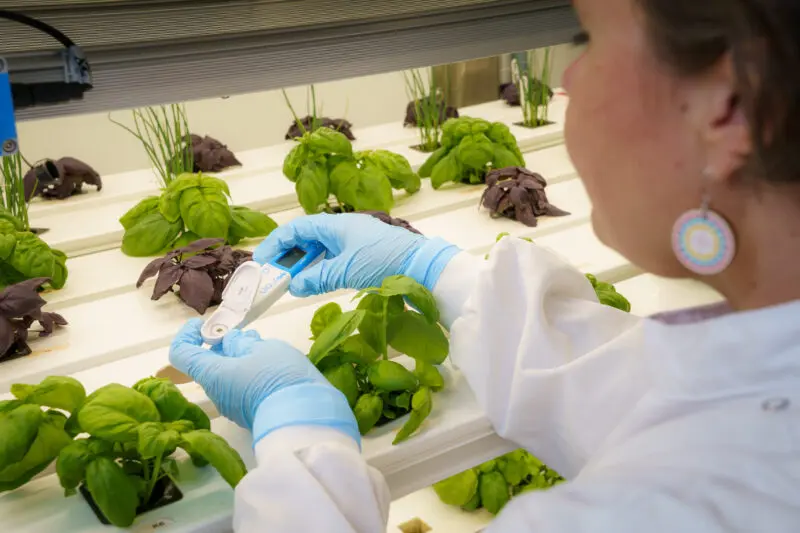
A state-of-the-art Controlled Environment Agriculture (CEA) research and development facility that seeks to transform how we understand and use technology in agriculture. The Innovation Hub for Controlled Environment Agriculture was established to demonstrate how disruptive innovation can respond to the challenges of a growing global population and climate-change.  The facility drives technological innovations in CEA that provide alternative sustainable and environmentally friendly food production by: Reducing operational costs and evaluating user-friendly leading-edge technology that enables the growth of a variety of crops.  Providing a platform that allows a flexible, dynamic approach to test new experimental ideas or products with cost-effective integrated solutions.  Enabling customers to develop their own CEA vertical farming systems for controlled plant growth in an efficient and optimal manner.  Disseminating and sharing its CEA research.  What does the IHCEA offer? Operational excellence in vertical farming developments, with best-practice protocols and SOPs, plus access to UKAS-credited analytical capabilities at JHI.  Multidisciplinary research, including technology integration and testing, treatment control trials and product testing.  Proof of concept trials including novel crops Research to reduce operational costs by optimising growth cycles for a wide variety of crops, while also enhancing qualities such as yield, flavour and shelf-life.  Automated nutrient-delivery and advanced sensor technology for controlled experimentation, including localised temperature, pH, EC humidity and light measurement capabilities.  Micro-nanobubble technology, to infuse the nutrient solution with CO2 and/or O2 MNBs to increase rootzone oxygenation and nutrient bioavailability, strengthening and increasing both growth and yield.  The IHCEA includes three hydroponic growing systems: Ebb and flood: a re-circulated system delivering nutrient solution to plants with alternate flooding and ebbing intervals. Nutrient film technique: a thin film of nutrient solution is continually recirculated past bare roots in gully channels, providing constant nutrient delivery with increased oxygen levels. Deep water culture: the continuous submersion of roots in nutrient solution to promote optimal growth. Adjacent automatically misted germination room. Two leading-edge LED lighting systems – FolioNova full white and SuperNova Blue spectrum (453nm) to promote vegetative and structural plant growth, photosynthesis promoting red (650nm) and photonutrient promoting far red (740nm) spectrum. In collaboration with: The Innovation Hub for Controlled Environment Agriculture capability is based at the James Hutton Institute (JHI) in Dundee. JHI offers world-leading scientific solutions for the sustainable management of land, crop and natural resources that support thriving communities. Soil and Crop Health Our unique CEA facilities range from pilot-to-commercial scale to foster the development, optimisation, validation, scale-up and demonstration of next generation technologies and innovative solutions that optimise the indoor production of crops (yield; costs), improving food quality whilst reducing our impact on resources.   We can test the effect of different strategies (environmental controls; IPM); growing systems (natural light; hydroponic; sunless); recipes (lights; nutrients); explore new crops and applications (seed breeding; high-value molecules; ingredients), as well as integrate circular economy opportunities (nutrients; energy; heat; CO2) to drive forward the novel practices and innovation that underpin this sector’s ambitions for sustainable and resilient food production. Media / images Projects

Read More »

Digital Phenotyping Laboratory

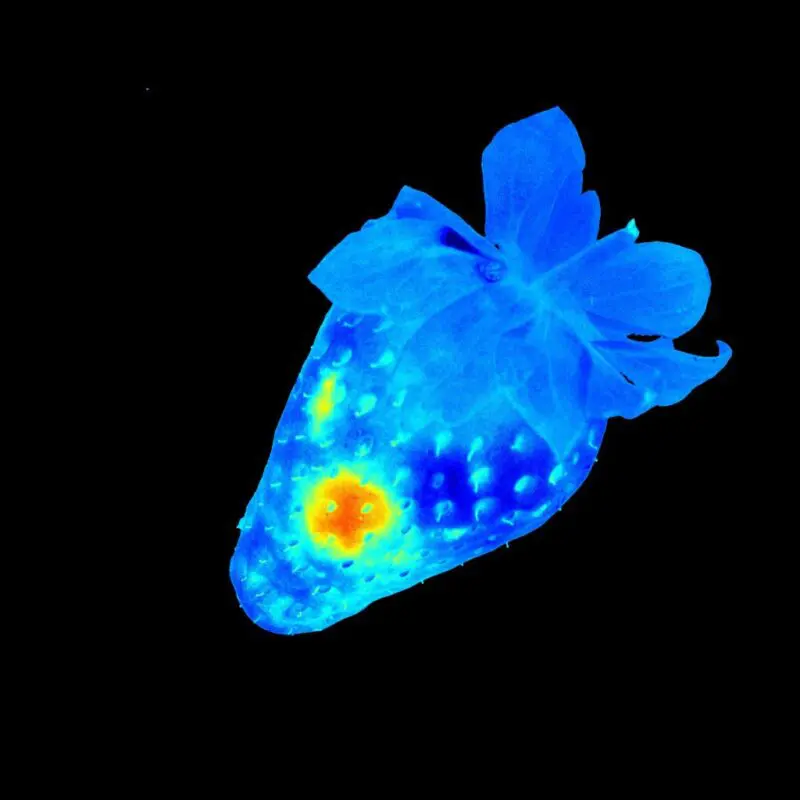
The Digital Phenotyping Laboratory enables agri-tech businesses, crop protection developers and precision agriculture innovators to develop, validate and scale next-generation plant health, sensing and crop monitoring technologies under highly controlled conditions.  The facility’s core capacity centres on phenotyping, the systematic measurement and analysis of observable plant traits such as growth, morphology, physiology and response to environmental stress. Based at the Rothamsted campus in Harpenden, the facility combines advanced imaging systems, controlled environment capabilities and world-leading scientific expertise to support rapid, data-driven evaluation of plant traits, crop health and treatment performance. The laboratory is particularly valuable for innovators developing solutions related to pests, diseases, weeds and remote sensing technologies.  In addition to controlled environmental experimentation, the laboratory also supports and participates in field-trial studies, enabling technologies to be assessed under real-world agricultural conditions. This combined approach ensures that innovation can be validated both under precises, repeatable conditions and in a variety of commercial environments. The facility enables businesses to: Evaluate crop protection products, including biocontrols and new chemistries Screen germplasm for disease resistance traits Develop and validate remote sensing and spectral imaging technologies Assess the impact of bio-stimulants, soil microbes and plant health products Monitor disease progression and plant responses non-destructively Identify spectral signatures linked to pests, diseases and crop traits Advanced multi-spectral imaging systems allow subtle plant characteristics and stress responses to be detected and quantified beyond what is visible to the naked eye, helping innovators generate high-quality validation data and refine product performance.  The facility also provides a valuable test environment for developers of remote sensing platforms, AI-enabled crop monitoring systems and precision agriculture technologies seeking to improve disease detection, treatment targeting and crop management.  Located within the wider Rothamsted innovation ecosystem, the laboratory connects startups, researchers and industry partners to one of Europe’s leading agri-tech research and commercialisation communities.  Soil and Crop Health Our soil and crop health capabilities empower innovators to develop novel technologies. We integrate advanced technologies, like precision-controlled environments, multi-sensor phenotyping, and advanced imaging equipment to generate real-time data. Our facilities enable the study of plant-soil-water relationships and plant physiological changes to stressors such as nutrients, pests and disease, heat and drought. These capabilities aim to maximise yields, support integrated crop management, increase nutrient efficiency, and comprehensively evaluate crop and soil systems. Media / images Projects

Read More »