
Artificial intelligence has moved well beyond experimental stages in most sectors and is well-integrated into our day-to-day lives. Advances in machine learning, sensor engineering and cloud computing now deliver practical, usable systems that analyse patterns and process real-time data at scales that were unrealistic a decade ago. Across the agri-tech sector, all signs point to increasing use of AI‑enabled decision support and data analytics in farming.
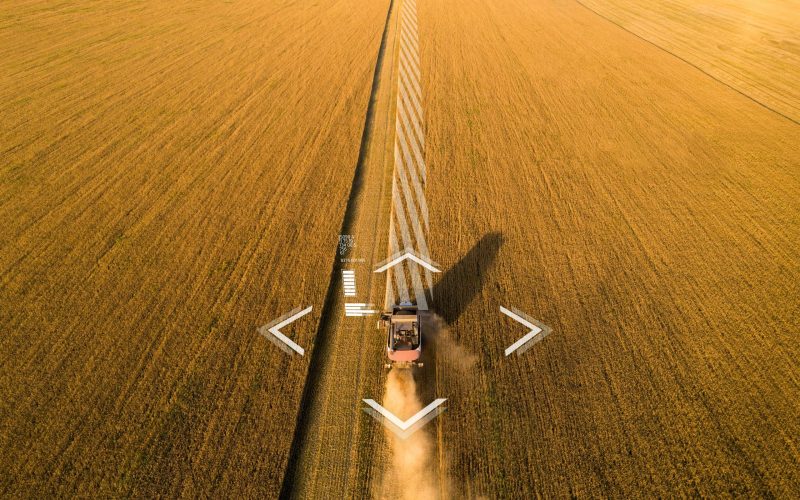
UK agri-tech is already seeing the rise of precision tools, data-driven tech and decision support platforms. AI is becoming a layer within this stack by interpreting images, automating data analysis and supporting day-to-day choices rather than sitting apart from them.
On many farms, artificial intelligence now sits alongside the other decision support tools people use every day in some capacity. The farms featured in our Farming Smarter documentary series demonstrated that AI is becoming part of the routine and is being used in practical ways, strengthening crop monitoring, biodiversity measurement and day-to-day decision-making.
Seeing the crop properly
Crop monitoring is a good example. Walking crops will always matter, but human eyesight inevitably spots problems later on. Fotenix, an agri-tech innovator supported by the UK Agri-Tech Centre, uses multispectral imaging and AI-driven analysis to detect nutrient stress, disease and physiological changes before they’re visible. The imaging is non-destructive and precise, giving growers quick, clear signals rather than complex interfaces.
Fotenix’s model is grounded in commercial reality. They’ve spent years showing that earlier detection translates into less waste, better-timed interventions and stronger crop performance under real farm constraints, not only in research settings. It is now widely used across controlled environments and horticultural systems.
Measuring nature in a way farmers can use
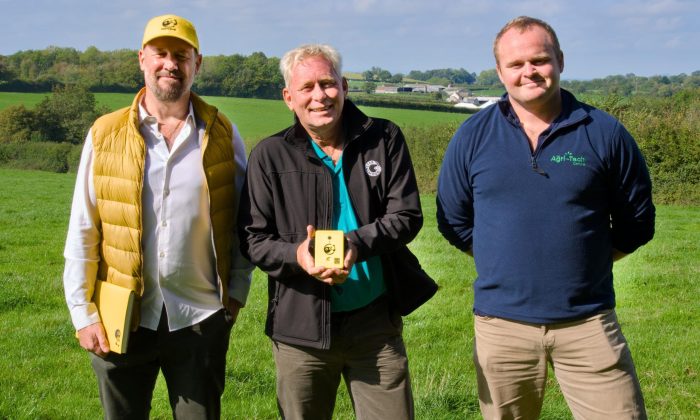
AI is also reshaping how we understand biodiversity on farms. ChirrupNano, developed through a collaboration between Chirrup.ai and the UK Agri Tech Centre, uses bio-acoustic sensors to turn birdsong into reliable biodiversity data. Featured in the Farming Smarter docuseries, it is a small portable device that can sit anywhere on the farm and autonomously identify 100+ bird species across Britain and Ireland.
ChirrupNano doesn’t require farmers to become ecologists, the system interprets acoustic data and benchmarks it against other farms, past recordings or national standards. Birds respond rapidly to change, making them powerful indicators of wider ecosystem health. Over 100 farmers are already involved in the rollout, helping shape the technology so it fits day-to-day practice and for farms to use as an evidence base.
Connectivity: A barrier and an opportunity
For many farms, the main barrier to using AI tools isn’t cost or complexity; it’s connectivity. At the Oxford Farming Conference 2026, this point came through repeatedly. Discussions focused on whether tools genuinely strengthen resilience (the event’s central theme) and the consensus was that data now sits alongside soil and seed as a strategic input, but only when tools fit existing workflows and prove on-farm value.
A national survey in 2025 highlighted the scale of the connectivity issue:
- 60% of farmers say reliable internet access is critical for day-to-day operations.
- 8% of farms still have no internet access at all.
- 42% cite poor connectivity as a major barrier to adopting new tools.
- Among farms with full fibre, 47% said it unlocked precision tools that were previously unavailable.
The effects go beyond agronomy. Poor connectivity reshapes how farm businesses operate and affects family life and community connections. The flip side is the opportunity – when high-quality broadband arrives, farmers adopt new technologies quickly and report immediate efficiency gains from precision applications to real-time monitoring and automation.
Connectivity unlocks new service markets: remote diagnostics, cloud-based field maps, live biodiversity monitoring, sensor integrations and performance-based AI tools such as those used by Fotenix and Chirrup.ai.
The gap is therefore an opportunity waiting to happen. Where connectivity improves, adoption follows. And where adoption follows, demand grows for better analysis, richer datasets and smarter decision support.
Where AI adds real value
The exciting part isn’t the novelty of AI, but the shift it enables from reactive to preventative decision making and when done well, the faster turning of farm data into useful information.
The farms in Farming Smarter aren’t showpieces for futuristic systems, they’re working landscapes run by people balancing risk, cost and responsibility. When AI tools work well, they support decision-making quietly and reliably and become part of the everyday toolkit farmers already know how to use.
Dr Sofia Hirscher, Technical Marketing Manager
If you want to test, trial and demonstrate your technology on farm or have any questions, contact us at [email protected]