
The UK Agri-Tech Centre has supported an innovative two-year project designed to transform pest management. The project, titled ‘DeCyst’, set out to improve understanding of solanaceous trap crops and determine how they can be most effectively used by UK potato producers to combat Potato Cyst Nematodes (PCN).
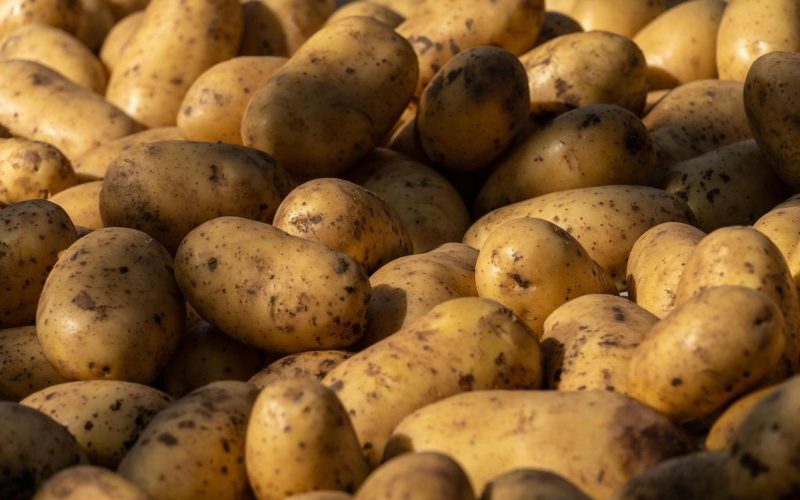
PCN remains one of the most serious challenges for potato farming in the UK, causing significant losses nationwide.
To tackle the problem, the DeCyst initiative, backed by Defra and Innovate UK, focused on trap cropping as a forward-thinking pest management technique. Working collaboratively, the UK Agri-Tech Centre, Produce Solutions, Harper Adams University, VCS Potatoes and several progressive potato growers refined and enhanced trap cropping methods. Their goal was to maximise the performance of DeCyst™ solanaceous trap crops, developed to outsmart PCN infestations.
The effect of PCN
Trap cropping involves planting certain crops to divert PCN away from potatoes. By triggering PCN to hatch at a different point in the rotation, mature female nematodes are unable to complete their reproductive cycle, which helps reduce their long-term impact.
Dr Alex McCormack, Innovation Lead – Agronomy, at UK Agri-Tech Centre, said: “It’s been a great few years working with the DeCyst consortium advancing our knowledge and understanding of how to get the best out of Solanaceous Trap Crops (STCs). I’ve particularly enjoyed seeing how engaged the wider industry has been in the project, with growers and agronomists engaging in useful discussions at the many demonstration events and presentations at trade shows over the last few years. Personally, it’s also been great to continue to be involved in this sort of applied research and to work with old friends and some new ones along the way. Going forward, it’s now a question of how we can continue to build on this project’s successes, alongside looking at other complementary tools to manage pests and diseases like PCN.”
Dr Matthew Back, Reader in Nematology at Harper Adams University, added: “PCN is the most prevalent potato pest in the UK. High populations of PCN can cause yield losses of up to 80% in susceptible cultivars, with an estimated annual cost to the Great British potato industry of £31 million each year. Moreover, PCN threatens the continued production of seed due to its continued spread in Scotland. As crop protection chemistry, such as nematicides are revoked and control measures limited, growers have to investigate alternative methods such as trap crops, to ensure a viable future for potatoes within their rotations.”
Testing the best trap crops
The project evaluated three solanaceous trap crop varieties – Solanum sisymbriifolium (DeCyst-Prickly), Solanum scabrum (DeCyst-Broadleaf) and Solanum chenopodioides (DeCyst-Podium). Through systematic testing and analysis, the goal was to determine which species deliver the best suppression of PCN, while developing clear agronomic guidelines for growers.
James Lee, Head of Agronomy at Produce Solutions, said: “We need all the tools available to us to control PCN, particularly if we lose any further nematicide options. Adoption of solanaceous trap crops could mean an increase in resilience and the maintenance of productivity for the UK potato industry. An additional benefit is that they add organic matter and can increase carbon storage if they are chopped and incorporated into the soil. This is especially important given the move to more regenerative farming systems and emerging carbon markets.”
To learn more about the DeCyst project or if you have any questions, please get in touch via [email protected].