
Over the past 12 months, I’ve had the privilege of working on our newly released report, The Future of Arable and Horticulture Innovation: Shaping the Next Ten Years. As an environmental scientist and agri-tech innovation expert at the UK Agri-Tech Centre, I’m passionate about making farming more productive, resilient and sustainable. This report reflects that vision and I’m excited to share some insights with you.
Healthy soils underpin everything we do in agriculture. They’re the foundation of food production, biodiversity and climate change resilience. This year’s World Soil Day (5 December 2025) is a timely reminder that protecting our soil isn’t just good practice; it is essential for the future of farming and the planet.
Why soil health matters
The UK’s arable and horticultural sectors have long been at the forefront of innovation and that’s something I’m proud to see continuing. From early mechanisation to advances in plant science and precision agriculture, growers have consistently sought new methods to manage and enhance the health and performance of the soils they rely on.
Today, we’re facing new and complex challenges: climate volatility, resource constraints, labour shortages and the need to improve productivity while reducing environmental impact. Against this backdrop, regenerative farming is often discussed as a route to restoring soil function and building resilience.
That’s why, in our latest report, we explore the most promising opportunities that emerge when regenerative approaches are combined with technology, not positioned as an alternative to it.
Regenerative farming and agri-tech: an evolving partnership
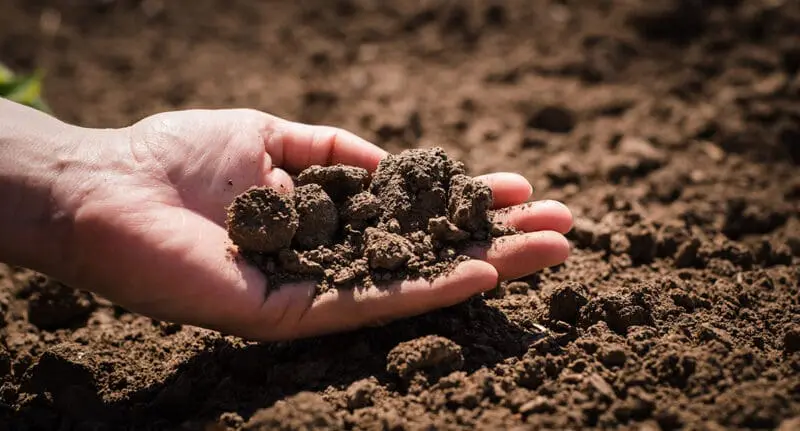
Regenerative agriculture aims to restore soil health and ecosystem function through practices such as cover cropping, diverse rotations, reduced tillage and even agroforestry. These techniques improve soil structure, build organic matter, enhance microbial activity and support carbon sequestration, helping farmland recover its natural fertility and resilience.
Our report highlights that regenerative farming and agri-tech are becoming increasingly interdependent. Rather than seeing regenerative agriculture as a fixed end-state, the sector is moving towards a model where biological processes, sensing technologies and data-driven management evolve together. Digital and in-field sensors are giving growers clearer insights into soil moisture, carbon dynamics and microbial function. These tools make it easier to identify where practices such as cover cropping or minimum tillage are likely to deliver the greatest benefit.
As these technologies develop further, opportunities emerge to scale soil-function interventions more reliably. Biological inputs such as biostimulants and bio-based fertilisers are gaining traction, supported by improved methods for monitoring their performance in real farm conditions. Equipment designed for low-disturbance cultivation, alongside precision application tools, is helping integrate regenerative practices into mainstream arable systems without compromising timeliness or output.
Over the longer term, regenerative and technological innovations are expected to align even more closely. Advances in biological input systems, integrated seed and soil solutions and crop varieties developed for performance within regenerative systems will help farmers build resilient cropping systems that are both environmentally and economically robust. These shifts will be supported by adaptive farming platforms capable of responding to real-time soil and crop conditions, making regenerative practices more predictable, measurable and commercially viable.
The next ten years
Growers told us that regenerative approaches must deliver improvements in soil health while also supporting productivity, labour efficiency and economic resilience. Our report makes clear that agri-tech will play a central role in achieving this balance. Technologies that allow growers to measure change, optimise practice and validate outcomes will be critical in moving regenerative farming from principle to widespread, scalable adoption.
As we mark World Soil Day, it is clear that soil remains one of farming’s most valuable assets. But the next decade will be defined not only by how we protect and restore it, but by how we use biological, digital and agronomic innovation to make regenerative approaches both practical and productive across the UK’s arable and horticultural sectors.
Join the conversation
Whether you’re developing new agri-tech solutions or simply curious about what’s ahead, I hope this report sparks ideas and inspires action. Soil is the starting point for everything we grow, and together, we can make sure it remains healthy for generations to come. Have questions or ideas?
Message me at [email protected]
About the author
Dr Harry Langford
Harry is an interdisciplinary environmental scientist and agri-tech innovation expert, passionate about advancing crop productivity and food system sustainability. With a background in soil micro-structure and function, he brings expertise in soil health, sustainable agriculture and environmental sensing technologies.
At the UK Agri-Tech Centre, Harry leads collaborative R&D and open innovation projects across the agri-food supply chain, helping develop practical, robust solutions to critical sector challenges. His work focuses on integrating regenerative farming practices with cutting-edge technology to deliver real sustainability impacts for UK agriculture.