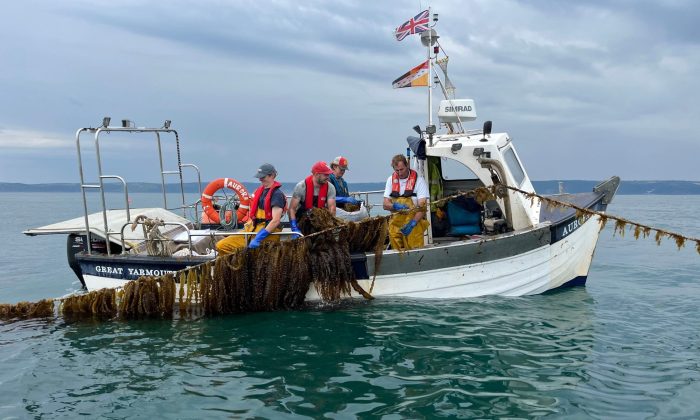

In a significant boost to sustainable agriculture, the UK Agri-Tech Centre, in collaboration with Rothamsted Research, Algapelago Ltd, and Harper Adams University, backed by Innovate UK, has announced the launch of the groundbreaking ‘low energy kelp’ seaweed project.
The 24-month project ‘optimising low energy extraction of kelp for soil and livestock nutrition’ is set to receive a research grant to develop a novel two-stage extraction process that will produce consistent, high-quality liquid biostimulant and an animal feed supplement from cultivated kelp.
These products are intended to enhance soil and animal health while reducing reliance on chemical inputs. Ross Robertson, the UK Agri-Tech Centre farming technology specialist explains:
Cultivated kelp is a sustainable and rich source of nutrients and bioactive compounds that benefit microbial communities, leading to healthier soil and livestock systems.
He explains that the project will conduct kilo-scale laboratory trials, prototype system development, and controlled field trials to test the efficacy of the products under environmental stresses. In-vitro livestock trials conducted by Harper Adams University will focus on the impact of seaweed supplements on rumen function and performance.
Rothamsted Research will lead plant trials focusing on how Algapelago’s seaweed biostimulant influences plant-soil interactions, under abiotic stresses of heat and drought.
Luke Ansell, head of operations at Algapelago, says:
This project is a pivotal step towards unlocking the potential of seaweed in agriculture. We’re eager to lead the way in demonstrating how low-energy, sustainable practices can significantly benefit agriculture while adhering to environmental standards.
Dr Martin Blackwell, soil scientist at Rothamsted Research, adds:
We’re excited to work with Algapelago Ltd and the UK Agri-Tech Centre on this initiative. Algapelago’s novel approach to seaweed processing not only supports sustainable farming but also addresses the pressing challenges of modern agricultural practices in our changing climate.
The ‘low energy kelp’ project is ambitious in its long-term goal and promises to be a cornerstone for future agricultural practices, driving forward the integration of sustainable resources like seaweed into mainstream farming.
This initiative not only supports the health of the environment but also ensures the resilience and productivity of the agriculture sector in the UK and beyond.