
Farmers can take steps now to reduce methane emissions, and technology is in the pipeline to help them, the UK Agri-Tech Centre tells Lords.
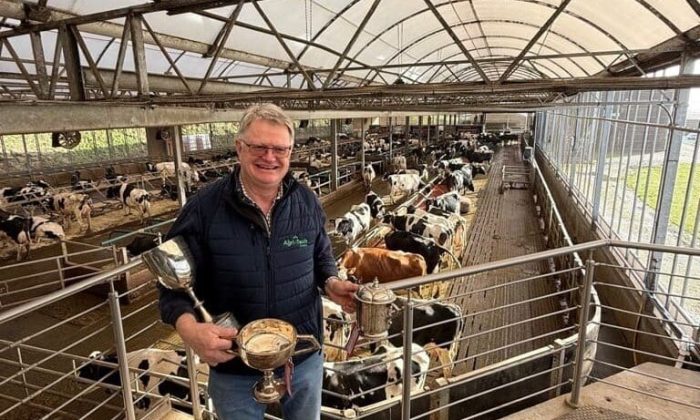
The UK Agri-Tech Centre CEO, Phil Bicknell gave evidence to the House of Lords environment and climate change committee as part of their inquiry on methane. The UK Agri-Tech Centre has published reports on potential actions farmers can take to reduce emissions and innovation pipeline that will help the livestock sector reach net zero. The Centre is involved in trials and projects aimed at reducing methane emissions through breeding, such as the low-methane sheep project, and feed additives, such as the “Dancing with Daffodils” project.
The UK Agri-Tech Centre CEO, Phil Bicknell said:
“It is important to remember that livestock production systems are diverse and that ruminant animals don’t just emit methane: they are valuable because they take low-quality feed, such as grass, and turn it into a high-quality and nutrient-dense product.
Calculating methane emissions from agriculture is complex; it is all very well to generate national figures, but what happens at a farm level is very important. There are pros and cons in the current emissions calculators for farmers, but we do have better information than was previously the case.
Different approaches are being used to monitor methane emission levels, such as closed chambers, sniff techniques and handheld lasers, and there are different trials and opportunities being developed. The technology isn’t quite there yet but the cost and accessibility are improving all the time.
At the UK Agri-Tech Centre we are all about trying to accelerate agri-innovation to help the inform the government what they can do and to inform farm businesses to be more proactive. There is technology in the pipeline that will deliver impact and there is, understandably, interest in methane inhibitors, but we shouldn’t forget that what’s good for farm performance also offers benefits from a sustainability angle: more efficient production reduces emissions per unit of output.”
Want to learn how to mitigate methane emissions?
If you have any questions about this article or general enquiries about the UK Agri-Tech Centre, please contact [email protected]