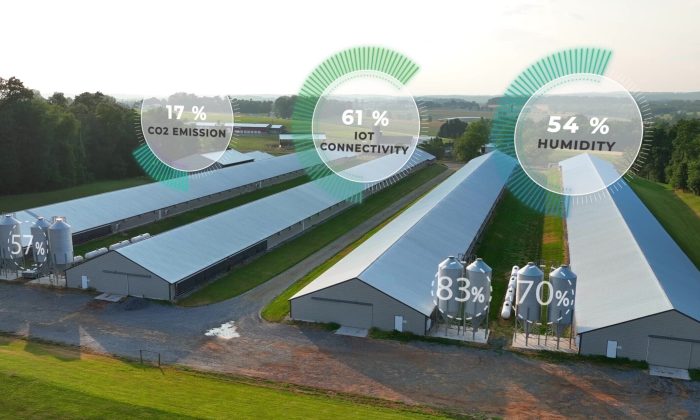

Innovation is essential to the future of agriculture. From AI-driven decision tools and precision sensors to robotics and novel biological inputs, the sector is generating new solutions to some of farming’s most pressing challenges – improving productivity, adapting to climate change, and building a more sustainable food system.
But innovation alone doesn’t create value. Protecting it, positioning it and scaling it does. That’s where intellectual property (IP) becomes critical – not as a legal formality, but as a strategic tool for growth. Too often treated as something to address later, for agri-tech businesses looking to scale it needs to be part of the conversation from the outset.
From protection to commercial advantage
At its simplest, IP protects what makes a business unique. But its real value goes much further. A clear IP strategy can:
- Give investors confidence by demonstrating defensibility and long-term value
- Enable partnerships by clarifying ownership and rights
- Create new revenue streams through licensing or data-driven services
It’s not just about stopping others copying – it’s about building something worth scaling.
More than patents: understanding the right protection for your business
IP is often associated with patents – but in agri-tech, the picture is more varied. There are many forms of protection available, from trade marks and design rights to plant variety rights. Those scaling agri-tech innovations should be particularly aware of:
Patents protect novel, inventive technical solutions – new products, processes or uses – and grant exclusive rights for up to 20 years. They require public disclosure of the invention, can take several years to grant, and involve ongoing costs to maintain. Most relevant for novel hardware, chemical formulations or genuinely inventive methods.
Copyright arises automatically and protects original works including software, written content, datasets and models – no registration is required. In the UK it lasts for the lifetime of the creator plus 70 years. Particularly relevant for software platforms, analytical tools and proprietary training data.
Trade Secrets cover confidential information that gives a competitive edge – algorithms, formulations, processes or business methods. There is no registration and no public disclosure; protection lasts as long as confidentiality is maintained. A strong option for innovations that are difficult to reverse-engineer.
Database Rights protect substantial investment in creating or maintaining a dataset, even where the underlying data isn’t novel. Increasingly relevant as agri-tech businesses build proprietary datasets from farm sensors, satellite imagery or agronomic trials.
Effective IP strategies combine different forms of protection, aligned to the actual sources of value in the business and its stage of development.
Practical first steps for early-stage businesses
For many founders, IP can feel like a distant concern. While you should always take specialist advice from a legal adviser, a few early actions can help you start thinking in the right way:
- Do an IP audit. Take stock of what you have before spending on protection. Where does value sit – in the technology, the data, the process, or the brand?
- Protect before you disclose. Patent rights can be lost if an invention is publicly disclosed before filing. File before any public presentation, demo day or publication.
- Use NDAs consistently. Ensure a non-disclosure agreement is in place before sharing anything commercially sensitive with partners, investors or trial hosts.
- Check freedom to operate. Before investing heavily in a product or process, check you are not inadvertently infringing someone else’s IP.
- Clarify ownership in collaborations. When working with universities or research institutes, establish who owns what from the outset – both what each party brings in and anything created jointly.
- Get early specialist advice. A short conversation with a patent lawyer early on can save significant time and cost later. The UK IPO also provides free guidance for start-ups.
Why IP looks different in agri-tech
Agri-tech brings specific challenges. Innovation spans hardware, software, data and biology, and development cycles can be long – requiring extensive real-world testing before market. Collaboration is central too, but creates risk: testing can expose innovation before it is properly protected, and collaborative projects can blur ownership without clear agreements. Different IP regimes in global markets add further complexity.
Common pitfalls – and how to avoid them
Leaving IP too late is perhaps the most common issue – once a product has been publicly demonstrated or discussed, some protection options may already be closed off. Investing in IP without a clear commercial rationale creates cost without return. Collaboration can create risk if ownership is not defined upfront. And many businesses underestimate the value of protecting software, data and algorithms – increasingly where the real commercial value sits.
Turning innovation into impact
At the UK Agri-Tech Centre, we work with businesses across this journey – from validation through to commercial deployment and scale. That includes supporting real-world testing in a way that builds robust evidence without compromising IP, and helping businesses navigate partnerships, markets and the wider ecosystem.
Because innovation only delivers impact when it is adopted – and adoption is far more likely when the value behind that innovation is clear, protected and scalable. The future of agri-tech won’t just be defined by who innovates fastest – but by who is able to capture, protect and scale that innovation effectively.