
Why are we still wasting seafood by-products while importing feed ingredients?
Aquaculture is under increasing pressure to reduce reliance on fish meal and krill, while supply chains remain exposed to volatility and rising sustainability expectations.
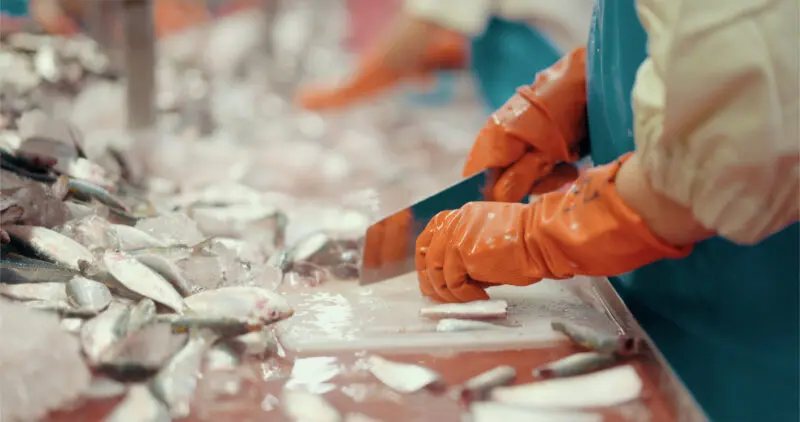
At the same time, large volumes of seafood processing by-products; rich in protein, oils and nutrients continue to be underutilised or disposed of at cost.
Bridging this gap presents a clear opportunity: to turn waste into value while strengthening more resilient, local feed supply systems.
The challenge: lost value and growing pressure
For seafood processors and feed manufacturers alike, the challenge is both practical and commercial:
- Valuable by-products are often discarded or downgraded
- Disposal creates unnecessary cost pressures
- Feed inputs remain heavily reliant on imports
- Sustainability and carbon reduction expectations are increasing
The result is a disconnect: high-value nutrients are lost at origin, while demand for feed ingredients continues to grow elsewhere.
The innovation: circular value from side streams
Pennosan Ltd is addressing this challenge through a natural, low-impact process that converts seafood by-products into high-value aquaculture feed ingredients.
Instead of being discarded, these materials are used to recover valuable proteins and oils that can be fed back into aquaculture systems.
The approach:
- Works with existing seafood processing operations
- Avoids harsh chemical treatments
- Unlocks value from materials that would otherwise go to waste
This approach turns a cost into a usable, revenue-generating resource.
From concept to confidence: independent validation
A key barrier to adopting new feed ingredients is proof, particularly when replacing established inputs like fish meal and krill.
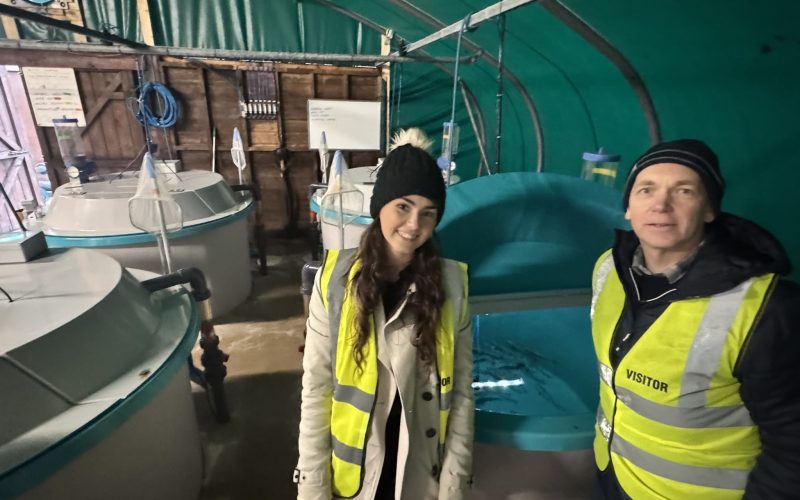
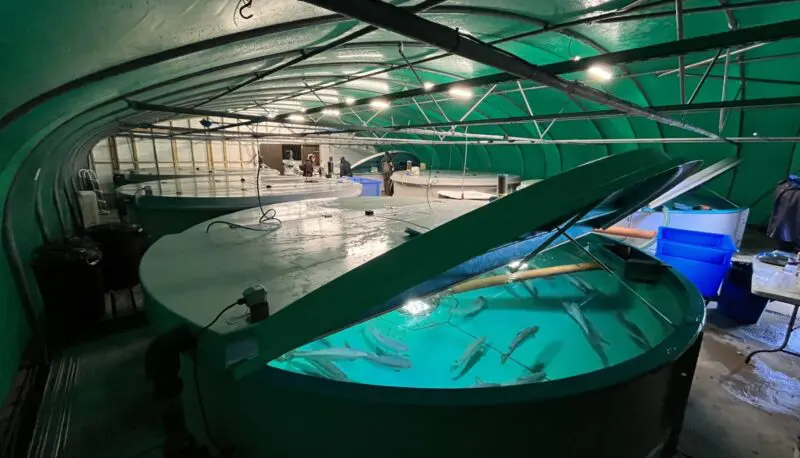
With support from the Marine Aquaculture Innovation Centre (MAIC), one of the UK Agri-Tech Centre’s validation facilities, Pennosan’s ingredients have been tested across multiple species.
The results show:
- Positive growth performance
- Strong health outcomes
- Successful replacement of traditional marine-based feed inputs
This provides the proof needed to move from testing into real-world use.
“Independent trials at the UK Agri-Tech Centre’s MAIC facility helped refine both process and product.”
Commercial impact: turning waste into opportunity
This innovation translates directly into tangible business value:
For seafood processors:
- Transform underutilised by-products into new revenue streams
- Reduce waste handling and disposal costs
- Improve overall resource efficiency
For feed manufacturers:
- Access alternative, locally derived ingredients
- Reduce reliance on imported and price-volatile inputs
For the wider industry:
- Strengthen supply chain resilience
- Support lower-carbon, circular production systems
A model built for scale
Crucially, this is not a one-off innovation, it is a replicable, scalable model.
By enabling co-located recovery within existing seafood processing operations, Pennosan’s approach:
- Integrates into current infrastructure
- Supports regional circular economy systems
- Reduces waste at source
- Creates repeatable value across multiple sites
This creates a clear pathway to scale across the industry.
The role of collaboration
Collaboration played a key role in accelerating development and reducing adoption risk.
Through access to controlled trial environments, technical expertise and real-world testing conditions, the partnership enabled:
- Independent validation
- Deeper biological insight
- Refinement of both process and product
- Clear pathways for follow-on development
This support helps build commercially viable solutions while reducing the risk of adoption.

Business Perspective
“Working with UK Agri-Tech Centre and its MAIC facility was instrumental in accelerating the development of our recovered protein feed ingredients.
Their controlled trials provided independent validation, deeper biological insight and practical guidance that helped us refine both the process and the product.
The collaboration has opened up clear pathways for follow-on work, and we greatly value the technical expertise and industry perspective they brought to the project.”
Jonathan Hughes, Managing Director of Pennosan.
Looking Ahead: Scaling Circular Feed Solutions
As aquaculture continues to grow, the need for sustainable, resilient feed ingredients will only intensify.
Pennosan’s approach demonstrates how underutilised resources can be transformed into commercially viable, scalable solutions—reducing reliance on finite marine inputs while unlocking value closer to source.
Together, this shows how innovations can be proven, built for real-world use and scaled across the industry.
Acknowledgement
This work was supported by Innovate UK.
Development and validation were enabled through by-products supplied by seafood processors — D.R. Collin, Scottish Shellfish Marketing Group (SSMG), Farne Salmon, and Jonas Seafood Ltd — alongside project management and feed trial support from Sustainable Feeds Ltd.
Trials were conducted at the UK Agri-Tech Centre’s, Marine Aquaculture Innovation Centre (MAIC).