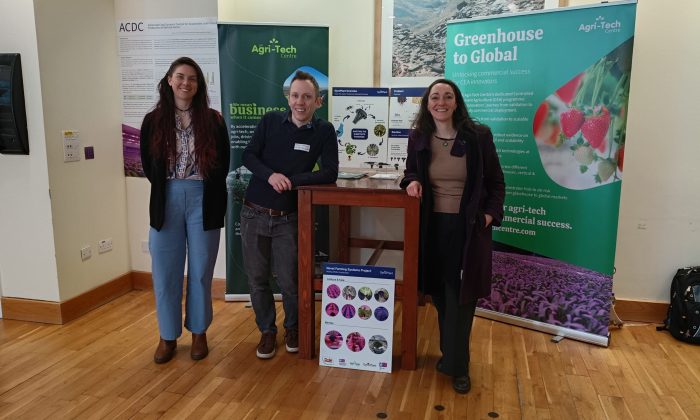

Regenerative agriculture plays a vital role in improving soil health, enhancing biodiversity and ensuring the long-term sustainability of food production. However, many farmers face significant barriers, including financial risks, knowledge gaps and uncertainty about short-term economic returns during the transitions. A recent event hosted by the UK Agri-Tech Centre and EIT Food brought together stakeholders from across the supply chain in an Open Innovation Forum focused on how to de-risk the transition to regenerative agriculture. The event highlighted the power of systems thinking and collaborative innovation in overcoming barriers and accelerating change. The focus areas of the forum:
- Reducing risks for farmers transitioning to regenerative agriculture
- Building a stronger support network by integrating technology and engaging stakeholders across the supply chain
Evolving perspectives
Open discussions and collaborative thinking throughout the forum altered the perceptions of the attendees around who holds responsibility for the transition to regenerative agriculture. While farmers were initially seen as the primary drivers of change, participants left with a broader understanding that a holistic, systems-thinking approach that involves the entire agrifood supply chain is essential.
A systems-wise approach to change
Roundtable discussions provided a platform to share knowledge and ideas on how the agrifood supply chain can collaborate to support the transition to regenerative agriculture. They focused on the use of technology, policy and collaboration to overcoming barriers to adoption. Throughout the day four key themes rose:
- De-risk the transition: The financial and operational risk of transitioning should not fall solely on farmers but rather shared across the supply chain. Proposed solutions included transition funds and retail incentives to ease the burden.
- Data standardisation: Data should focus on measuring the impact of transitioning, with artificial intelligence and automation to help simplify data handling, create data frameworks and support compliance.
- Behavioural changes: Education, training and clear communications about the benefits of regenerative agriculture is needed across the supply chain, from consumers to policymakers, to build understanding and momentum.
- Holistic approach: Long-term success requires a holistic approach with buy-in from the entire supply chain to support the entire ecosystem from biodiversity and soil health to farmers and food quality. Proposed solutions include benchmarking and focusing on success metrics rather than just crop yields.
Open innovation breaks down traditional silos to enable knowledge and ideas to flow freely. It fuels faster, more creative solutions and empowers businesses to turn ideas into real-world impact. More opportunities are needed for open collaboration across the sector to drive forward sustainable solutions and turn these initial discussions into actions.
Download the full report below to find out more about the Open Innovation Forum.