
By Thomas Slattery, ADOPT Lead, UK Agri-Tech Centre
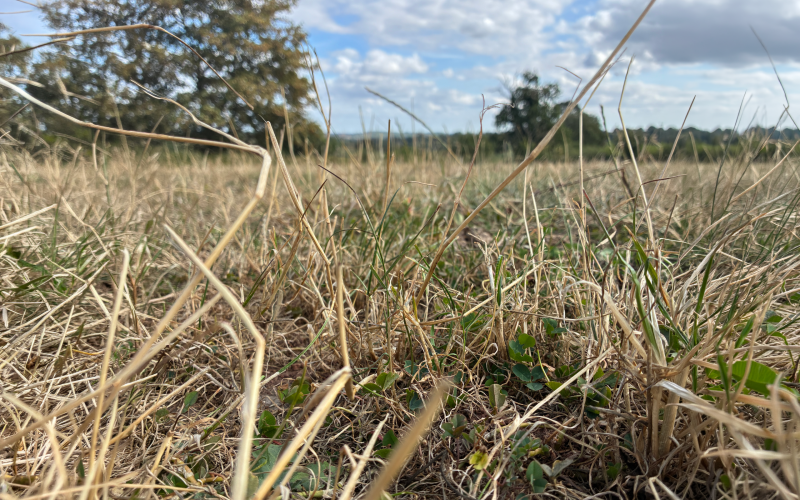
After a hot, dry summer, water has rarely felt more important to farming. For many growers, decisions about when, where and how to use increasingly scarce water are not theoretical questions. They affect crop quality, yields, costs and ultimately the resilience of the farm business, says Thomas Slattery, ADOPT Lead, UK Agri-Tech Centre.
This makes the growing number of water-focused projects supported through the Accelerating Development of Practices and Technologies (ADOPT) Fund particularly timely. But these projects also illustrate something bigger about ADOPT: the value of putting farmers at the heart of innovation.
ADOPT is designed around practical trials on commercial farms, bringing farmers together with researchers, technology providers and other specialists to test ideas under real farming conditions. Crucially, farmers are not simply the end users of somebody else’s research. They help identify the problem, shape the trial and judge whether a potential solution is genuinely workable.
It assumes good ideas already exist on farms, that farmers are experts and what’s often missing is the structure and support for them to help develop and test them properly.
Water provides some excellent examples.
Current ADOPT projects on water management
In Suffolk, a farmer-led project is testing Aquagrain, a biodegradable soil amendment, in commercial spinach, lettuce and onion crops on light sandy soils. The trial is examining whether holding more water and nutrients around the root zone can reduce irrigation requirements while maintaining crop yield and quality.
Elsewhere, farmers at Elveden in Suffolk and Waldersey in Cambridgeshire are testing smart variable-rate irrigation for potatoes and onions, combining information about soils, crop growth and weather to apply water more precisely.
Other ADOPT projects are looking further ahead. In Shropshire, farmers are looking at whether high river flows can be captured and stored for periods when water is scarce, while another project is testing managed aquifer recharge – storing winter water underground for irrigation when crops need it.
A further trial is investigating whether treated wastewater, filtered through reedbeds, could provide farmers with an alternative year-round supply.
Innovation must work on farm
The technologies differ, but the principle is consistent; start with a genuine farming challenge and test possible answers where they must work – on farm.
And funding trials is only part of the story. ADOPT projects have professional facilitators to help with administration and reporting, alongside free support from the ADOPT Support Hub. This means innovation can happen alongside everything else involved in running a farm.
ADOPT is about fairly de-risking and remunerating farmers for doing the hard work of trialling and testing and experimenting, rather than expecting them to shoulder the cost and risk alone.
After this summer, finding better ways to manage water feels especially urgent. The answers will not come from technology alone. They will come from giving farmers the time, support and opportunity to ask the right questions, test ideas in their own conditions and share what they learn.
This is where farmer-led innovation can make a lasting difference.
Get in touch to find out how the ADOPT Support Hub can support your idea.