
A project exploring efficient, low-energy techniques for processing cultivated kelp into soil biostimulants and animal feed supplements has achieved a significant breakthrough, according to its latest findings. Algapelago, a farmer-led seaweed biotechnology company managing an offshore kelp farm, has worked alongside Rothamsted Research and the UK Agri-Tech Centre to test the effectiveness of these products under conditions of abiotic stress.
The Innovate UK-funded project, Optimising Low Energy Extraction of Kelp for Soil and Livestock Nutrition (known as ‘Low Energy Kelp’), focuses on creating sustainable agricultural inputs derived from cultivated seaweed. Interest in seaweed-based biostimulants is rapidly growing within agriculture, thanks to their ability to stimulate plant growth, enhance stress tolerance and improve nutrient use efficiency, all while offering a renewable and environmentally beneficial alternative to chemical inputs.
Currently, most agri-seaweed products rely on wild-harvested sources. However, as policy continues to push for reductions in chemical fertiliser use, the demand for cultivated seaweed-derived biostimulants and feed supplements is set to grow exponentially.
Despite this, the biochemical mechanisms driving seaweed’s beneficial impact on crops are still not fully understood. In collaboration with subcontractor Atlantic Mariculture, Algapelago has now refined a low-energy extraction process that produces a consistent, high-quality biostimulant with considerable commercial potential.
What did the research show?
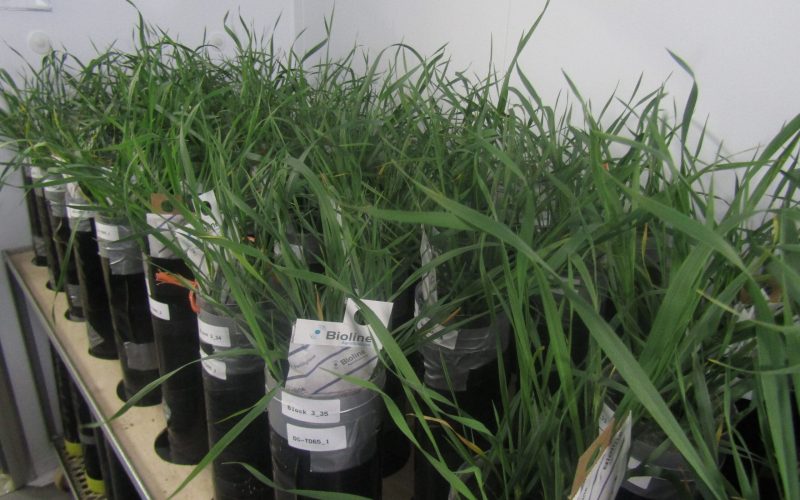
To determine optimal application rates and methods for Algapelago’s prototype biostimulant ‘TD65’, two controlled experiments were undertaken.
The first investigated the impact of four different rates of foliar applications on wheat and field bean yields under both well-watered and drought-stressed conditions and the second investigated whether foliar application or soil application had the greatest impact on yields of wheat. The goals of the first experiment were to identify the most effective application rate of TD65 under normal growing conditions and to explore whether any yield advantage was maintained during drought stress.
In the second trial, researchers aimed to determine whether observed benefits came from direct physiological effects on plants or through stimulation of soil microbial activity, which could improve nutrient availability and uptake. For the dosage study, wheat and field beans were cultivated in 10 cm diameter × 90 cm deep intact clay-loam soil cores suitable for both ambient and drought-stress testing. In the application method study, plants were grown in 2L pots containing either sieved soil or glass beads (to simulate a hydroponic system), allowing a comparison between crops grown with and without soil microbes.
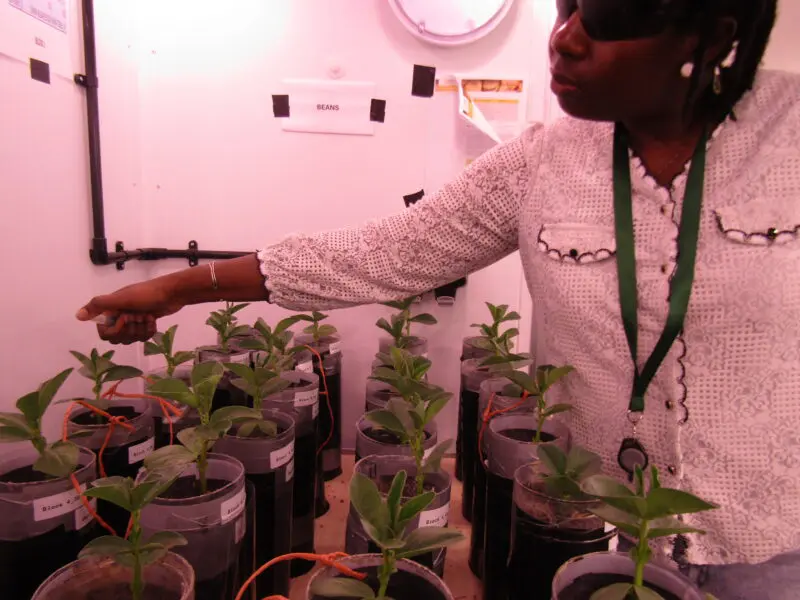
Three application types were tested: foliar only, soil only and foliar plus soil microbes. In all cases, results were benchmarked against control plants grown without the biostimulant. Results showed that the optimal application rate led to a 53% increase in wheat grain yield, driven by a 45% increase in grain number compared to control values [1]. No benefits were observed under drought-stressed conditions.
In the application method experiment, the application method didn’t affect the yields of wheat in either growing medium, although the plants grown in the hydroponic system significantly outperformed those grown in soil.
Researchers recommend further studies to examine the timing of applications at different growth stages and to test under additional drought scenarios. Trials using varying fertiliser levels are also advised, as the biostimulant may perform better under more nutrient-limited conditions. Overall, the findings suggest that seaweed-derived biostimulants can deliver measurable yield improvements in certain growing environments.
Luke Ansell, Head of Operations at Algapelago Marine, said: “The completion of the Rothamsted crop trials is a significant milestone for the project and wider product development. Thanks to the Rothamsted team for all their hard work and we are thrilled to see a 53% yield increase in wheat grain due to this prototype sugar kelp extract. This result has validated our belief in the quality of our cultivated sugar kelp and extraction method. While we await the full analysis results from this study, a wider trial program is underway across soft fruits, field and root vegetables which will further build the evidence base for product efficacy. Meanwhile our sister Farming Futures project is investigating the impact of kelp extracts on crop nutrient use efficiency.”
Impact
This project demonstrates that rope-grown sugar kelp can play a vital role in strengthening UK food resilience, improving soil health and helping to reduce carbon emissions and nitrate dependency, aligning closely with goals outlined in the Government Food Strategy.
Cultivated kelp provides a sustainable source of potash, micronutrients and bioactive compounds, while its offshore farming supports biodiversity by offering habitat and nourishment for various marine species, including commercially important fish species.
Professor Adie Collins, Science Director at Rothamsted Research, said: “At a time when yields and corresponding profits are under pressure from a range of abiotic and biotic stresses, biostimulant research offers a glimmer of hope to farmers in an ever more challenging world.”
Building on earlier feasibility work, this project has optimised the two-stage liquid extraction and ensiling process for kelp, producing consistent and scalable agricultural products.
Dr. Saro Rengaraj, Innovation Associate for Soil Health at the UK Agri-Tech Centre, added: “From sea to soil, kelp builds resilience and grows results. Algapelago’s kelp biostimulants could boost soil resilience, nutrient cycling and microbial health – sustainably enhancing crop productivity.”
[1]. N.B. Yield metrics have been updated 30/10/2025 to align with Rothamsted Research results.